
Saddam Hussein Abd al-Majid al-Tikriti, ace of spades playing cards, issued by USA, during coalition war in Iraq, 2003 invasion,Iraqi Most Wanted
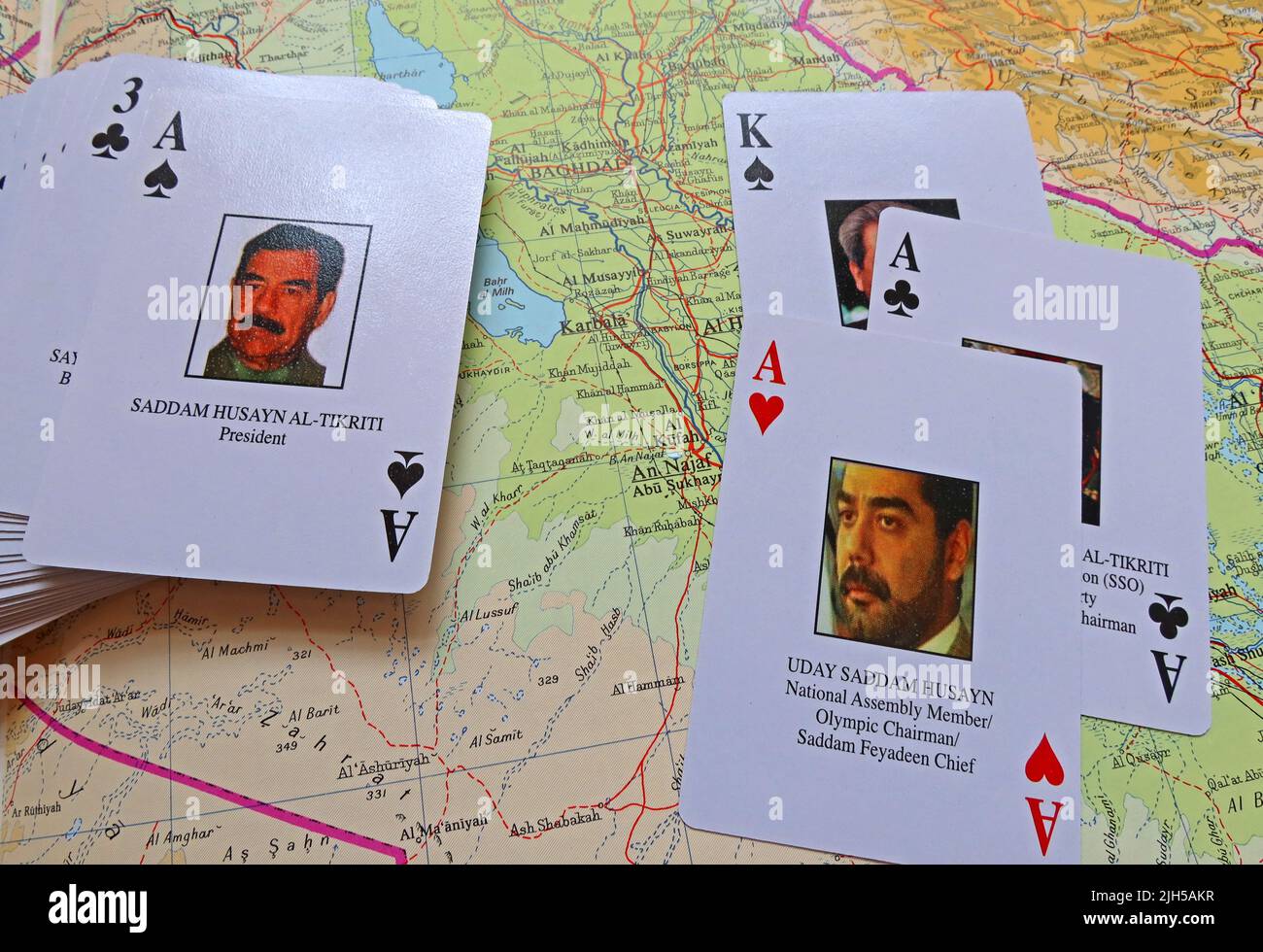
Image details
Contributor:
Tony SmithImage ID:
2JH5AKRFile size:
55.6 MB (2.3 MB Compressed download)Releases:
Model - no | Property - noDo I need a release?Dimensions:
5328 x 3648 px | 45.1 x 30.9 cm | 17.8 x 12.2 inches | 300dpiDate taken:
15 July 2022Location:
Bahgdad , IraqMore information:
2003 Iraqi Most Wanted playing cards laid across a printed map of Iraq and the surrounding region. The foreground card shows Saddam Hussein Abd al-Majid al-Tikriti, president of Iraq, as the ace of spades, the most recognisable card in the deck. Nearby cards include Uday Saddam Hussein as the ace of hearts, with other senior figures from the former Iraqi regime partly visible. The image links maps, intelligence, military identification, propaganda, regime change and the aftermath of the United States-led coalition invasion of Iraq in 2003. The deck was produced as a practical recognition aid for coalition troops, using a familiar playing-card format to list high-value targets from Saddam Hussein's government and Ba'ath Party power structure. Photographed as a documentary object on a detailed Middle East map, the cards create a strong visual shorthand for the Iraq War, Operation Iraqi Freedom, military intelligence, manhunt operations, dictatorship, occupation, conflict, wartime communication and modern political history. The composition is useful for editorial features on the 2003 invasion, the search for former Iraqi leaders, the fall of Saddam's regime, US and British military involvement, Middle East geopolitics, the use of symbolic imagery in war, and the way popular culture objects can become records of international conflict. The visible map place names and desert colours add a geographic setting, while the cards' portraits and suits give the photograph a collectible, archive, museum and memorabilia quality. It can also illustrate themes of regime collapse, wanted lists, intelligence briefings, coalition forces, military history collections, the ethics of invasion, contested intelligence, postwar instability, and the long legacy of the Iraq conflict in politics, museums, journalism, education and public memory.

