
. [Collected reprints, 1912-1919. Mammals; Mammals; Birds. 220 Field Museum or Natural History — Zoology, Vol. XI.. Prairie Meadow Mouse or Prairie Vole (Microtus ochrogaster). opening on one side. This burrow and nest are occupied in winter, and in it at least the first litter of young is produced in the spring; but, in the summer and fall, these meadow-mice may be found in similar nests in the grass above ground, in which the young are often, if not usually, brought forth. Nests formed under the snow in winter are also occupied by them. From the burrows, innumerable runways traverse the neig
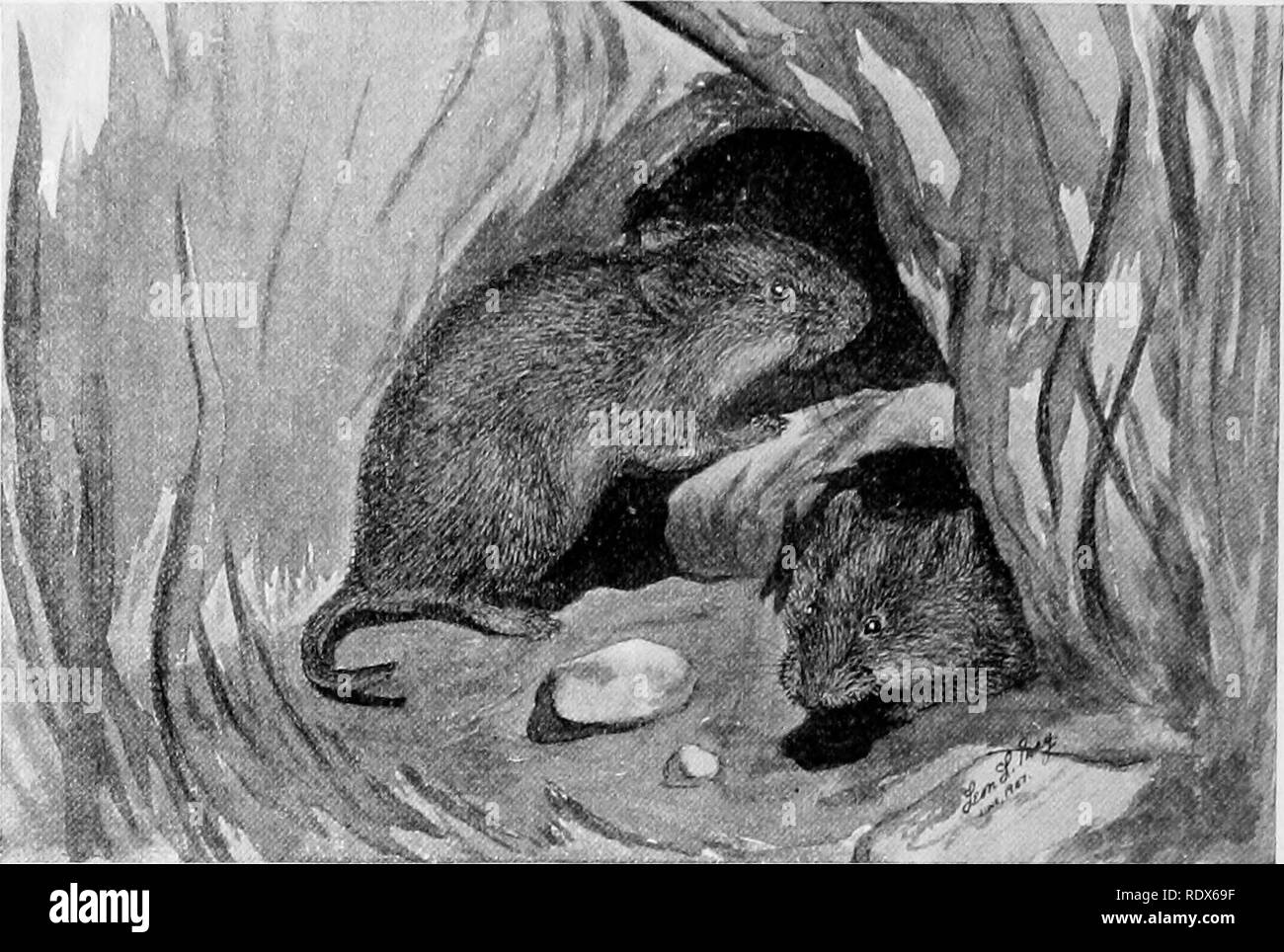
Image details
Contributor:
The Book WormImage ID:
RDX69FFile size:
7.2 MB (470.3 KB Compressed download)Releases:
Model - no | Property - noDo I need a release?Dimensions:
1927 x 1297 px | 32.6 x 22 cm | 12.8 x 8.6 inches | 150dpiMore information:
Access rights only. This is a handout or public domain image supplied by a third party. Alamy grants access to the digital file but provides no warranties regarding copyright or moral rights. Alteration, modification, or cropping is prohibited without prior approval. All commercial uses require advance authorization from the content provider.
This image could have imperfections as it’s either historical or reportage.
. [Collected reprints, 1912-1919. Mammals; Mammals; Birds. 220 Field Museum or Natural History — Zoology, Vol. XI.. Prairie Meadow Mouse or Prairie Vole (Microtus ochrogaster). opening on one side. This burrow and nest are occupied in winter, and in it at least the first litter of young is produced in the spring; but, in the summer and fall, these meadow-mice may be found in similar nests in the grass above ground, in which the young are often, if not usually, brought forth. Nests formed under the snow in winter are also occupied by them. From the burrows, innumerable runways traverse the neighborhood, intersecting those from other burrows, thus forming a complete net-work so that often scarcely a square yard can be found in an acre not crossed by one or more of these tracks. The runways of one pair may sometimes be traced five or ten rods on every side. These roads are not only formed for use in winter, when the ground is covered with snow, but are also employed as highways in summer. They are made above ground by pressing down and gnawing off the grass, and the earth is often worn quite smooth and bare in those most used. The inhabitants can travel easily along them at all times, in search of food, being well concealed by the overarching grass. In winter, these paths are formed on the ground, under the snow, as well as in the grass. The mice do not inhabit prairie pastures, where the grass is eaten close and affords them no cover. "Upon examining, in November, the burrow of a pair of these meadow-mice, situated on the wild prairie, I found the excavation to have been recently enlarged. The nest was placed near the centre of. Please note that these images are extracted from scanned page images that may have been digitally enhanced for readability - coloration and appearance of these illustrations may not perfectly resemble the original work.. Cory, Charles B. (Charles Barney), 1857-1921. s. l. , s. n.

