
Borthwicks Close, Royal Mile, Edinburgh old town, Lothian, Scotland, UK, EH1 1TB - 1450
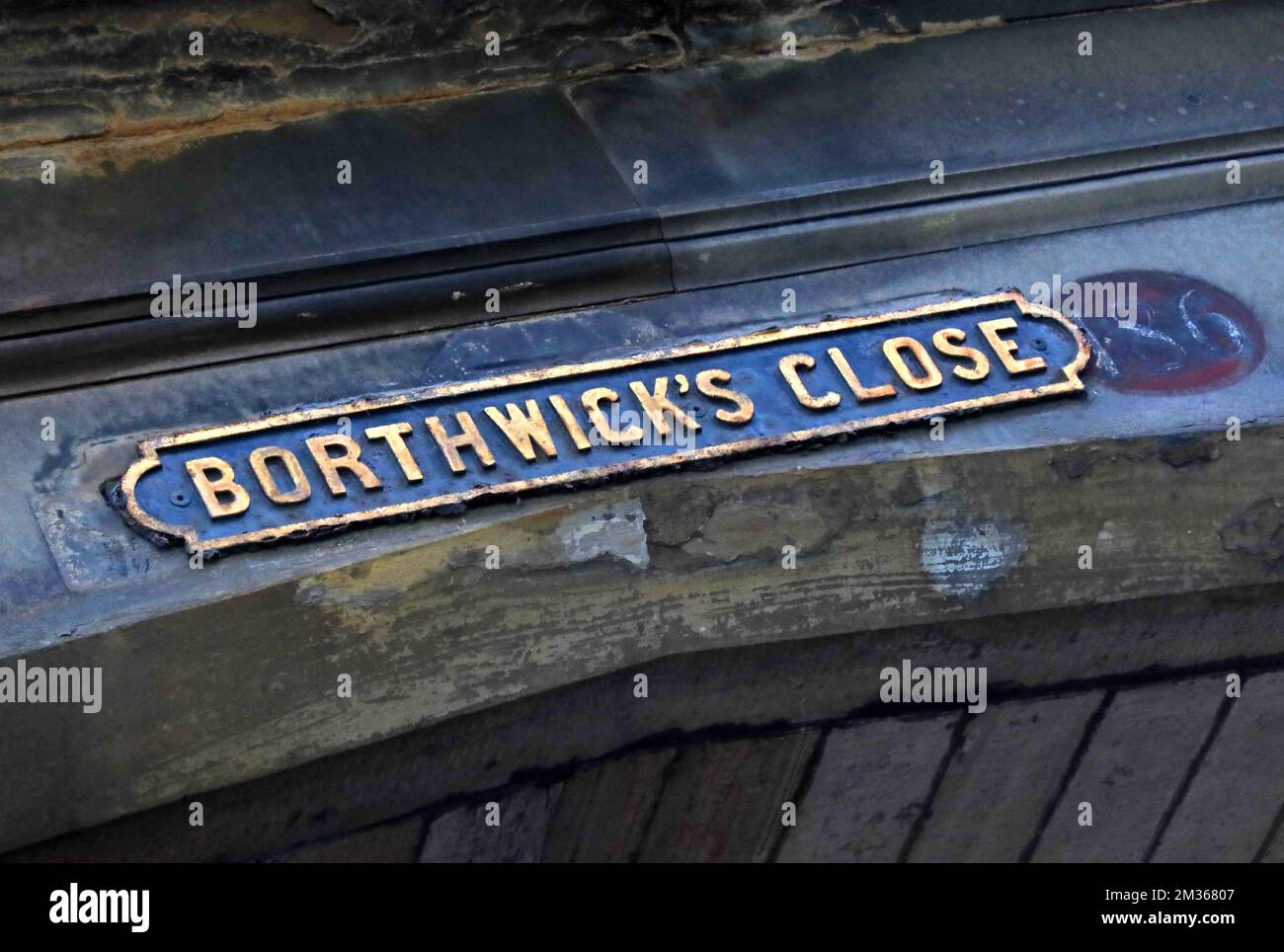
Image details
Contributor:
Tony SmithImage ID:
2M36807File size:
46.3 MB (1.7 MB Compressed download)Releases:
Model - no | Property - noDo I need a release?Dimensions:
4908 x 3300 px | 41.6 x 27.9 cm | 16.4 x 11 inches | 300dpiDate taken:
27 November 2022Location:
Borthwicks Close, Royal Mile, Edinburgh old town, Lothian, Scotland, UK, EH1 1TBMore information:
. Borthwicks Close, Royal Mile, Edinburgh old town, Lothian, Scotland, UK, EH1 1TB - 1450. Photographed on 27 November 2022. Dates back to 1450 and is known to have housed the residences of Lord Borthwick (Castle near Middleton) and Lord Napier of Merchiston. In the longer view, heritage photography is particularly useful where structures or objects have changed function; A former workplace, shop, transport structure or piece of equipment can become a museum object or landmark, linking everyday history with conservation and interpretation. In the longer view, public wording is part of the visual landscape; Direction signs, warning notices, painted advertisements and engraved plaques show how authorities and businesses communicated before digital screens and app-based information became widespread. Current 2026 relevance comes from the fact that heritage remains economically and culturally significant through tourism, education and place-making, while the cost of maintaining historic fabric creates continuing debate about conservation and reuse. Current 2026 relevance comes from the fact that much public information has moved onto smartphones and digital displays, making older fixed signs and printed notices increasingly useful as evidence of how people once navigated places, bought services and followed rules. In historical terms, older buildings and artefacts provide tangible evidence that written records cannot fully replace; Their wear, construction, signage and setting help researchers understand local history, design, industry and social life across different periods. From a heritage perspective, historic objects and places gain meaning through survival; Materials, craftsmanship, inscriptions and later alterations can reveal how a building, machine or everyday item was made, used and valued, while preservation decisions show which parts of the past communities choose to retain.

