
Melrose Close, Royal Mile, Edinburgh old town, Lothian, Scotland, UK, EH1 1TH, now part of the Radisson Blu Hotel
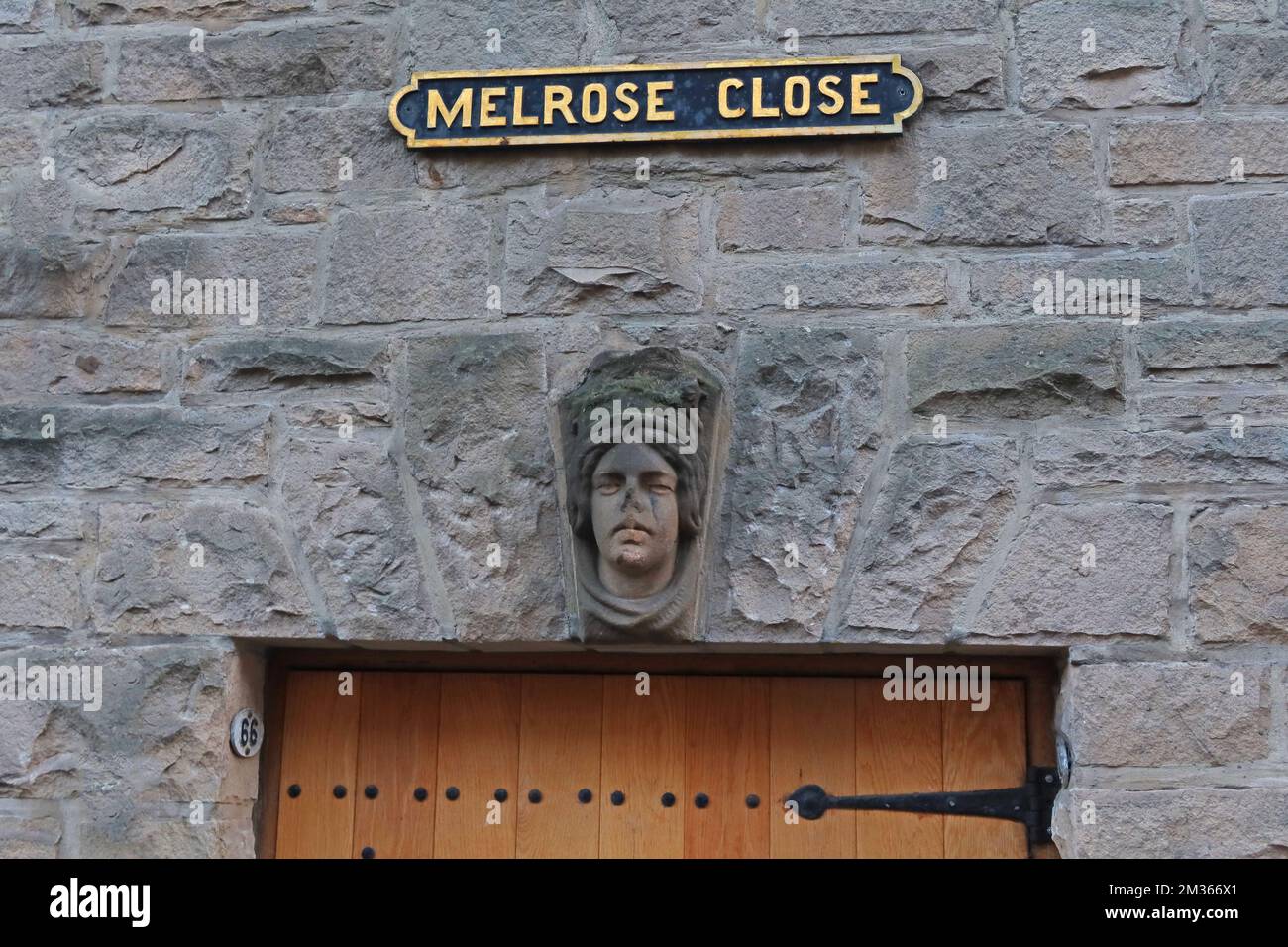
Image details
Contributor:
Tony SmithImage ID:
2M366X1File size:
57.1 MB (2.8 MB Compressed download)Releases:
Model - no | Property - noDo I need a release?Dimensions:
5472 x 3648 px | 46.3 x 30.9 cm | 18.2 x 12.2 inches | 300dpiDate taken:
27 November 2022Location:
Melrose Close, Royal Mile, Edinburgh old town, Lothian, Scotland, UK, EH1 1THMore information:
. Melrose Close, Royal Mile, Edinburgh old town, Lothian, Scotland, UK, EH1 1TH, now part of the Radisson Blu Hotel. Photographed on 27 November 2022. It takes its name from the residence of Andrew Durie, Abbot, 1526. It was later occupied by Lord Strichen in the mid- 1700s and is now incorporated into The Radisson Blu Hotel. As background, older buildings and artefacts provide tangible evidence that written records cannot fully replace; Their wear, construction, signage and setting help researchers understand local history, design, industry and social life across different periods. From a heritage perspective, public art can become part of the identity of a street or neighbourhood, recording political ideas, community history, humour, memory and changing cultural tastes; Murals, sculpture and decorative art are especially valuable as documentary subjects because they may be altered, moved, weathered or removed. Against the 2026 backdrop, conservation is increasingly considered alongside regeneration, climate resilience and adaptive reuse; The value of a historic subject therefore lies not only in nostalgia but in the evidence it provides about materials, local identity and how places change. As of 2026, contemporary interest in public art is closely linked to regeneration and cultural tourism. murals and sculpture continue to be used to express identity and animate public space, while redevelopment can make photographic records of earlier works increasingly valuable. From a heritage perspective, historic objects and places gain meaning through survival; Materials, craftsmanship, inscriptions and later alterations can reveal how a building, machine or everyday item was made, used and valued, while preservation decisions show which parts of the past communities choose to retain. Closely associated editorial terms include historic environment, period detail, historic fabric, heritage asset, social history, architectural history, and restoration.

