
Statue of Constantine the Great, Roman emperor from AD 306 to 337, in York, in front of York Minster, Deangate, York, Yorkshire, England, UK, YO1 7HH
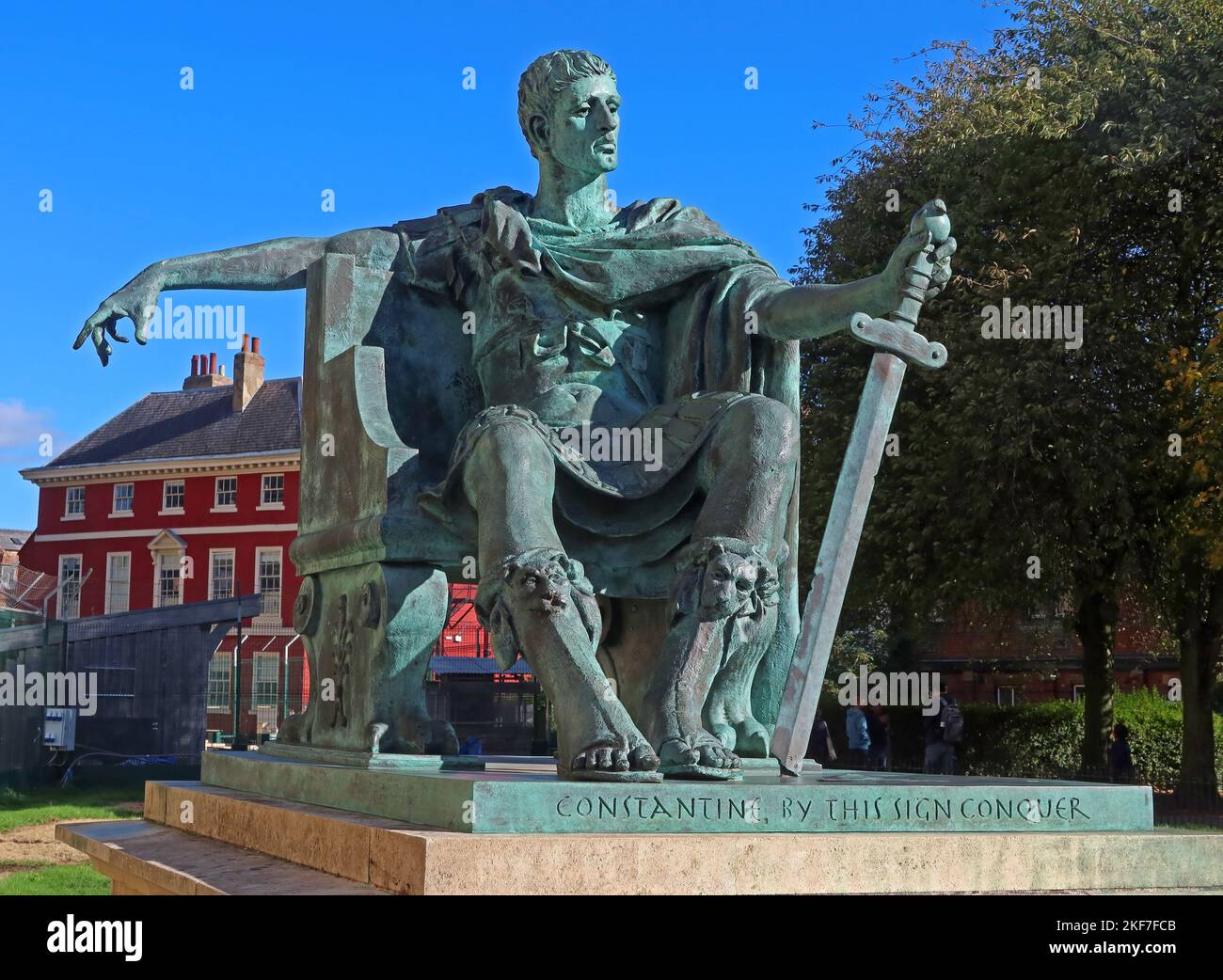
Image details
Contributor:
Tony SmithImage ID:
2KF7FCBFile size:
52 MB (2.2 MB Compressed download)Releases:
Model - no | Property - noDo I need a release?Dimensions:
4980 x 3648 px | 42.2 x 30.9 cm | 16.6 x 12.2 inches | 300dpiDate taken:
16 October 2022Location:
Deangate, York, Yorkshire, England, UK, YO1 7HHMore information:
Bronze statue of Constantine the Great sits prominently in Minster Yard beside York Minster in the historic centre of York, North Yorkshire. Photographed in bright sunshine beneath a clear blue sky, the monumental seated figure wears Roman military clothing and imperial robes. His right arm extends outward while his left hand grips a long sword. Lion-head details decorate the throne, and the green patina of the bronze contrasts strongly with the blue sky, surrounding trees and red building behind the monument. The inscription across the plinth reads “CONSTANTINE, BY THIS SIGN CONQUER”. Constantine was proclaimed emperor by his troops at Eboracum, the Roman name for York, in AD 306 following the death of his father, Constantius Chlorus. He went on to rule from 306 until 337 and became one of the most influential emperors in Roman history. His reign is closely associated with the transformation of the Roman Empire, the rise of Christianity and the foundation of Constantinople. The wording on the plinth refers to the tradition expressed by the Latin phrase “in hoc signo vinces”, meaning “in this sign, conquer”. The statue was commissioned by York Civic Trust to commemorate Constantine’s accession in York. Sculptor Philip Jackson created the life-size-and-a-third bronze work, which was unveiled in 1998 by former Archbishop of York and Canterbury Lord Coggan. Its position near the south transept of York Minster connects the modern public artwork with the city’s Roman past and later Christian heritage. The image is useful for editorial subjects including Roman Britain, Constantine the Great, ancient history, Christianity, public sculpture, civic commemoration, York tourism, Yorkshire landmarks and cultural heritage. The strong low viewpoint emphasises the authority of the seated emperor, while the sword, throne, inscription and architectural setting provide clear visual details for travel, history and education features.

