
Silverware plate and trays at Dunham Massey house NT property, Altrincham, Greater Manchester, England, UK
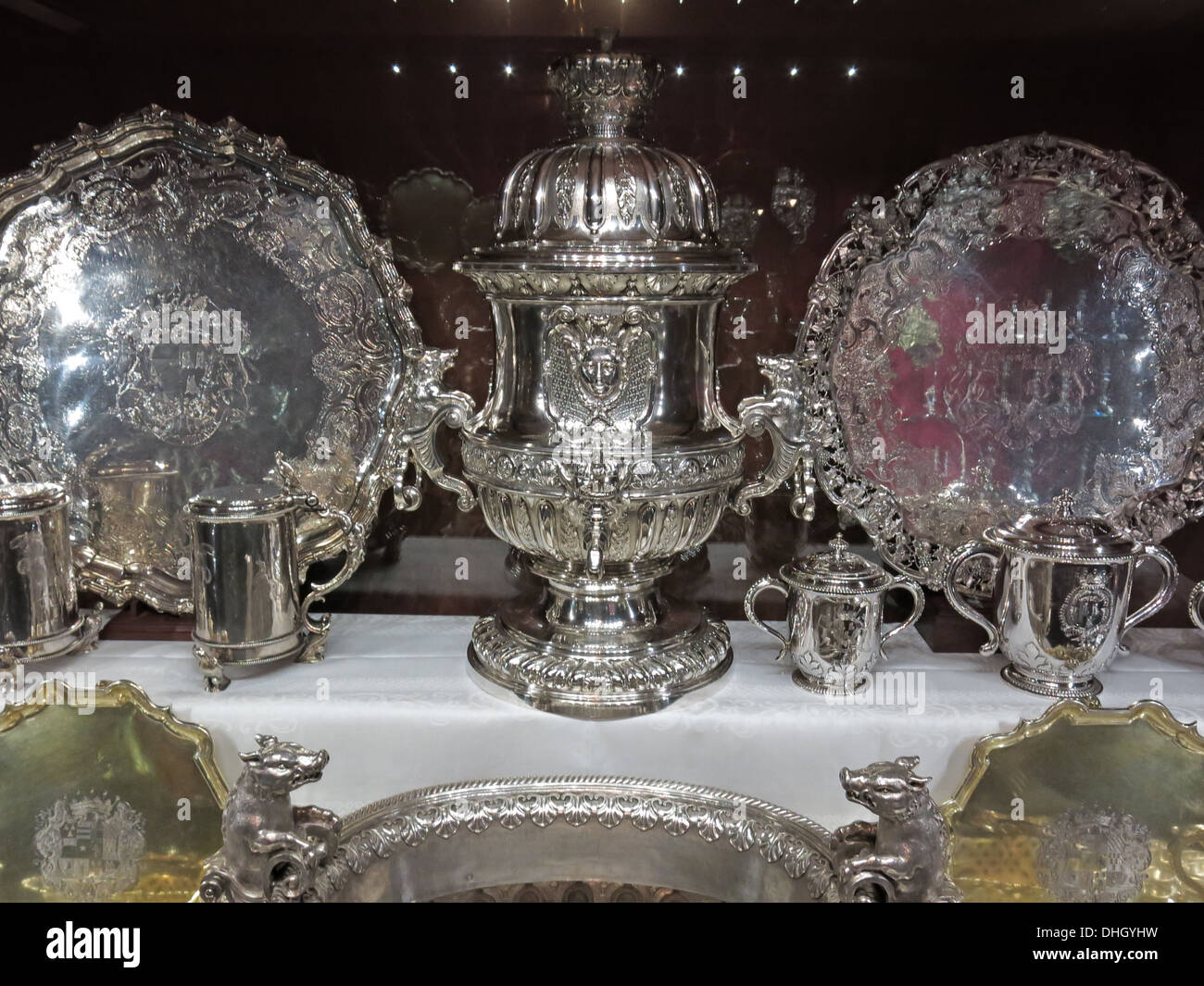
Image details
Contributor:
Tony SmithImage ID:
DHGYHWFile size:
34.3 MB (1.5 MB Compressed download)Releases:
Model - no | Property - noDo I need a release?Dimensions:
4000 x 3000 px | 33.9 x 25.4 cm | 13.3 x 10 inches | 300dpiDate taken:
15 September 2013Location:
Dunham Massey, Altrincham, Cheshire, England, UKMore information:
. Silverware plate and trays at Dunham Massey house NT property, Altrincham, Greater Manchester, England, UK. Photographed on 15 September 2013. The recorded location is Dunham Massey, Altrincham, Cheshire, England, UK. Commissioned by Lord Warrington for the Great Bedchamber at Dunham Massey. Archambo was an eminent Huguenot goldsmith.;Provenance. Formerly in the collection of George Booth, 2nd Earl of Warrington (1675-1758); now at Sotheby's. As background, historic interiors combine architecture with material culture; Furniture, clocks, silverware, screens, organs and decorative schemes can reveal craftsmanship, status and institutional use in ways that a façade alone cannot convey. In the longer view, museums and heritage attractions turn surviving objects and places into interpreted public history; Displays, reconstructed rooms and preserved machinery can place everyday artefacts within broader stories of work, domestic life, conflict, design and technological change. Against the 2026 backdrop, restoration projects increasingly emphasise retaining significant interiors as well as façades, making earlier photographs useful evidence when rooms are refurbished, repurposed or opened to visitors. Current 2026 relevance comes from the fact that heritage attractions increasingly combine physical collections with digital interpretation and events, but the authenticity of original objects and settings continues to be central to their appeal. From a heritage perspective, interiors preserve details that exterior photographs cannot show: furniture, fittings, decorative finishes and room layouts reveal how structures were actually used; Such features are often altered during refurbishment even when the outside remains unchanged. As of 2026, restoration projects increasingly emphasise retaining significant interiors as well as façades, making earlier photographs useful evidence when rooms are refurbished, repurposed or opened to visitors.

