
Old signwriting on university buildings at 12 Nicholson Square, Edinburgh City, Lothians, Scotland , UK
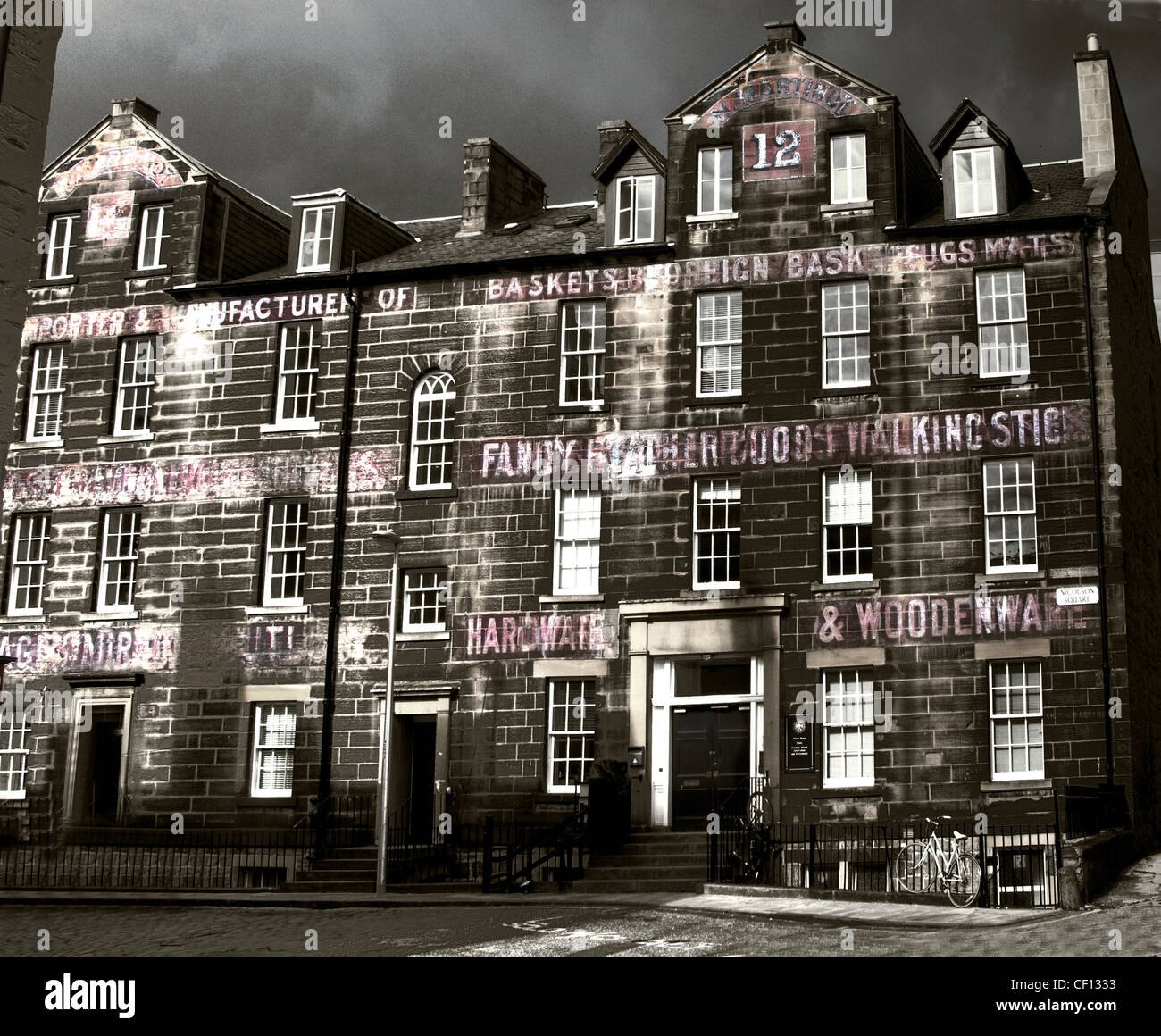
Image details
Contributor:
Tony SmithImage ID:
CF1333File size:
33.4 MB (2 MB Compressed download)Releases:
Model - no | Property - noDo I need a release?Dimensions:
3763 x 3100 px | 31.9 x 26.2 cm | 12.5 x 10.3 inches | 300dpiDate taken:
2010Location:
12 Nicholson Square, Edinburgh City, Lothians, Scotland , UKMore information:
. Old signwriting on university buildings at 12 Nicholson Square, Edinburgh City, Lothians, Scotland , UK. Photographed on 1 January 2010. 12 and 14 Nicolson Square are lovely old buildings in the old town of Edinburgh with distinctive old faded painted sign remnants in red. Looking at the subject's development, historic objects and places gain meaning through survival; Materials, craftsmanship, inscriptions and later alterations can reveal how a building, machine or everyday item was made, used and valued, while preservation decisions show which parts of the past communities choose to retain. In historical terms, town and city centres are continually rewritten by new buildings, transport schemes and evolving commercial uses; Photographs preserve the everyday fabric between major landmarks, including underpasses, arcades, back streets and small businesses that may disappear during redevelopment. The historical context is that public wording is part of the visual landscape; Direction signs, warning notices, painted advertisements and engraved plaques show how authorities and businesses communicated before digital screens and app-based information became widespread. For the 2026 context, heritage remains economically and culturally significant through tourism, education and place-making, while the cost of maintaining historical fabric creates continuing debate about conservation and reuse. During 2026, urban regeneration in England continues to focus on town-centre renewal, housing, public realm and reuse of vacant commercial property; Earlier street scenes provide valuable before-and-after evidence of these changes and of the businesses or structures lost along the way. In the present 2026 context, conservation is increasingly considered alongside regeneration, climate resilience and adaptive reuse; The value of a historic subject therefore lies not only in nostalgia but in the evidence it provides about materials, local identity and how places change.

