
Antique stoneware brewery flagons and jars associated with Taunton, Somerset.
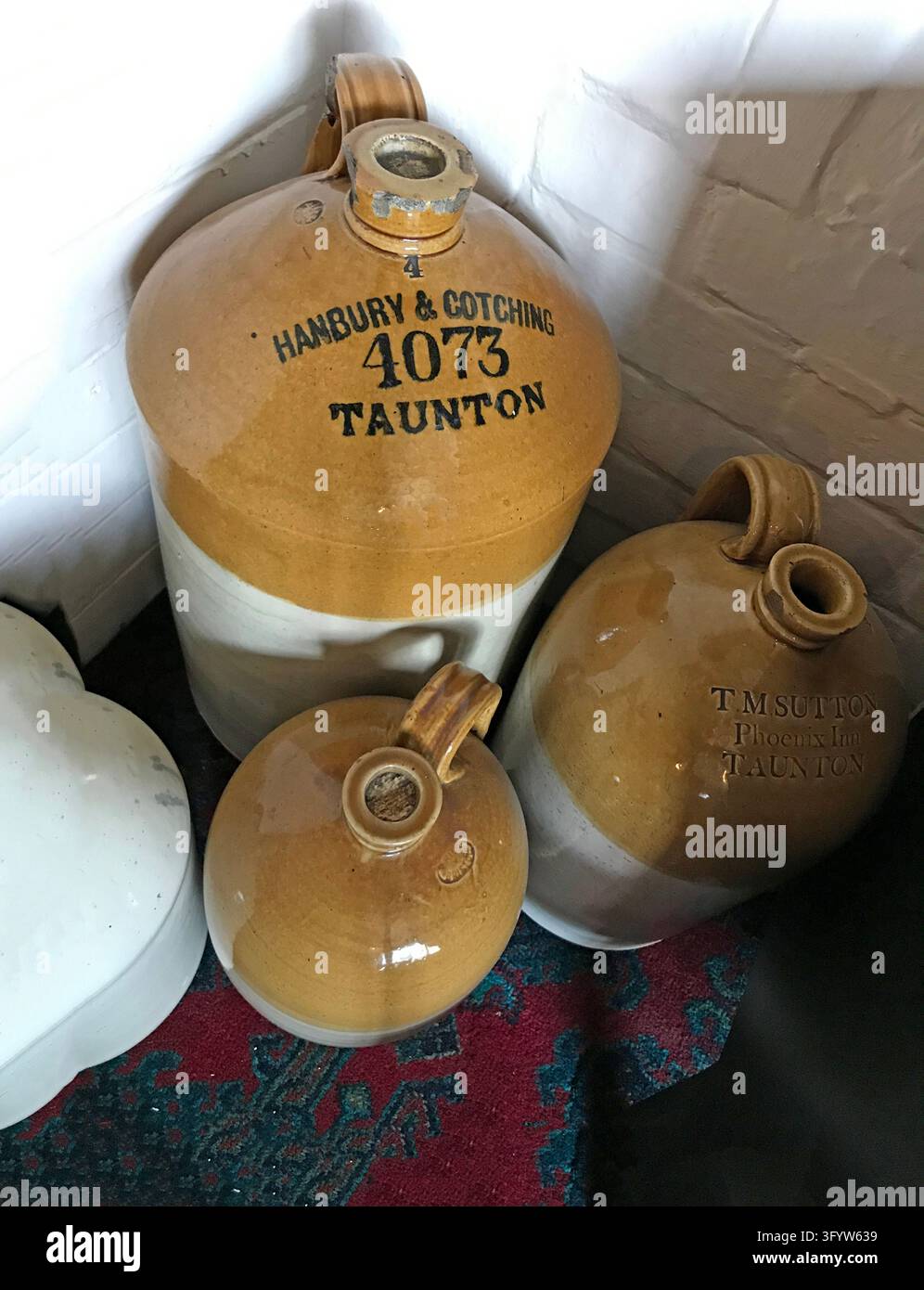
Image details
Contributor:
Tony SmithImage ID:
3FYW639File size:
46.7 MB (1.4 MB Compressed download)Releases:
Model - no | Property - noDo I need a release?Dimensions:
3537 x 4615 px | 29.9 x 39.1 cm | 11.8 x 15.4 inches | 300dpiDate taken:
30 April 2019More information:
. Several large brown glazed stoneware vessels stand together indoors, including a handled container labelled with a brewery-related inscription and the place name Taunton. Their curved bodies, narrow necks, ceramic surfaces and hand-finished appearance distinguish them from modern beverage packaging. Such vessels were used for storing and distributing liquids, including beer and other drinks, before disposable packaging became widespread. The photograph is a close study of historic domestic and commercial stoneware, with legible lettering and contrasting vessel shapes offering clues to provenance and former use. Several substantial brown ceramic flagons are arranged together, with raised shoulders, narrow necks and small loop handles. Their glazed surfaces range from dark amber to warm tan, with worn areas and old lettering contributing to a visibly aged character. Stoneware vessels of this kind were traditionally used in Britain to hold and transport liquids, including beer, cider, spirits or other goods, depending on the maker and customer. Before modern disposable packaging became widespread, reusable pottery containers could be marked with the name of the supplier, an address or identifying information. The jugs' robust shapes, short spouts or mouths and firmly attached handles reflect that practical function. Taunton is the county town of Somerset, an area with a long agricultural and cider-making history, with the vessel shapes, handles and printed marks providing distinctive physical details. The objects are grouped on a surface under indoor lighting, allowing their varied sizes and decorative lettering to be compared. Glazed pottery develops small variations in colour and texture through manufacture and use, making antique examples visually individual. The image documents historic British containers and trade branding through the physical evidence of clay, glaze, handles and inscriptions.

