
Airport duty-free tobacco shop displaying cigarettes behind screens at Manchester Airport, UK.
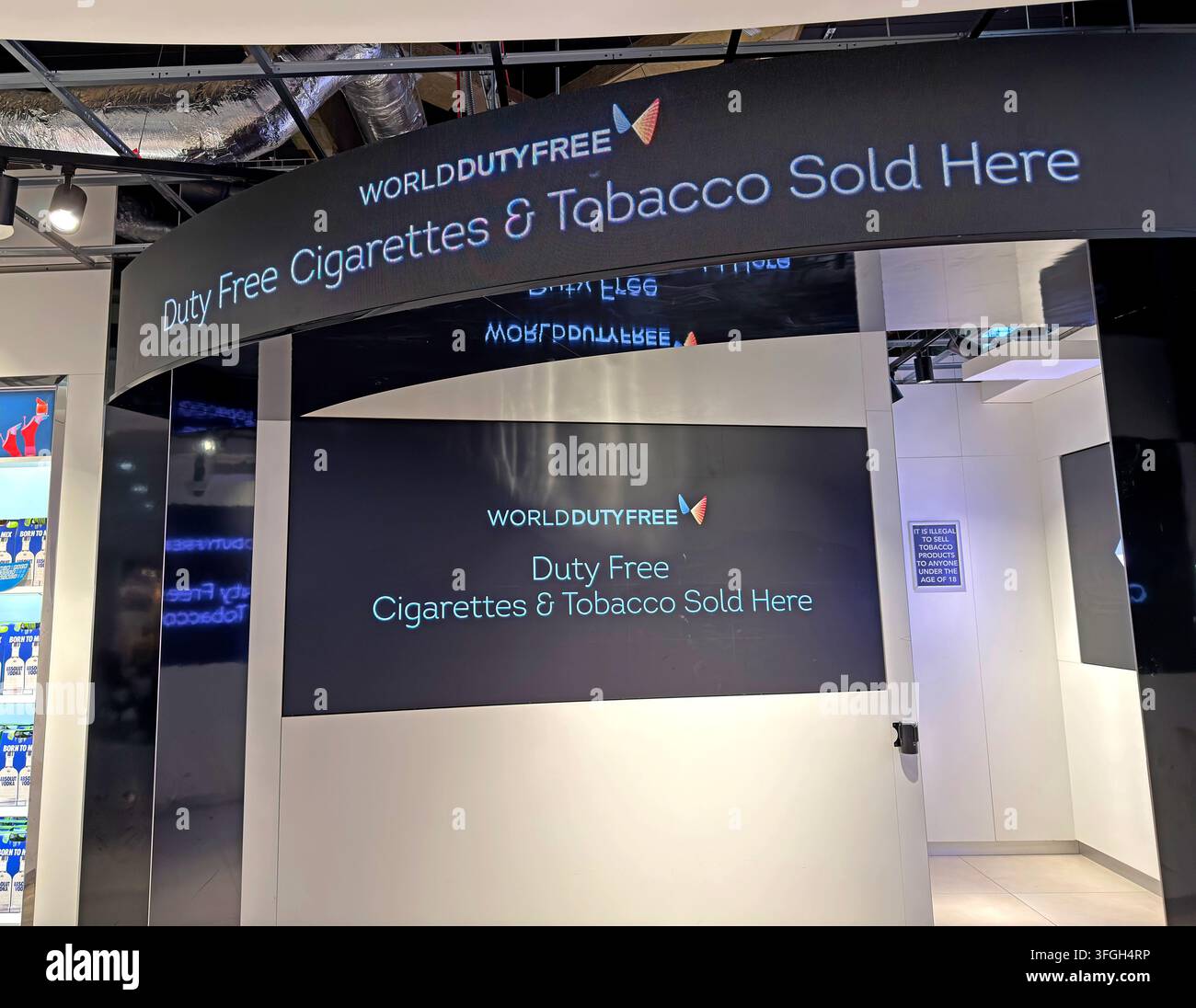
Image details
Contributor:
Tony SmithImage ID:
3FGH4RPFile size:
65.6 MB (2.2 MB Compressed download)Releases:
Model - no | Property - noDo I need a release?Dimensions:
5440 x 4212 px | 46.1 x 35.7 cm | 18.1 x 14 inches | 300dpiDate taken:
8 September 2026Location:
Manchester Airport, Ringway Road, Manchester, M90 1QXMore information:
. A World Duty Free tobacco sales area at Manchester Airport advertises duty-free cigarettes and tobacco, with products kept behind screened or controlled displays rather than openly merchandised. The dark branded unit contrasts with the wider terminal retail environment. Tobacco retail is increasingly constrained by public-health regulation, display restrictions, health warnings and declining smoking rates, yet duty-free sales remain a feature of many international airports. Travel retail also reflects different tax and customs rules depending on destination. The image captures the tension between a long-established airport product category and policies designed to reduce the visibility and consumption of tobacco. The words 'Duty Free Cigarettes & Tobacco Sold Here' remain prominently advertised even though the products themselves are concealed, a visual consequence of tighter tobacco-display rules. Airport shops occupy a special retail environment because travellers may qualify for different allowances depending on destination and customs status. The result is a category that is commercially important to travel retailers while simultaneously subject to strong health warnings, age controls and policy aimed at reducing smoking. Independent specialist businesses can add resilience to a town centre by giving shoppers reasons to visit that are not duplicated by every national shopping destination. Re-use of older commercial buildings can keep historic façades in active use, although modern signage and accessibility requirements often alter their appearance over time. Shopfronts can change occupier quickly while the building behind them lasts for decades, so retail photography often records a temporary layer of town-centre history. The shift from goods towards food, grooming, leisure and other services is changing the mix of many British high streets because these activities cannot be delivered entirely online.

