
Eccles transport interchange in Salford, Greater Manchester, serving buses and Metrolink trams.
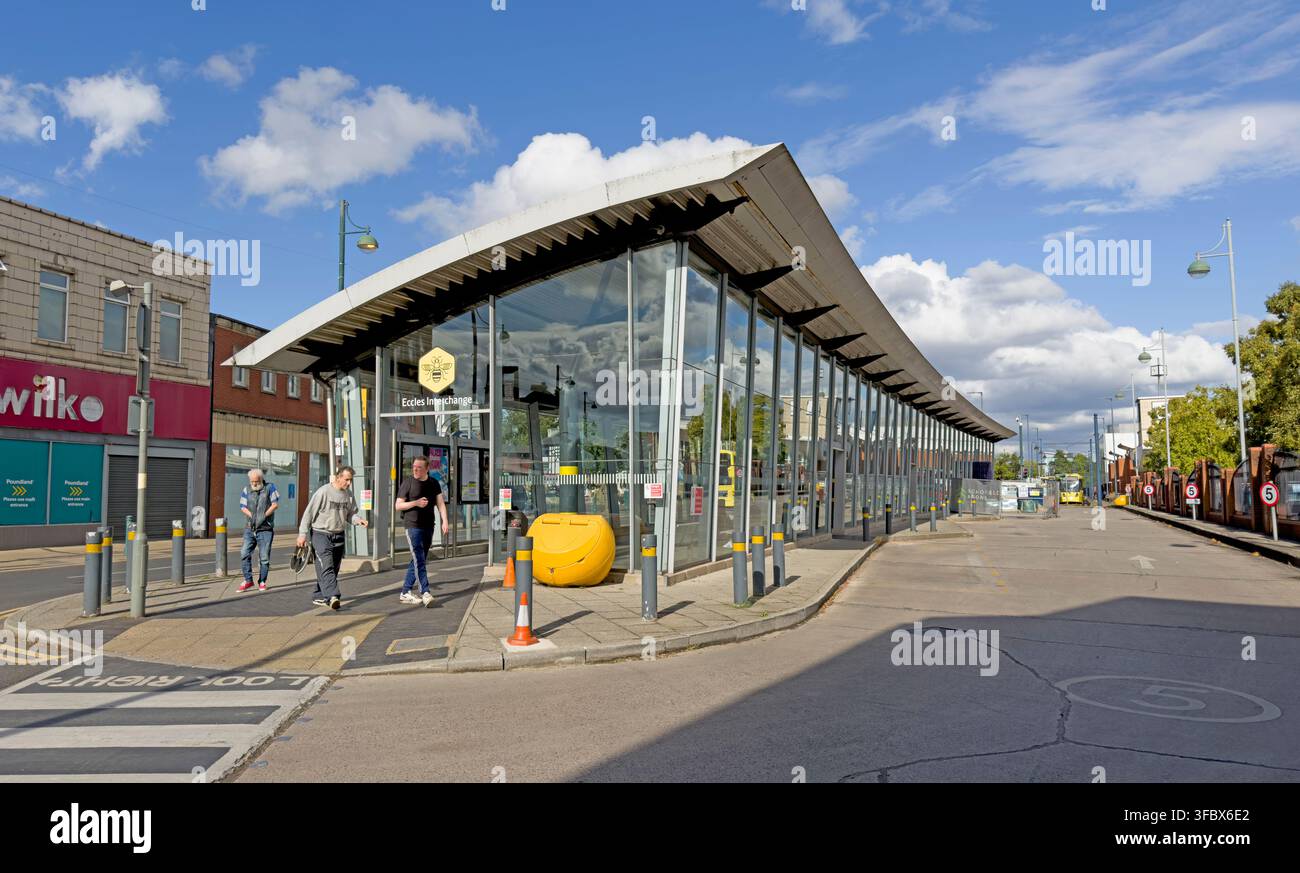
Image details
Contributor:
Tony SmithImage ID:
3FBX6E2File size:
85.9 MB (2.6 MB Compressed download)Releases:
Model - no | Property - noDo I need a release?Dimensions:
7060 x 4255 px | 59.8 x 36 cm | 23.5 x 14.2 inches | 300dpiDate taken:
19 August 2026Location:
Eccles Interchange, Church Street, Eccles, Salford, Greater Manchester, England, UKMore information:
. Eccles Interchange serves the town of Eccles in Salford as a combined public-transport hub for local bus services and the Manchester Metrolink tram network. Its central location allows passengers to transfer between bus and tram services close to the shopping area and town centre, making it an important everyday connection point for journeys across western Greater Manchester. Eccles is the western terminus of one of the established Metrolink routes, linking the town with Salford Quays, MediaCity and central Manchester. The interchange also sits within the wider Bee Network programme, which aims to create a more integrated approach to buses, trams, walking and cycling across Greater Manchester. The modern canopy, passenger waiting areas and surrounding streetscape show how transport facilities are embedded within the town centre rather than operating as isolated infrastructure. Interchanges such as Eccles are significant to policies seeking to reduce car dependence, improve access to employment and services, and make transfers between modes easier. Eccles interchange brings bus and Metrolink services together in one town-centre hub, supporting integrated journeys, commuter travel and public-transport access across Salford and Greater Manchester. Eccles is particularly well suited to interchange because bus routes serving surrounding Salford neighbourhoods meet a tram line offering direct access towards Manchester. The quality of the interchange therefore affects more than the immediate town centre: it shapes whether multi-stage public-transport journeys feel practical enough to compete with private car travel. The interchange consequently illustrates how relatively modest town-centre transport buildings can have network-wide importance when they make transfers predictable, sheltered and easy to understand. The interchange building and stops make transfers between local buses and Manchester Metrolink easier and more legible.

