
Historic Liverpool tobacco warehouse stone detail with carved Wade and Co lettering, Liverpool, England, UK.
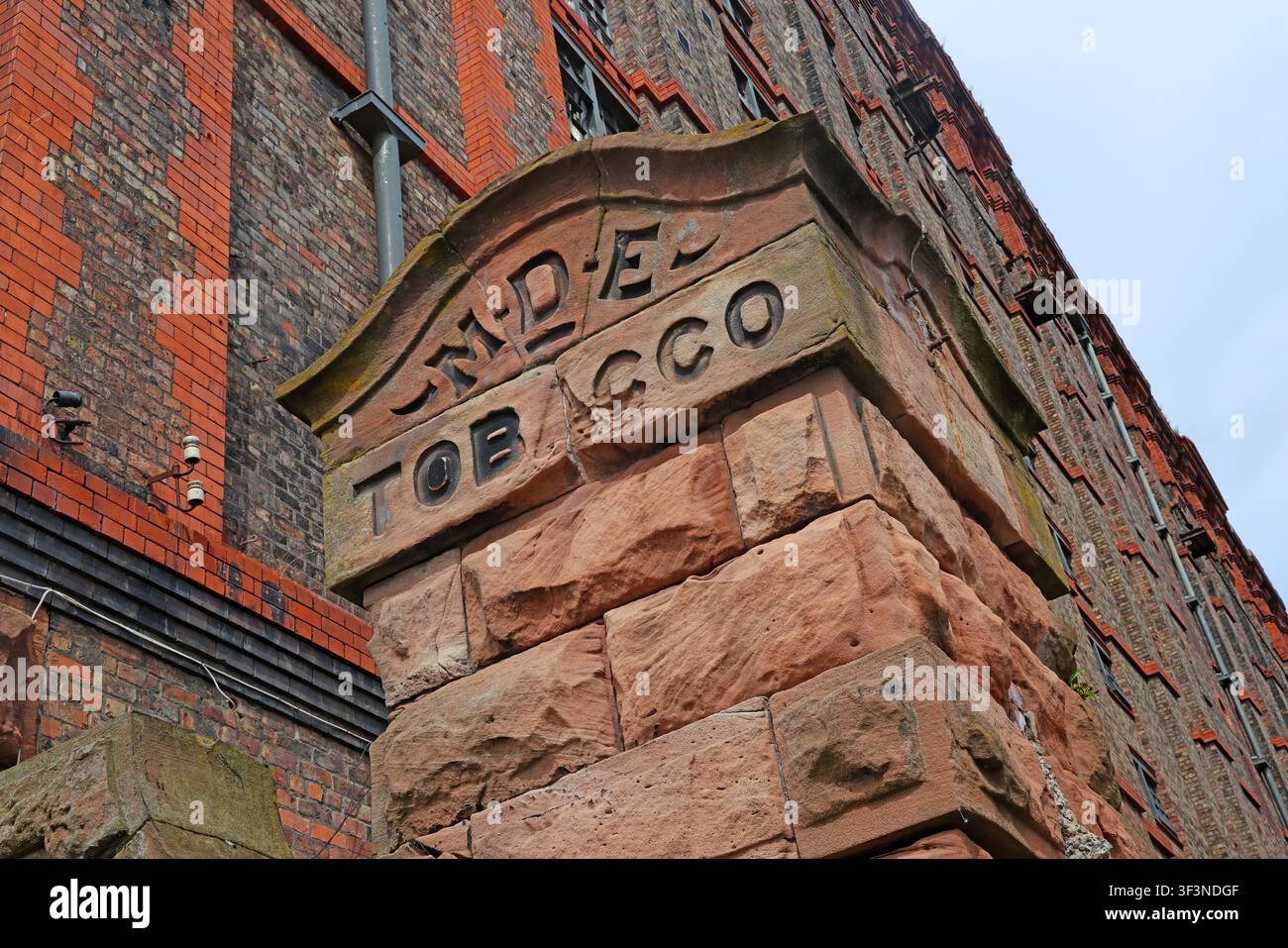
Image details
Contributor:
Tony SmithImage ID:
3F3NDGFFile size:
110 MB (6.9 MB Compressed download)Releases:
Model - no | Property - noDo I need a release?Dimensions:
7592 x 5064 px | 64.3 x 42.9 cm | 25.3 x 16.9 inches | 300dpiDate taken:
30 May 2026Location:
Liverpool, Merseyside, England, UKMore information:
. Historic Liverpool tobacco warehouse stone detail with carved Wade and Co lettering, Liverpool, England, UK. Photographed on 30 May 2026. The recorded location is Liverpool, Merseyside, England, UK. Historic stone architectural detail on a former tobacco or dock warehouse in Liverpool, England, UK, showing carved WADE and Co lettering set into red brickwork. The close view is suitable for editorial use on Liverpool's mercantile and dock heritage, tobacco trade history, industrial architecture, warehouse buildings, carved commercial signage and the city's historic waterfront economy. For industrial archaeology, the historical context is that factories, mills, mines and workshops record the technologies and labour that powered industrial expansion; Machinery, inscriptions and specialist buildings are valuable evidence of engineering practice, working conditions and regional industries. Looking at lifeline ferry, the longer history is that working harbours combine civil engineering with everyday transport; Their breakwaters, piers, navigation lights and boarding areas reflect successive generations of investment as traditional fishing and coastal shipping have been joined by tourism, cruise traffic and lifeline ferry services. The background to typography is that signs are functional pieces of graphic design that organise movement and communicate rules, names or destinations; Lettering, symbols, colours and materials can date public space as clearly as architecture, particularly when organisations rebrand or regulations evolution. For industrial archaeology, the 2026 context is that industrial heritage is increasingly tied to regeneration, tourism, conservation and skills education, particularly in former manufacturing towns seeking new uses for historic sites. In 2026, lifeline ferry remains relevant because current 2026 transport policy places increasing emphasis on integrated journeys, active travel and lower-emission fleets, so ferry terminals now.

