
London Borough of Hackney maintenance van branded Working for Better Homes, representing its mobile social housing repairs workforce.
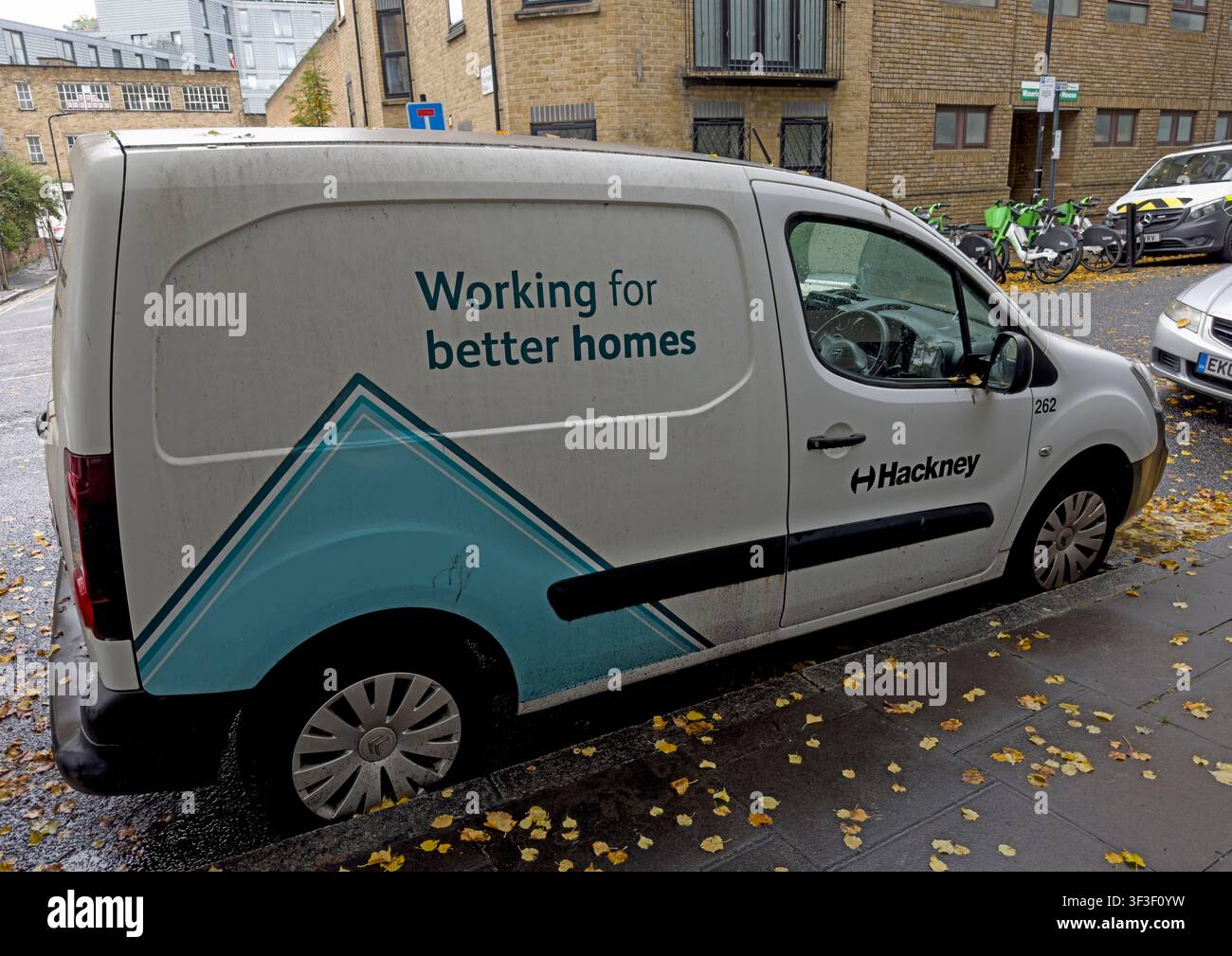
Image details
Contributor:
Tony SmithImage ID:
3F3F0YWFile size:
93.6 MB (3.3 MB Compressed download)Releases:
Model - no | Property - noDo I need a release?Dimensions:
6800 x 4812 px | 57.6 x 40.7 cm | 22.7 x 16 inches | 300dpiDate taken:
1 November 2023Location:
LBH Hackney, East LondonMore information:
London Borough of Hackney housing maintenance van parked on a wet residential street in East London during autumn. The white panel van carries Hackney branding, a turquoise house-shaped graphic and the slogan “Working for better homes”. Fallen yellow leaves cover the pavement and roadway, while brick housing blocks, parked vehicles and a bicycle docking station form the surrounding inner-city scene. The vehicle represents the mobile workforce responsible for maintaining council homes, leasehold blocks, estates and communal areas across the borough. Repairs operatives may include plumbers, electricians, carpenters, surveyors, labourers and other skilled trades travelling between appointments with tools, equipment and replacement materials. Mobile working systems allow jobs, inspections, photographs, risk information and completion details to be recorded while staff are in residents’ homes. This frontline repairs capacity is increasingly important as English social housing providers comply with Awaab’s Law. Phase 1 came into force on 27 October 2025, placing legally enforceable duties on landlords to investigate and address significant damp and mould hazards within fixed timescales and to respond to emergency hazards within 24 hours. Providers need reliable reporting, triage, inspection, scheduling, contractor management, resident communication and evidence that homes have been made safe. Phase 2 is due to take effect on 30 November 2026, extending the significant-hazard requirements beyond damp and mould. It will cover excess cold and heat, falls, structural collapse, fire and explosions, electrical hazards, and domestic or personal hygiene and food-safety risks. Councils and housing associations must therefore ensure that their repairs services, asset data, call handling, out-of-hours arrangements and mobile workforces can identify vulnerable residents and complete urgent action within statutory deadlines. The photograph illustrates council housing repairs

