
Red neon sign reading “Life Is Better With Biriyani” inside a contemporary Indian restaurant promoting the popular South Asian rice dish.
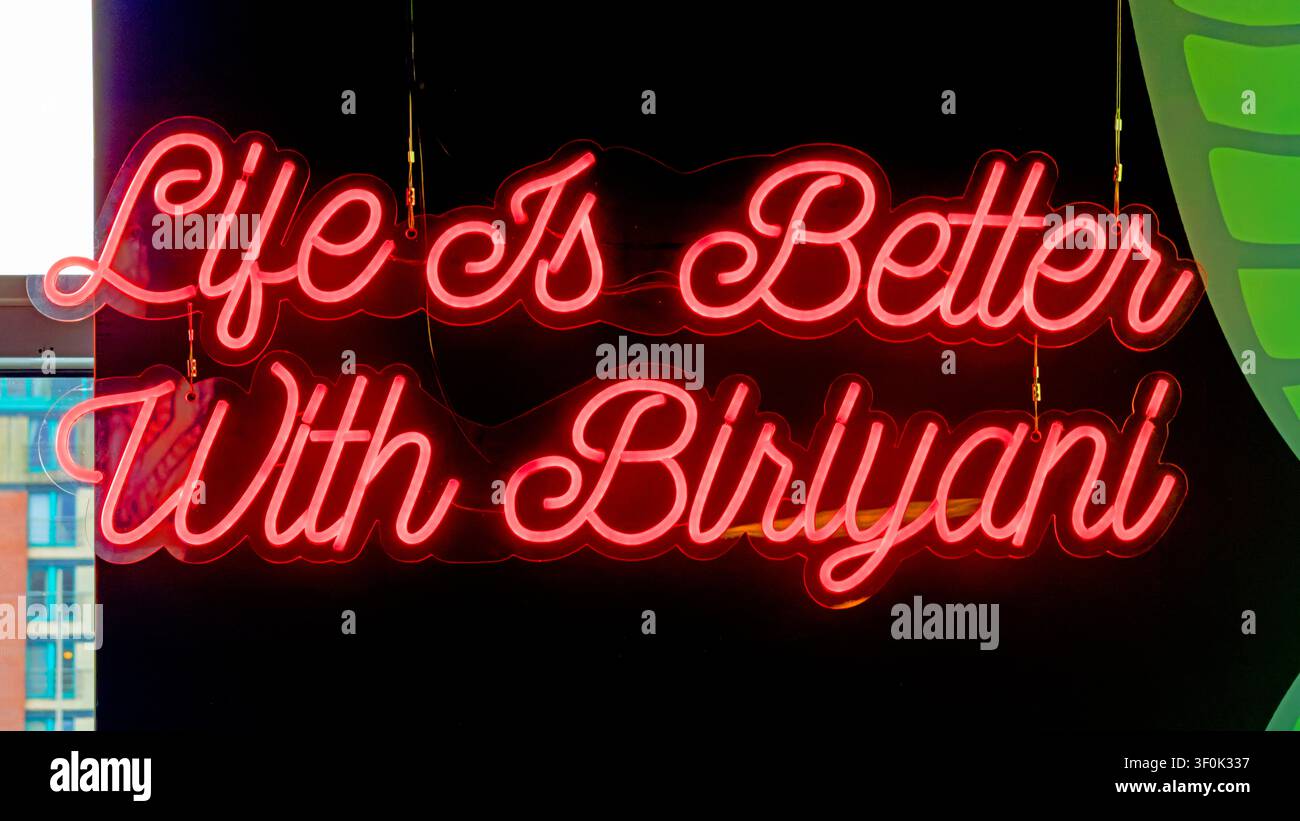
Image details
Contributor:
Tony SmithImage ID:
3F0K337File size:
104.7 MB (2 MB Compressed download)Releases:
Model - no | Property - noDo I need a release?Dimensions:
8064 x 4536 px | 68.3 x 38.4 cm | 26.9 x 15.1 inches | 300dpiDate taken:
9 June 2026Location:
Dundee, ScotlandMore information:
Vivid red neon sign reads “Life Is Better With Biriyani” against a dark restaurant interior. The phrase is formed in flowing cursive script over two lines, with the glowing tubes producing a warm pink-red halo around each letter. The close framing isolates the illuminated message while fragments of a window and green graphic decoration remain visible at the edges. The playful slogan turns enthusiasm for biriyani into a bold decorative feature and marketing statement. Neon phrases of this kind are common in contemporary restaurants, cafés and takeaway venues, where they provide atmospheric lighting, reinforce brand personality and create an eye-catching backdrop for customer photographs and social media posts. Here, the handwritten lettering and saturated colour give the food message an informal, celebratory character. Biriyani is an accepted alternative spelling of biryani, alongside biriani. The name generally describes a layered rice dish associated with the Indian subcontinent, usually combining fragrant rice with meat, fish, eggs or vegetables, aromatic spices and regional ingredients. Preparation methods and flavours vary considerably across India, Pakistan, Bangladesh, Sri Lanka and diaspora communities. Well-known styles include Hyderabadi, Lucknowi or Awadhi, Kolkata, Sindhi, Malabar and Thalassery biriyani. The dish is strongly associated with hospitality, communal eating, festivals, family gatherings and restaurant dining. Long-grain basmati rice is frequently used, while saffron, fried onions, herbs, yoghurt and spice mixtures may contribute colour and aroma. Some versions are cooked by the dum method, sealing the ingredients so they steam slowly together. This close image records the commercial use of food culture as interior design. It combines neon aesthetics, humorous copywriting and South Asian culinary identity, presenting biriyani not merely as a menu item but as comfort food, cultural symbol and source of shared enjoyment.

