
Leeds Art Gallery interior with visitors, paintings and sculpture in Leeds, West Yorkshire, England, UK.
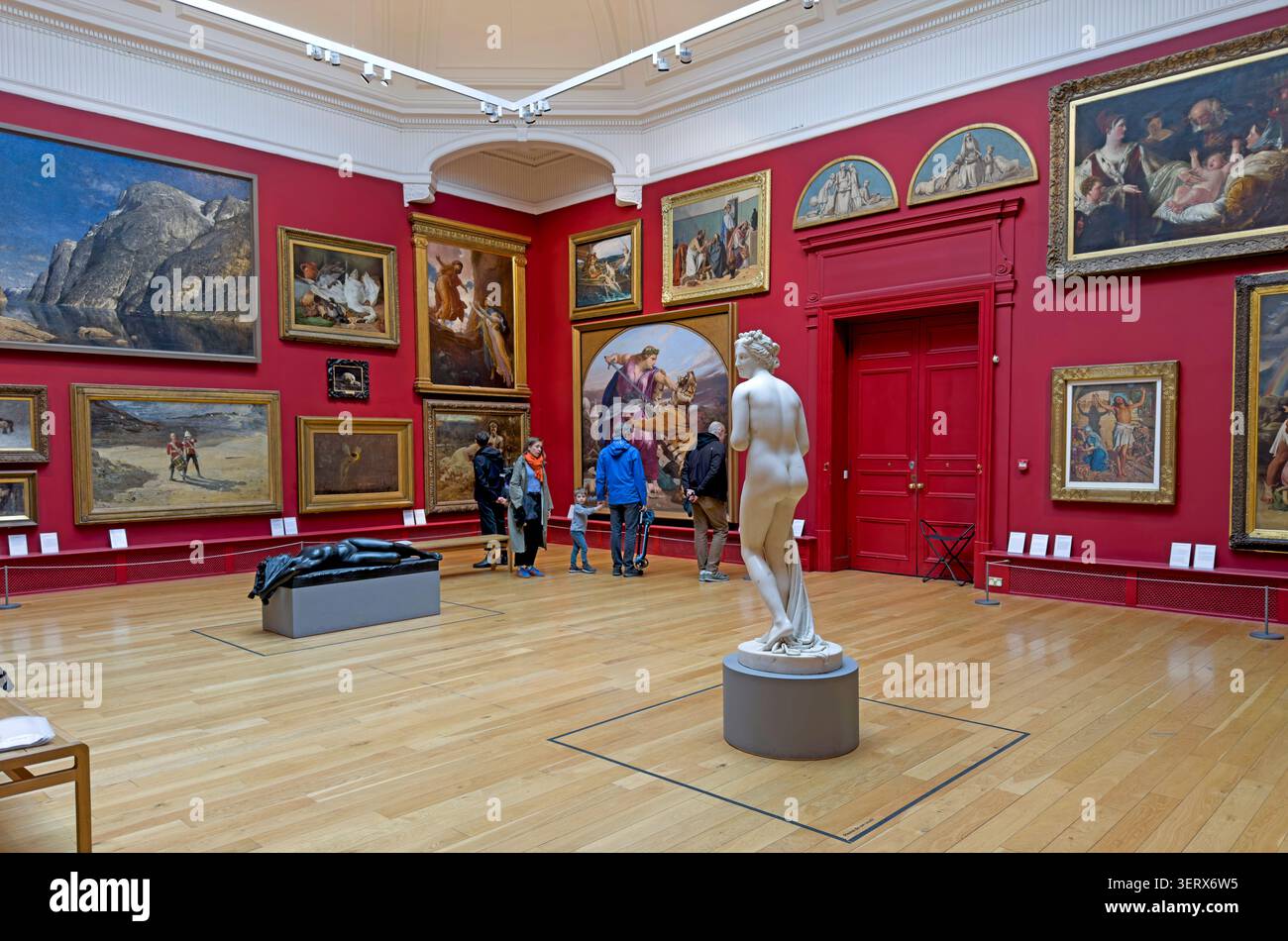
Image details
Contributor:
Tony SmithImage ID:
3ERX6W5File size:
69.7 MB (2.4 MB Compressed download)Releases:
Model - no | Property - noDo I need a release?Dimensions:
6064 x 4016 px | 51.3 x 34 cm | 20.2 x 13.4 inches | 300dpiDate taken:
16 May 2026Location:
Leeds Art Gallery, The Headrow, Leeds LS1 3AA, West Yorkshire, England, UKMore information:
. Leeds Art Gallery interior with visitors, paintings and sculpture in Leeds, West Yorkshire, England, UK. Photographed on 16 May 2026. The recorded location is Leeds Art Gallery, The Headrow, Leeds LS1 3AA, West Yorkshire, England, UK. The gallery room has richly coloured red walls filled with framed artworks, while a freestanding sculpture stands on the polished wooden floor beneath the high glazed roof. Visitors move through the exhibition space viewing the collection. The combination of historic architecture and densely displayed artworks gives the room a distinctive traditional gallery character. Looking at mural, the longer history is that monuments and civic artworks are part of the visual history of place; Their subjects reveal whom a community chose to celebrate, while later reinterpretation or controversy can change the meaning of an apparently permanent object. The background to reading room is that public libraries expanded during the nineteenth and twentieth centuries as part of civic education, later adding computers, events and digital services while retaining their role as shared community space. In 2026, mural remains relevant because contemporary street art continues to blur the line between unofficial expression, commissioned mural and tourist attraction; Images are therefore relevant to urban culture, creative industries, heritage interpretation and place-making. Current 2026 context around reading room is that libraries and museums continue to operate as community hubs, visitor attractions and sources of digital access, while funding pressures encourage partnerships, volunteering and new uses for historic buildings. Other strongly related concepts include public art, statue, cultural identity, visual culture, community art, memorial art, public realm, cultural landmark, archive, public library, collections, local history, heritage attraction, public history, museum display, and archive research.

