
Dixie Dean EFC blue entrance gates at Goodison Park in Liverpool, England, UK.
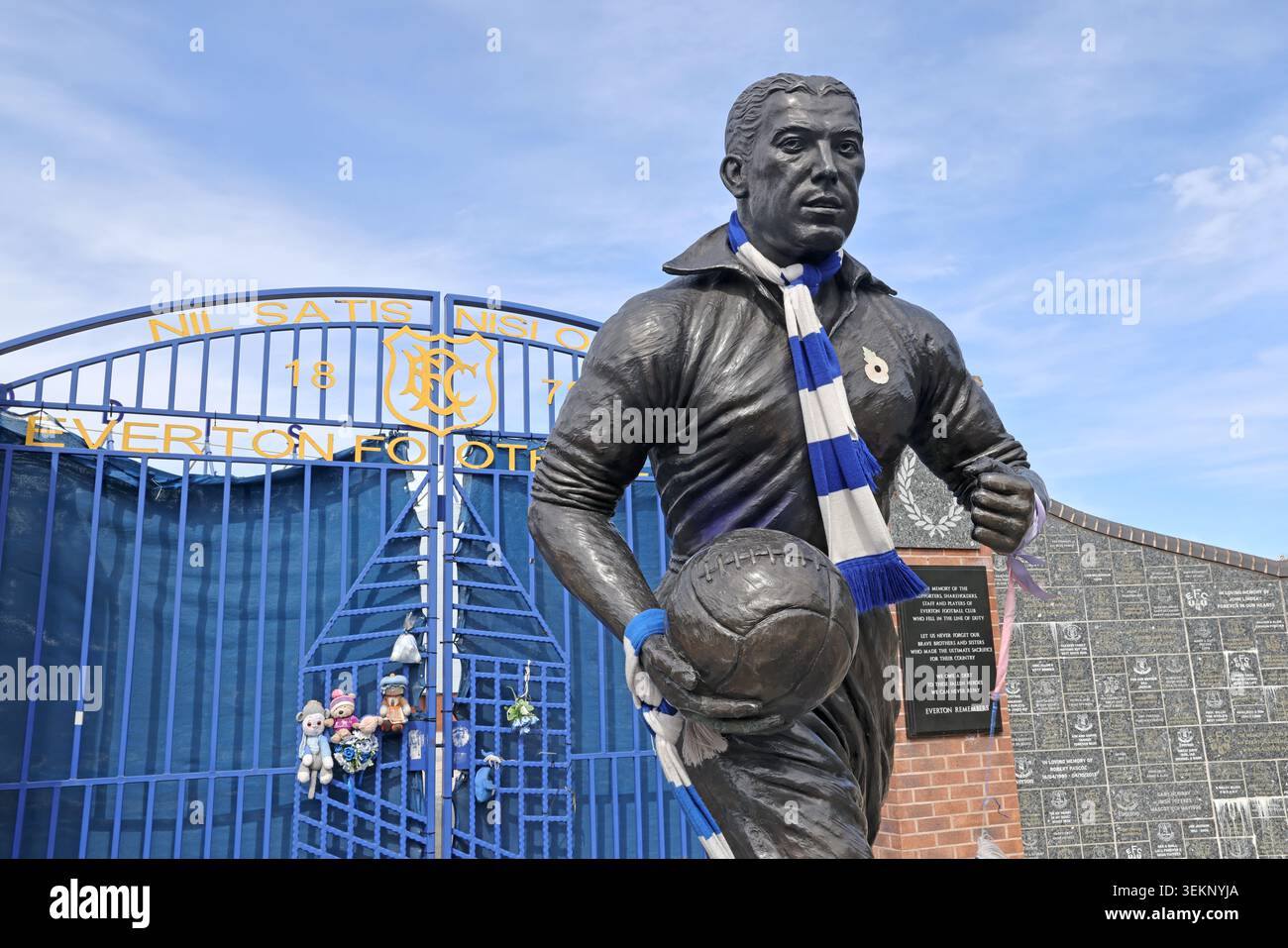
Image details
Contributor:
Tony SmithImage ID:
3EKNYJAFile size:
128.1 MB (3.9 MB Compressed download)Releases:
Model - no | Property - noDo I need a release?Dimensions:
8192 x 5464 px | 69.4 x 46.3 cm | 27.3 x 18.2 inches | 300dpiDate taken:
30 May 2026Location:
Goodison Park, Goodison Road, Liverpool, Merseyside, England, UKMore information:
. Dixie Dean EFC blue entrance gates at Goodison Park in Liverpool, England, UK. Photographed on 30 May 2026. The recorded location is Goodison Park, Goodison Road, Liverpool, Merseyside, England, UK. A bronze statue of Everton legend Dixie Dean stands in front of ornate blue metal gates carrying EVERTON FC lettering and club crests, creating one of the most recognisable supporter landmarks around the historic stadium. The statue holds a football and wears a blue-and-white scarf, while floral tributes and memorial details around the gates reinforce the emotional connection between the club, its famous players and generations of supporters. The image combines architecture, branding and sporting memory in a single strong Everton scene. Looking at club identity, the longer history is that sporting grounds, club colours and event memorabilia become part of local identity as generations of supporters associate particular streets, gates and stands with matchday ritual; Stadium architecture and branding also change repeatedly as clubs modernise facilities. The background to community art is that monuments and civic artworks are part of the visual history of place; Their subjects reveal whom a community chose to celebrate, while later reinterpretation or controversy can evolution the meaning of an apparently permanent object. Within the history of faith community, ecclesiastical buildings are both active places of worship and repositories of local evidence; Churchyard monuments, carved stone, stained glass and plaques provide material for genealogy, architectural history, religious practice and remembrance. In 2026, club identity remains relevant because sporting imagery has relevance beyond results, illustrating club identity, fan culture, major-event economics, venue investment and the role of sport in local regeneration. Its wider subject context includes fan culture, matchday, sporting heritage, and club identity.

