
County Arcade interior in the Victoria Quarter, Leeds, West Yorkshire, England, UK, showing mosaic floor and shopfronts.
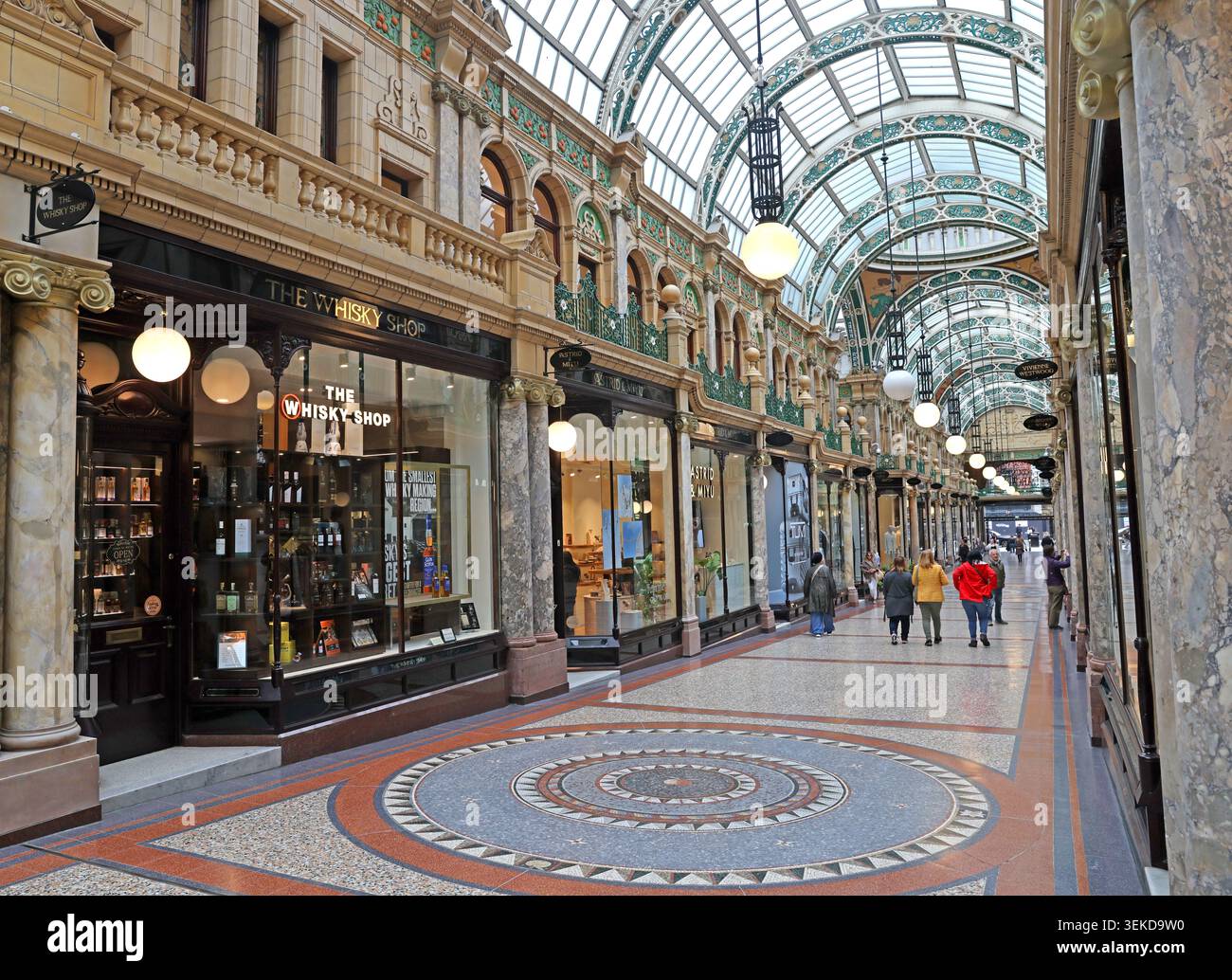
Image details
Contributor:
Tony SmithImage ID:
3EKD9W0File size:
117.6 MB (6.1 MB Compressed download)Releases:
Model - no | Property - noDo I need a release?Dimensions:
7520 x 5464 px | 63.7 x 46.3 cm | 25.1 x 18.2 inches | 300dpiDate taken:
16 May 2026Location:
County Arcade, Victoria Quarter, Leeds, West Yorkshire, England, UKMore information:
. County Arcade interior in the Victoria Quarter, Leeds, West Yorkshire, England, UK, showing mosaic floor and shopfronts. Photographed on 16 May 2026. The recorded location is County Arcade, Victoria Quarter, Leeds, West Yorkshire, England, UK. The elegant historic shopping arcade is characterised by richly decorated ironwork, glazed roofing, mosaic flooring and ornate shopfronts. The arcade is one of the most distinctive surviving retail interiors in Leeds and demonstrates how highly decorative nineteenth and early twentieth-century commercial architecture remains in active use. The image can support stories about heritage-led regeneration, premium retail, shopping tourism, adaptive reuse and the role of historic arcades in maintaining distinctive city-centre character. For regeneration, the historical context is that buildings are often the most durable evidence of former institutions and businesses; Brickwork, stonework, windows, entrances and signs can survive changes of ownership or use, allowing photography to document architectural style as well as the evolution of a street or district. Looking at retail premises, the longer history is that market halls have long concentrated small traders under one roof, combining food, household goods and specialist retail with an important social role; Regenerated markets increasingly mix traditional stalls with cafés, events and independent makers. For regeneration, the 2026 context is that reuse of existing buildings is increasingly discussed alongside embodied carbon, heritage conservation and town-centre regeneration; Photographs of older façades and converted premises can illustrate the practical tension between preservation, energy performance and new development. In 2026, retail premises remains relevant because high streets continue to change rapidly , with vacancies, redevelopment and food-led destinations altering the balance between retail and leisure; Earlier images of traders and shopfronts.

