
F.C. United of Manchester commemorative pennant marking the football club formed in 2005, England, UK.
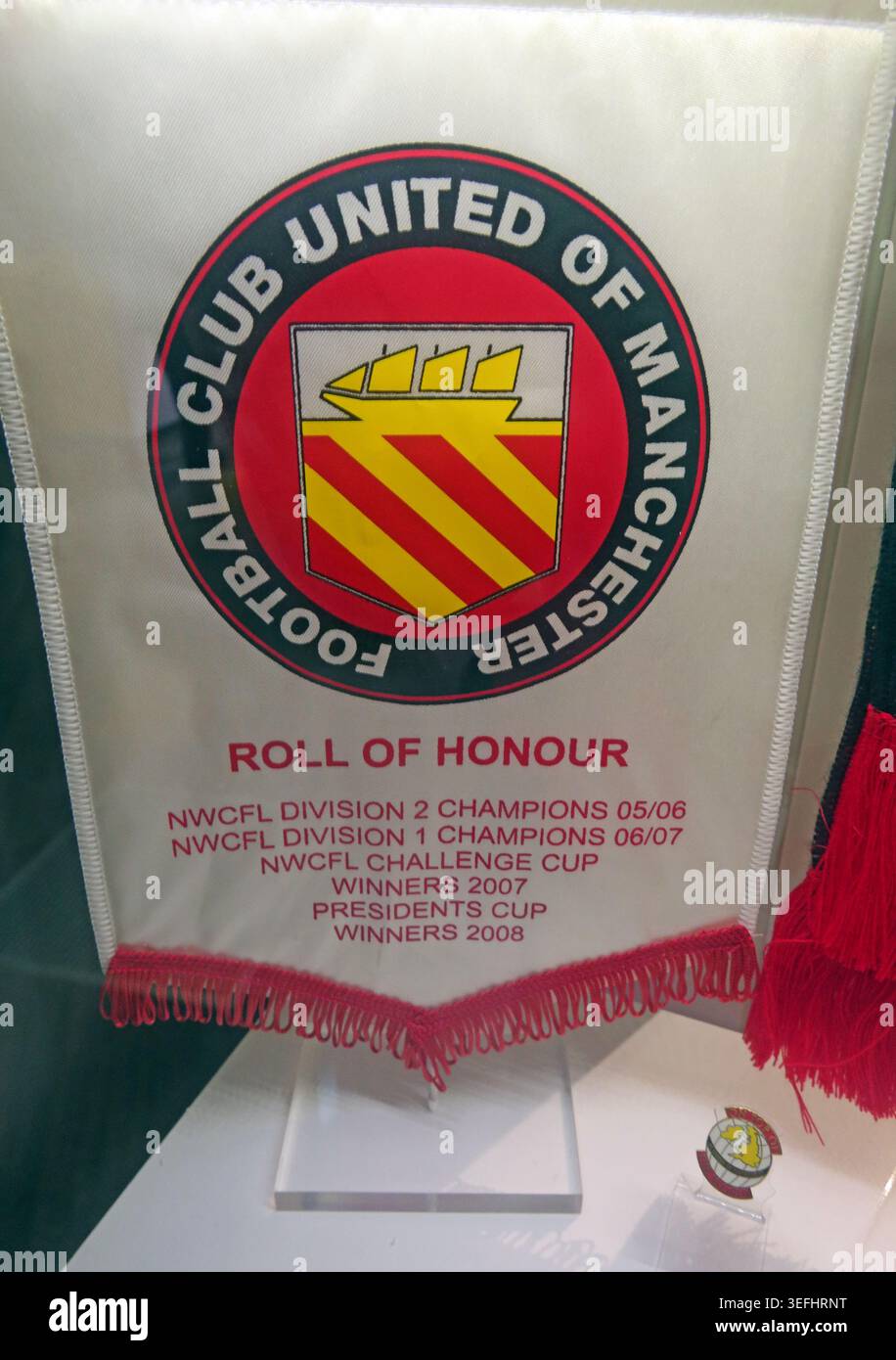
Image details
Contributor:
Tony SmithImage ID:
3EFHRNTFile size:
54 MB (1.5 MB Compressed download)Releases:
Model - no | Property - noDo I need a release?Dimensions:
3648 x 5172 px | 30.9 x 43.8 cm | 12.2 x 17.2 inches | 300dpiDate taken:
25 September 2023Location:
Manchester, Greater Manchester, England, UKMore information:
. F.C. United of Manchester commemorative pennant marking the football club formed in 2005, England, UK. Photographed on 25 September 2023. The recorded location is Manchester, Greater Manchester, England, UK. The red and white fabric souvenir carries the club crest and wording referring to its formation following opposition among some Manchester United supporters to the Glazer takeover. FC United was founded by supporters seeking an alternative model of football club ownership and governance. The pennant provides a compact visual record of that origin story and can illustrate features about fan movements, football finance, anti-Glazer protests, community ownership, non-league football and the changing relationship between supporters and professional clubs. In relation to supporters, historical context shows that british sports venues often have histories extending far beyond their present-day appearance, with rebuilt stands, sponsorship names and safety standards reflecting the professionalisation and commercial growth of spectator sport. For the story of public opinion, it is useful to note that election material, protest signs and campaign imagery preserve the language of politics as it was presented to voters at the time; Posters, slogans and public meetings can reveal local issues and political identities more directly than later summaries. As of 2026, the position for supporters is that professional sport continues to be closely tied to broadcast rights, tourism, sponsorship and stadium redevelopment, while supporter experience, policing, ticket prices and transport continue to shape matchday debate. For present-day public opinion, 2026 is significant because digital campaigning dominates much modern politics, but physical posters, rallies and street demonstrations remain visually important; Their presence highlights the continuing role of public space in democratic expression.

