
Colourful 'Greetings From Brick Lane' mural on a tall wall in London's East End street-art district.
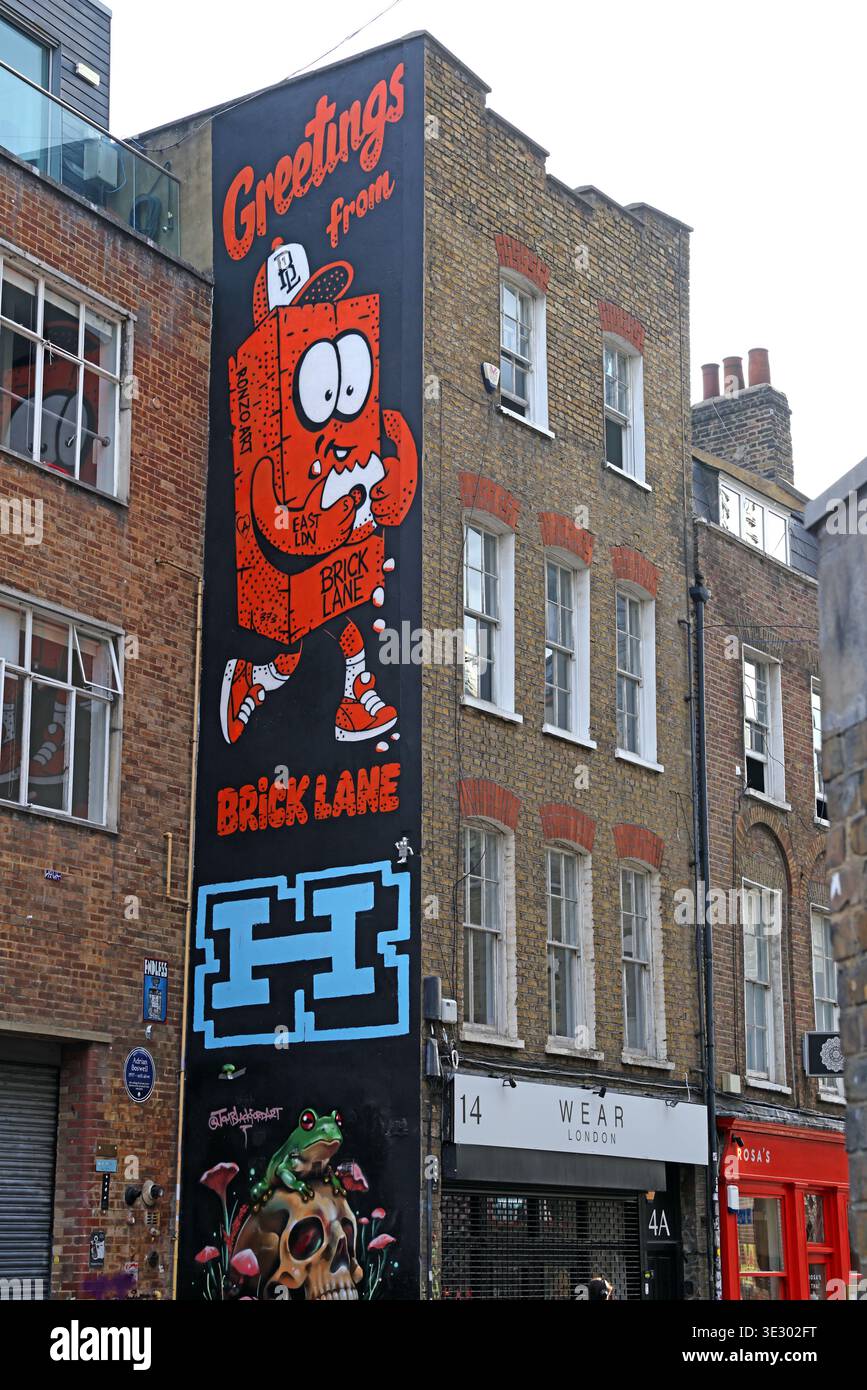
Image details
Contributor:
Tony SmithImage ID:
3E302FTFile size:
128.1 MB (5.3 MB Compressed download)Releases:
Model - no | Property - noDo I need a release?Dimensions:
5464 x 8192 px | 46.3 x 69.4 cm | 18.2 x 27.3 inches | 300dpiDate taken:
24 August 2025Location:
Brick Lane, London E1, England, UKMore information:
. Large 'Greetings From Brick Lane' mural on a tall wall in east London, using the visual language of souvenir postcards and oversized lettering to turn the street name into a piece of public art. Brick Lane is internationally associated with street art, independent fashion, markets, curry restaurants, nightlife and the creative reuse of former industrial buildings around the Old Truman Brewery. The mural contributes to a layered streetscape in which commissioned artwork, informal graffiti, paste-ups, advertising and constantly changing tags coexist on walls and shutters. That visual density has become part of Brick Lane's visitor identity, attracting photographers and street-art tours while also reflecting the neighbourhood's long tradition of cultural change. Historically the wider Spitalfields and Whitechapel area received successive migrant communities, including Huguenot silk weavers, Jewish refugees and later a large Bangladeshi population. The Bangladeshi presence reshaped the commercial life of Brick Lane in the late twentieth century and helped establish the surrounding area as Banglatown, particularly through restaurants, food businesses and community institutions. Alongside that history, the decline of large-scale brewing and manufacturing created buildings that were later occupied by artists, markets, music venues, studios and creative businesses. The photograph presents the mural frontally enough for the 'Greetings From Brick Lane' message to function almost as a location marker for this changing East End district. Public art here is not static: works may be painted over, weathered, replaced or absorbed into new layers, so photographs provide a useful record of a temporary urban surface. The postcard-style wording also reflects the area's evolution into a major tourism destination, where local identity is packaged and photographed alongside everyday residential and commercial life.

