
Large graffiti word 'EARN' painted on a wall in Brick Lane, east London, amid the area's dense street-art scene.
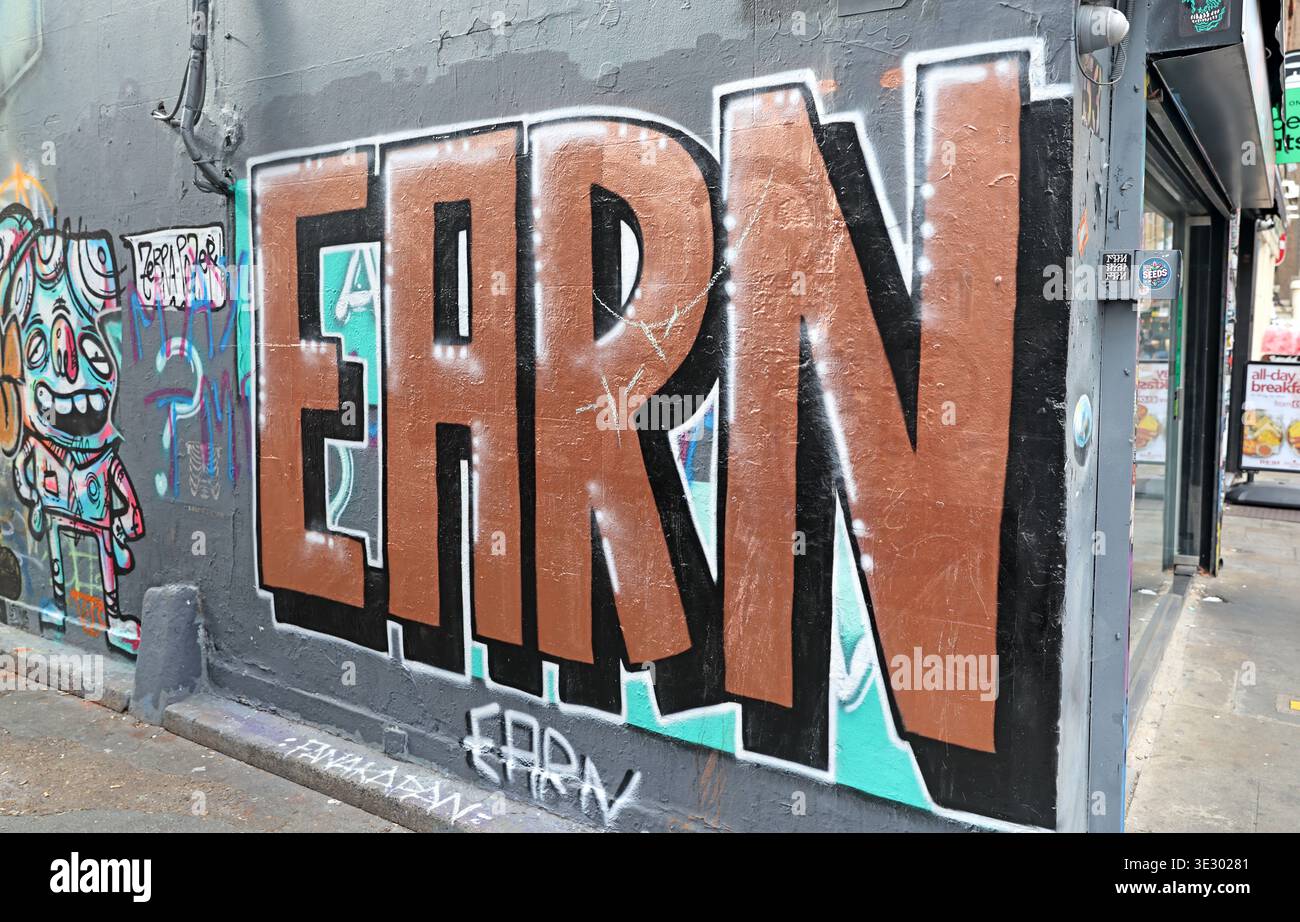
Image details
Contributor:
Tony SmithImage ID:
3E30281File size:
123 MB (5.6 MB Compressed download)Releases:
Model - no | Property - noDo I need a release?Dimensions:
8192 x 5248 px | 69.4 x 44.4 cm | 27.3 x 17.5 inches | 300dpiDate taken:
24 August 2025Location:
Brick Lane, London E1, England, UKMore information:
. Large graffiti lettering spelling 'EARN' on a wall in Brick Lane, east London, part of the dense and constantly changing street-art environment for which the district is internationally known. The piece relies on scale, outline and bold block letters rather than figurative imagery, demonstrating the central importance of lettering within graffiti culture. Names, words and letterforms have been fundamental to graffiti since the development of modern tagging and spray-can styles, with writers using repetition and visual distinctiveness to establish identity in public space. Brick Lane offers an unusually visible setting for this practice because walls, shutters, yards and temporary surfaces are already covered with murals, tags, stencils, stickers and paste-ups. Some work in the area is commissioned or tolerated, while other graffiti is unauthorised, creating a shifting boundary between public art, property damage, tourism and commercial place-making. The word 'EARN' also carries its own accidental or deliberate associations with money, work and status, which are especially resonant in a neighbourhood undergoing intense economic change and gentrification. Former industrial buildings around the Old Truman Brewery now support markets, offices, nightlife and creative businesses, bringing new investment and high visitor numbers to streets once dominated by manufacturing and local trade. The photograph frames the graffiti close enough for the word to dominate while still showing its rough urban wall context. Street art in Brick Lane is highly ephemeral: new pieces can be painted over within days, damaged by weather or obscured by advertising and building work. That makes photography an important record of individual works and of the broader visual character of the area at a particular moment. The bold word turns an otherwise ordinary wall into a temporary statement, reflecting the speed with which meaning can be added to and erased from the urban landscape.

