
St Elphin's parish Church, evening sunset, Church Street, Warrington, Cheshire, England, UK, WA1 2TL
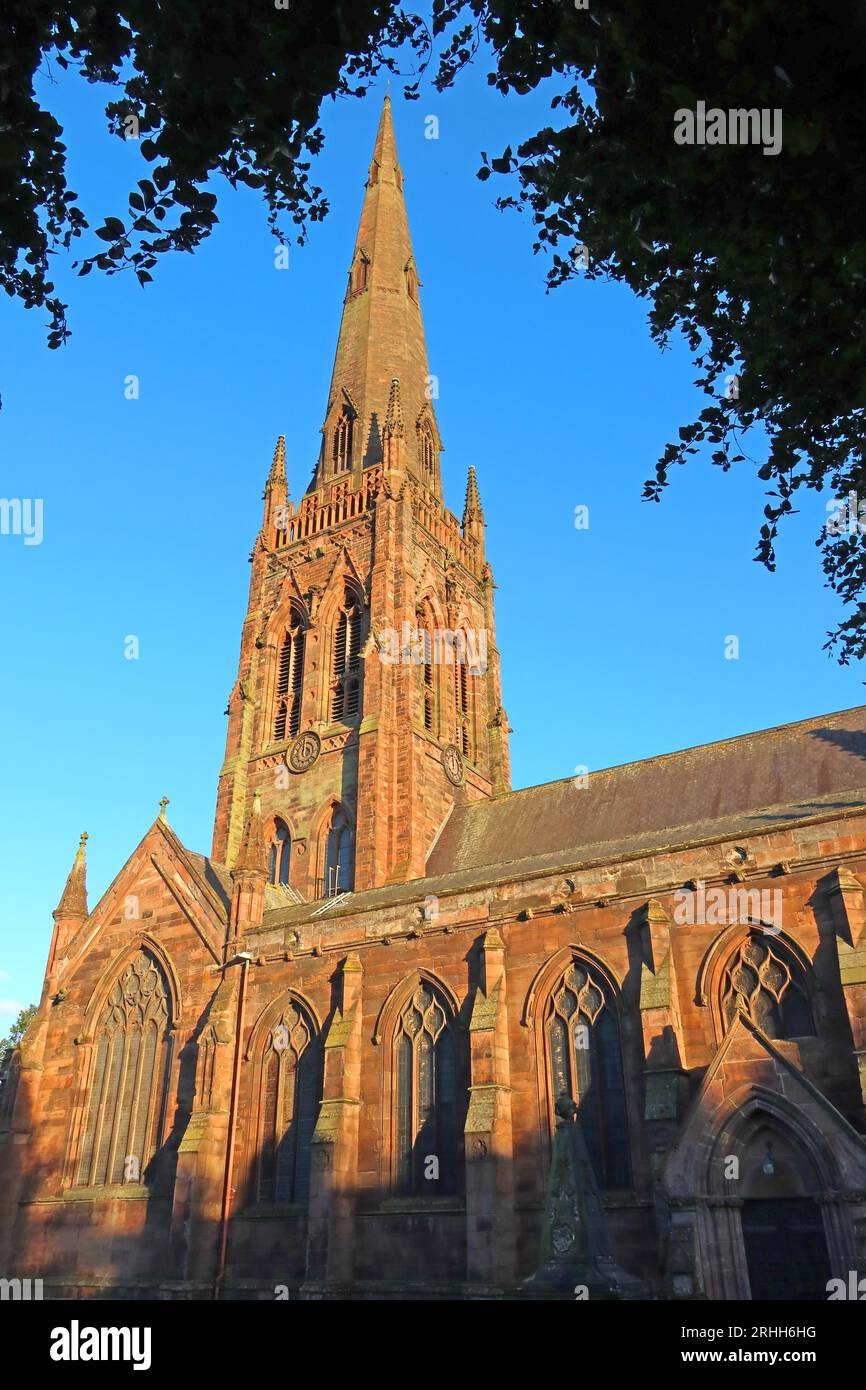
Image details
Contributor:
Tony SmithImage ID:
2RHH6HGFile size:
57.1 MB (2.2 MB Compressed download)Releases:
Model - no | Property - noDo I need a release?Dimensions:
3648 x 5472 px | 30.9 x 46.3 cm | 12.2 x 18.2 inches | 300dpiDate taken:
15 August 2023Location:
Church Street, Warrington, Cheshire, England, UK, WA1 2TLMore information:
. St Elphin's parish Church, evening sunset, Church Street, Warrington, Cheshire, England, UK, WA1 2TL. Photographed on 15 August 2023. Among parish churches, it is the third tallest in England. But nothing survives above ground of the original building (a Saxon wooden church), and only the chancel and crypt remain from its successor, the first stone building, which was built in 1354. Shelled and badly damaged by the Parliamentary forces in the Civil War of the 17th century, the tower of that church had to be rebuilt in 1696, and the nave was rebuilt in l770. The south aisle was added in the early 19th century, and the whole building was restored between 1859 and 1867, when the present distinctive spire was added. Inside, galleries in the aisles contain pews with doors, and some of the stained glass is by AWN Pugin. Looking at place of worship, the longer history is that churches combine worship with architecture, local memory and centuries of community past; Stonework, stained glass, memorials, furnishings and churchyards often record successive periods of rebuilding, Victorian restoration, local benefactors and family past. The background to historic comparison is that town and neighbourhood photographs record the accumulation of ordinary change: road layouts, shop names, signage, public art and building uses; Their value increases when compared over decades because apparently minor details can become the clearest evidence of transformation. Within the history of agriculture, irrigation and crop management became increasingly mechanised during the twentieth century, allowing farmers to control water and improve yields but also increasing attention to resource use and environmental impact. In 2026, place of worship remains relevant because historic places of worship remain important not only for faith but also for tourism, music, community use and local identity; Images of interiors, memorials and churchyards can support stories about conservation.

