
St Elphin's parish Church & Ring of Bells pub, evening sunset, Church Street, Warrington, Cheshire, England, UK, WA1 2TL
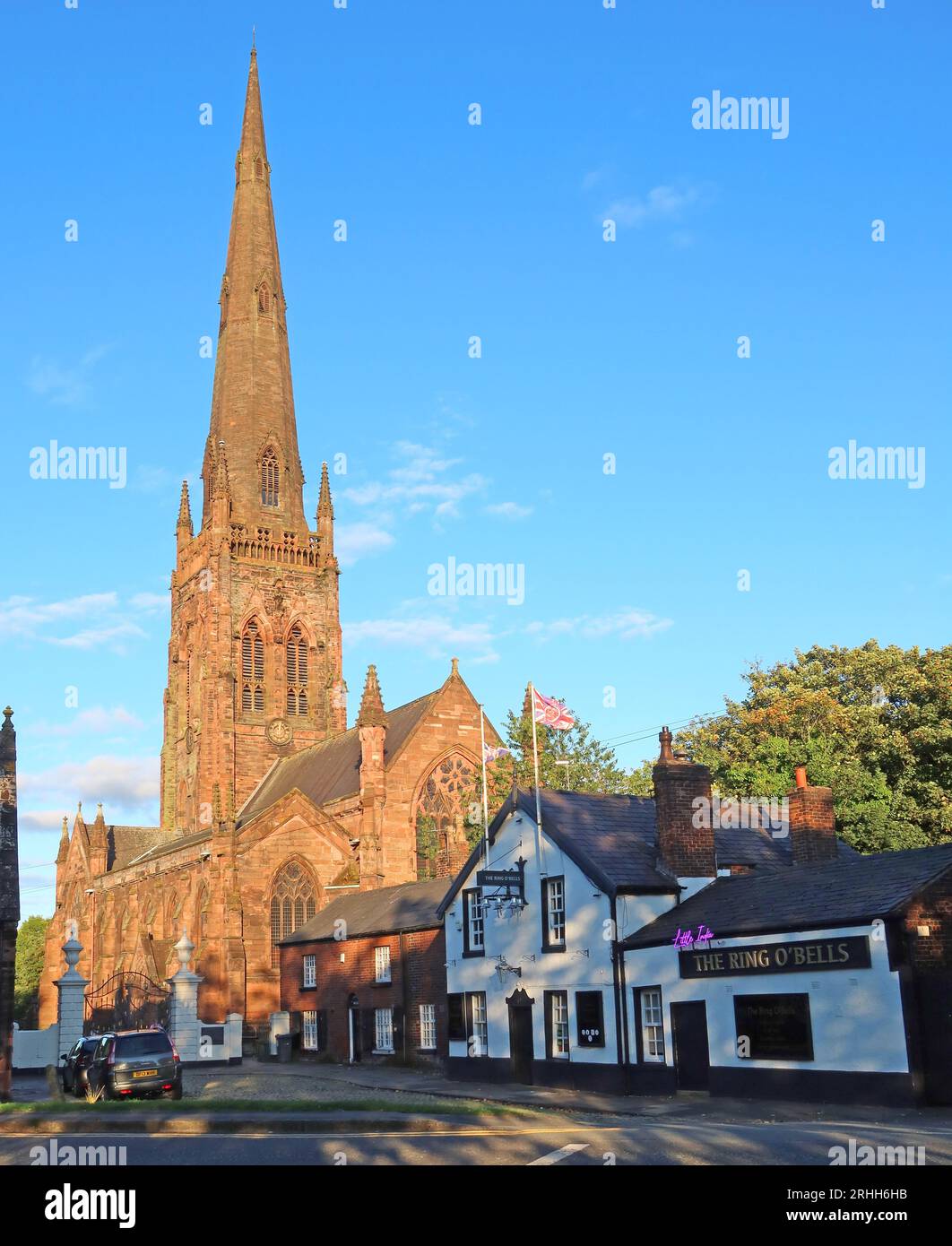
Image details
Contributor:
Tony SmithImage ID:
2RHH6HBFile size:
46.6 MB (1.5 MB Compressed download)Releases:
Model - no | Property - noDo I need a release?Dimensions:
3648 x 4464 px | 30.9 x 37.8 cm | 12.2 x 14.9 inches | 300dpiDate taken:
15 August 2023Location:
Church Street, Warrington, Cheshire, England, UK, WA1 2TLMore information:
. St Elphin's parish Church & Ring of Bells pub, evening sunset, Church Street, Warrington, Cheshire, England, UK, WA1 2TL. Photographed on 15 August 2023. Among parish churches, it is the third tallest in England. But nothing survives above ground of the original building (a Saxon wooden church), and only the chancel and crypt remain from its successor, the first stone building, which was built in 1354. Shelled and badly damaged by the Parliamentary forces in the Civil War of the 17th century, the tower of that church had to be rebuilt in 1696, and the nave was rebuilt in l770. The south aisle was added in the early 19th century, and the whole building was restored between 1859 and 1867, when the present distinctive spire was added. Inside, galleries in the aisles contain pews with doors, and some of the stained glass is by AWN Pugin. The background to architectural conservation is that parish churches and cathedrals are among Britain's richest sources of architectural and social history; Medieval fabric, later chapels, organs, altars, monuments and inscriptions can coexist within a single building, revealing generations of craftsmanship and changing liturgy. Within the history of town centre, place-based photography helps document the relationship between named locations and the people or businesses associated with them, especially where formal architectural records are limited. In relation to licensed premises, historical context shows that british pubs developed from inns, taverns and alehouses into licensed social institutions that have long served as meeting places, music venues and landmarks; Names, brewery signs, etched glass, tiled interiors and evolving fascias can preserve local history even when ownership or use changes. Current 2026 context around architectural conservation is that many historic churches face the practical challenge of maintaining listed fabric while remaining active community buildings, visitor attractions and venues for.

