
Gods Own Junkyard, neon lighting and advertising museum, Unit 12, Ravenswood Industrial Estate, Shernhall St, London, England, UK, E17 9HQ
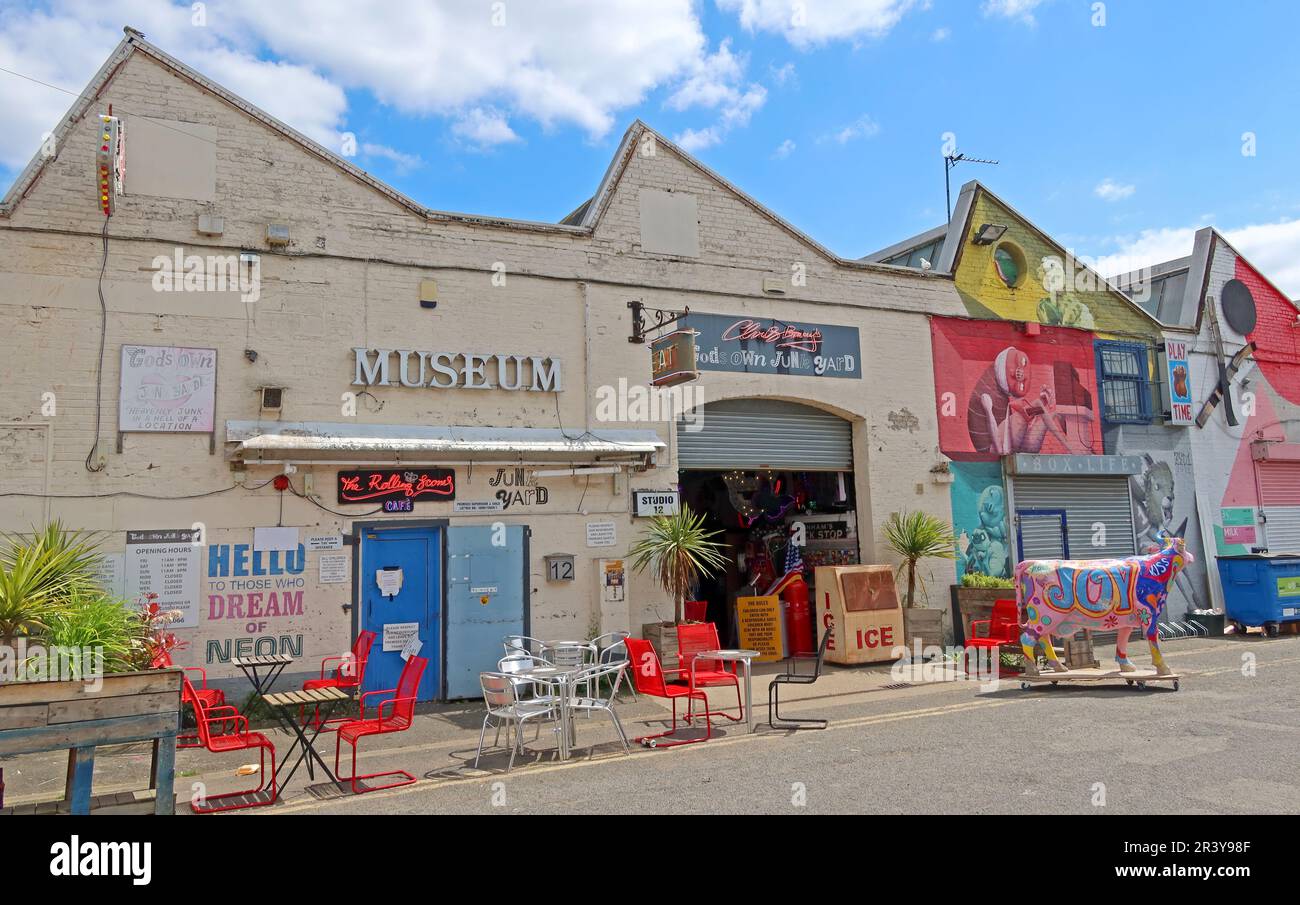
Image details
Contributor:
Tony SmithImage ID:
2R3Y98FFile size:
51.9 MB (2.1 MB Compressed download)Releases:
Model - no | Property - noDo I need a release?Dimensions:
5376 x 3372 px | 45.5 x 28.5 cm | 17.9 x 11.2 inches | 300dpiDate taken:
21 May 2023Location:
Unit 12, Ravenswood Industrial Estate, Shernhall St, Walthamstow, London, E17 9HQMore information:
. Gods Own Junkyard, neon lighting and advertising museum, Unit 12, Ravenswood Industrial Estate, Shernhall St, London, England, UK, E17 9HQ. Photographed on 21 May 2023. The recorded location is Unit 12, Ravenswood Industrial Estate, Shernhall St, Walthamstow, London, E17 9HQ. Chris Bracey has been the Neon Man for 37 years creating iconic artpieces for David la chappelle. Martin Creed etc. With a cult following in London and Los Angeles. New & used neon fantasies, salvaged signs, reclaimed neon signs, old movie props and retro displays. Neon art made from found objects, retrieved and renewed waste and lights. Fairground & circus lighting, architectural sign salvage. Led & cold cathode luxury products. Designers & makers of all things with light. For heritage conservation, the historical context is that industrial buildings and machinery preserve the material history of manufacturing: steam power, engineering, mining, textiles, ceramics and mass production transformed both the economy and the physical character of towns; Surviving equipment is now studied as industrial archaeology. Looking at museum, the longer history is that museums turn objects into interpreted past, while archives preserve documents that may have little value until researchers connect them with people, buildings or events; Interiors therefore record both collections and changing curatorial practice. The background to sculpture is that street art and murals are especially valuable as temporary cultural evidence because they may be painted over or lost during redevelopment; Photographs preserve both the artwork and its relationship with the surrounding neighbourhood. For heritage conservation, the 2026 context is that industrial heritage is increasingly tied to regeneration, tourism, conservation and skills education, particularly in former manufacturing towns seeking new uses for historic sites. The scene also brings together restaurant, street food, and home cooking.

