
Pat Finucane memorial mural on Beechmount Drive off Falls Road, Belfast, honouring the murdered human rights lawyer
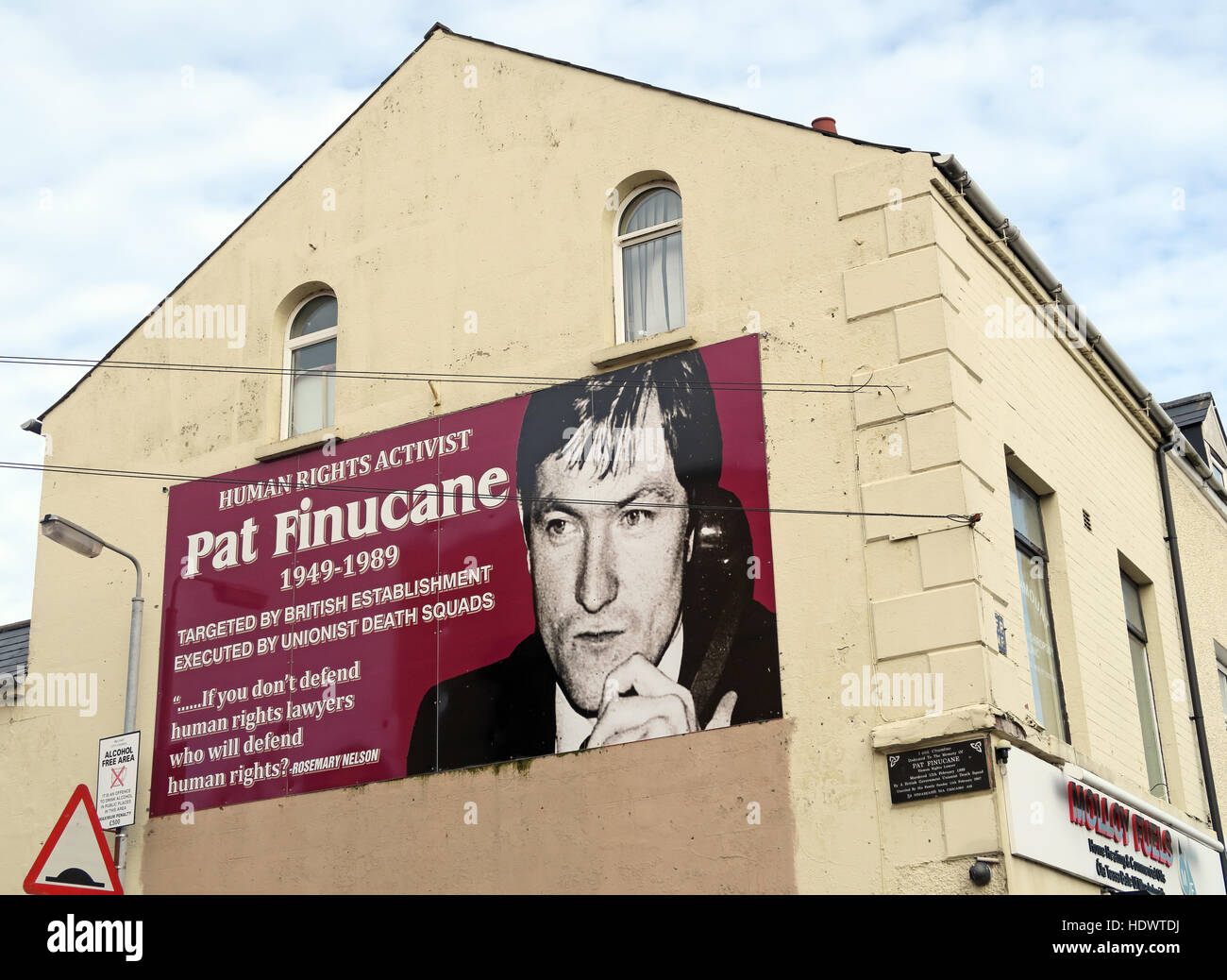
Image details
Contributor:
Tony SmithImage ID:
HDWTDJFile size:
47.8 MB (1.8 MB Compressed download)Releases:
Model - no | Property - noDo I need a release?Dimensions:
4788 x 3492 px | 40.5 x 29.6 cm | 16 x 11.6 inches | 300dpiDate taken:
20 October 2016Location:
West Belfast gable-end tribute to Pat Finucane links republican mural culture, human rights campaignMore information:
Gable-end memorial mural to Pat Finucane on Beechmount Drive at the junction with Falls Road in West Belfast, photographed on the side of a cream-painted building with overhead wires, a memorial plaque and a large maroon, black and white portrait panel. The mural names Pat Finucane as a human rights activist, gives his dates as 1949 to 1989, and includes wording that he was targeted by the British establishment and executed by unionist death squads. A quotation attributed to Rosemary Nelson asks, "If you don't defend human rights lawyers, who will defend human rights?", linking the mural to the danger faced by legal representatives. Pat Finucane was a Belfast solicitor and human rights lawyer murdered at his home in north Belfast on 12 February 1989 by loyalist paramilitaries. His killing became one of the most controversial cases of the Northern Ireland conflict because of repeated findings and allegations of state collusion. In September 2024, the UK Government announced an independent public inquiry into his death, following decades of campaigning by Geraldine Finucane and the wider family. That search for truth gives this street image strong editorial relevance for stories about legacy, justice, human rights law, state accountability, loyalist violence and the Troubles. The mural belongs to Belfast's tradition of political wall art. Falls Road, Beechmount and wider West Belfast contain many nationalist and republican murals that use gable ends and roadside walls as public memory sites. This example is not just decorative street art. It is a political memorial, a human rights statement and a local landmark, positioned in a predominantly nationalist area where murals have recorded conflict, identity, grief, resistance and calls for justice. The overcast daylight, street setting and stark portrait make the photograph useful for editorial coverage of Belfast murals, conflict tourism, memory culture, Irish republican heritage and peace process legacy.

