
HMRC HM Revenue and Customs Tax Return letter and form, paper filing deadline, England, UK
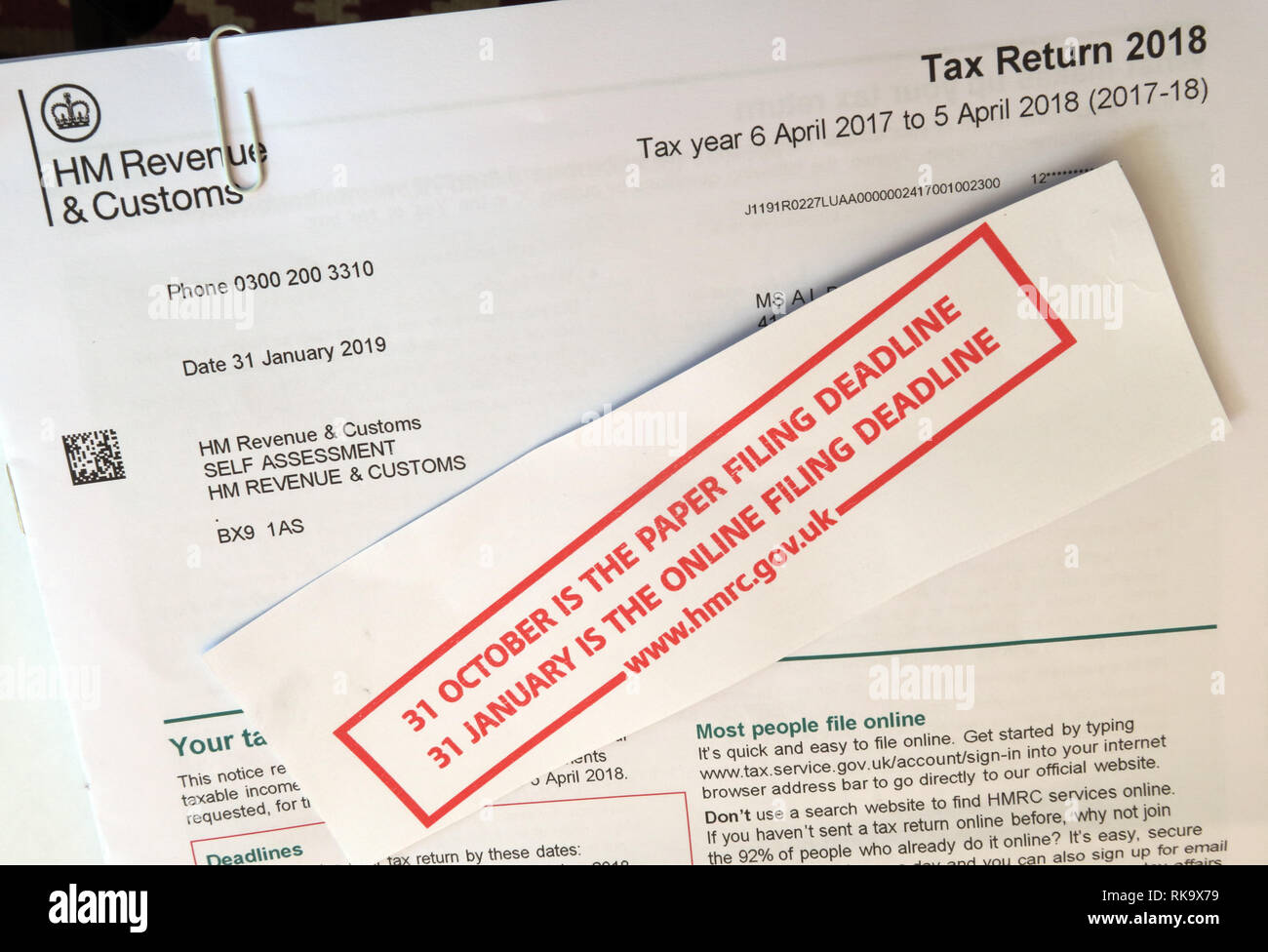
Image details
Contributor:
Tony SmithImage ID:
RK9X79File size:
52.2 MB (1.7 MB Compressed download)Releases:
Model - no | Property - noDo I need a release?Dimensions:
5172 x 3528 px | 43.8 x 29.9 cm | 17.2 x 11.8 inches | 300dpiDate taken:
10 February 2019More information:
. A place-specific photograph documents the visible identity of the recorded location, as photographed in 2019. The documentary focus is HMRC HM Revenue and Customs Tax Return letter and form, paper filing deadline, England, UK. The photograph carries associations with social context, modern history, visual record, documentary record, local character, community life, cultural landscape, place and memory, community environment, changing Britain, everyday Britain, and social landscape. The wider contemporary story of community change now includes shifts in local identity alongside altered public space, while policy and investment increasingly consider stronger archival comparison. Documentary value is strengthened by the precise setting at the recorded location, where even ordinary details of frontage, equipment, signs, traffic or public activity may disappear as the area evolves, specifically in relation to HMRC HM Revenue and Customs Tax Return letter and form. The view also records themes involving regional identity, everyday infrastructure, public realm, contemporary social history, local identity, documentary photography. The scene is further associated with dreaded tax return, deadline January, HM Revenue & Customs, PAYE, Self assessment, Tax form. Seen from a 2025-onward perspective, everyday local life also connects with the passage of time, altered public space and efforts aimed at before-and-after study. As the location changes, the frame remains a reference for everyday services, historic fabric, planning and redevelopment, movement through the area, and social change as part of the area's longer social history. In historical comparison, the image can help trace architecture and streetscape, transport patterns, neighbourhood identity, public access, and ownership or occupation without relying on a generic or reconstructed view. The view additionally fixes local character in the recorded location for future researchers.

