
Life is beautiful, Catwoman kisses Batman in a doorway, Northern Quarter, Manchester, NQ4, North West England, UK
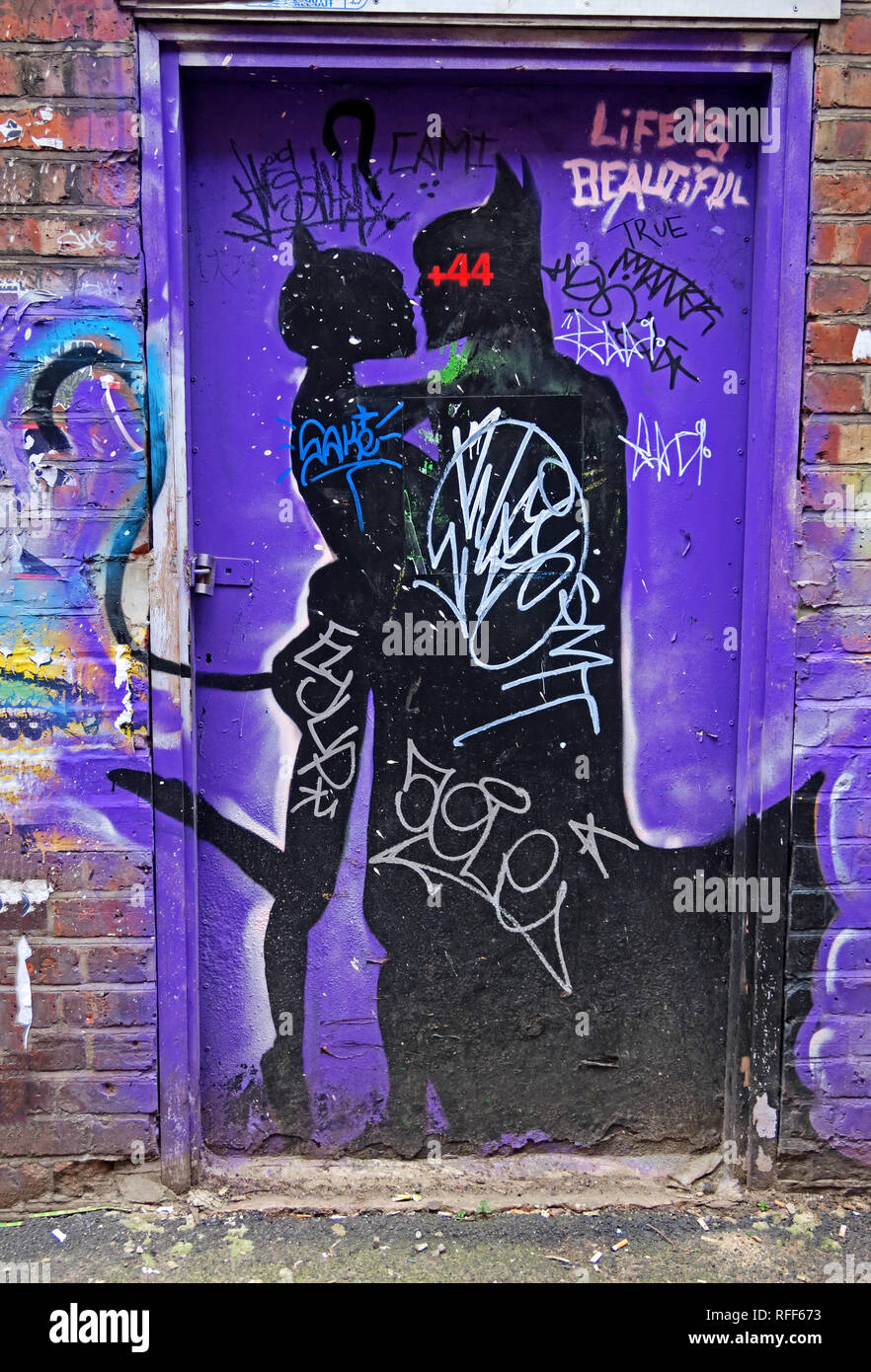
Image details
Contributor:
Tony SmithImage ID:
RFF673File size:
56.2 MB (3.3 MB Compressed download)Releases:
Model - no | Property - noDo I need a release?Dimensions:
3651 x 5376 px | 30.9 x 45.5 cm | 12.2 x 17.9 inches | 300dpiDate taken:
11 January 2019More information:
. A local-history photograph preserves the character of the recorded location, as recorded during 2019. The source caption identifies Life is beautiful, Catwoman kisses Batman in a doorway, Northern Quarter, Manchester, NQ4, North West England, UK. Further features of the subject include street-level design, creative regeneration, public art, local identity, community art, contemporary mural, public realm art, urban graphics, graphic intervention, urban artwork, urban visual culture, and visual placemaking. Modern coverage of creative hoardings frequently reaches beyond the immediate scene to questions of public-realm investment, regeneration and stronger place identity. Small period details preserved at the recorded location may become historically important as commercial occupants, public services, infrastructure and the built environment change, making the image useful for retrospective editorial coverage, specifically in relation to Life is beautiful. The surrounding context also touches on illustrated hoarding, temporary artwork, street creativity, art-led regeneration, community expression, creative streetscape. The scene is further associated with A Kiss can be deadlier, NorthernQuarter, Everlasting Love, Cat Woman poster, Cat Woman, sexy woman. For present-day editorial use, community artwork can also illustrate debates about temporary installations and youth culture, particularly where these affect creative reuse of redevelopment sites. Viewed retrospectively, the photograph can reveal transport patterns, neighbourhood identity, architecture and streetscape, ownership or occupation, and public access as part of the area's longer social history. Taken together, these details make the photograph a useful record of local business activity, the condition of buildings, regional identity, public-realm details, and patterns of everyday use without relying on a generic or reconstructed view.

