
Physical Graffiti Tea Shop, St Marks, Graffitea, East Village, Manhattan, NYC,NY, USA
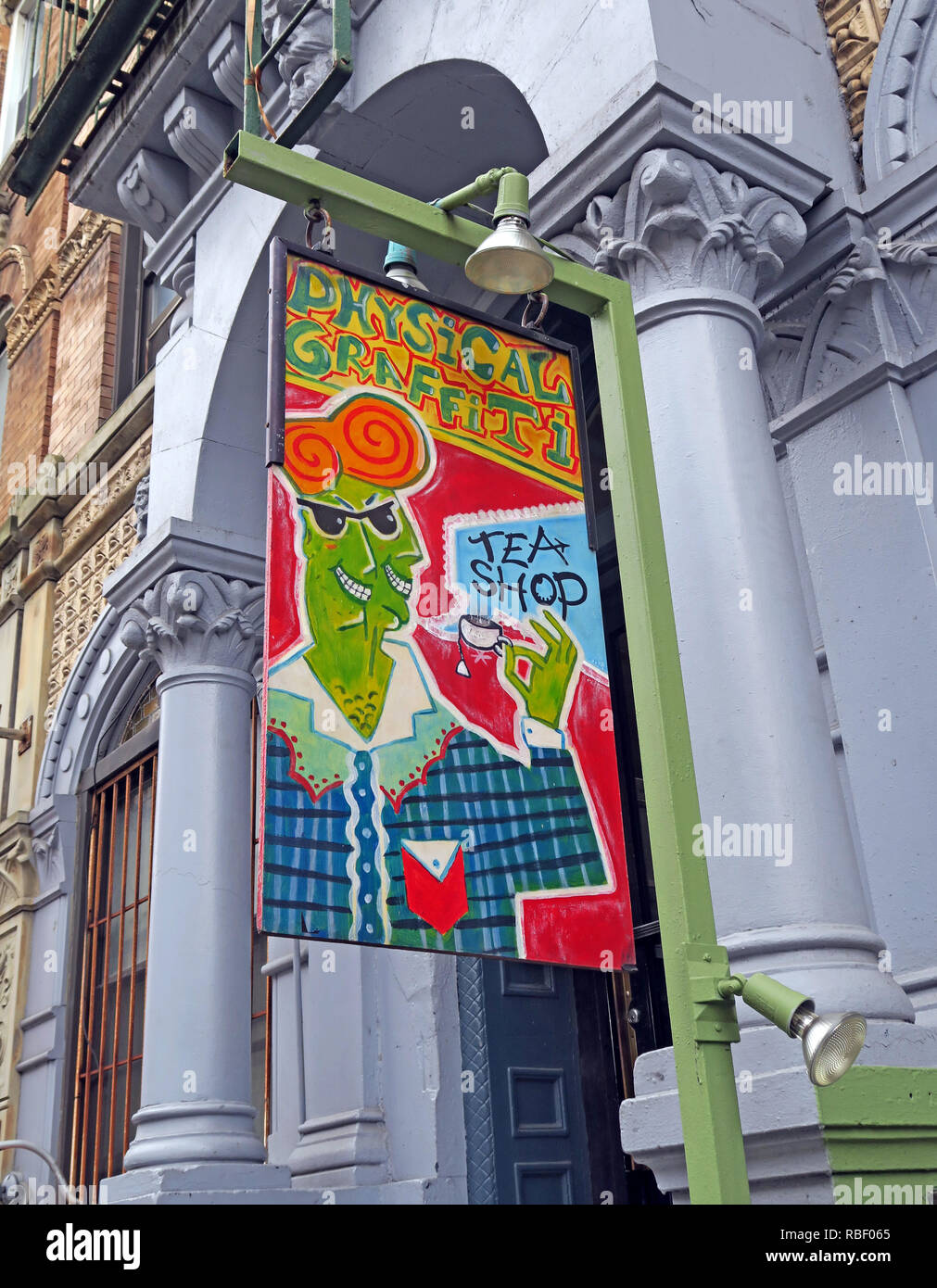
Image details
Contributor:
Tony SmithImage ID:
RBF065File size:
48.9 MB (2.4 MB Compressed download)Releases:
Model - no | Property - noDo I need a release?Dimensions:
3648 x 4688 px | 30.9 x 39.7 cm | 12.2 x 15.6 inches | 300dpiDate taken:
31 August 2018More information:
. A place-specific photograph preserves the physical context of the recorded location, in a documentary image made in 2018. Within that setting the photograph concentrates on Physical Graffiti Tea Shop, St Marks, Graffitea, East Village, Manhattan, NYC, NY, USA. Other closely connected aspects of the subject are bricks-and-mortar retail, retail decline and renewal, chain-store economy, creative regeneration, tourism economy, consumer retail, food-and-drink business, urban commerce, hospitality premises, destination economy, public art, and shopping district. The wider contemporary story of retail streets now includes changing footfall alongside brand consolidation, while policy and investment increasingly consider mixed-use town centres. Current debate around community artwork often combines regeneration, public-realm investment and the practical challenge of recording temporary artwork. In the mid-2020s, local dining is increasingly discussed through changing visitor patterns and staffing, with attention turning to sustainable tourism. The photograph fixes the recorded location at one identifiable stage in its history, providing a reference against which later refurbishment, closure, demolition, conversion, new ownership or altered public use can be assessed, specifically in relation to Physical Graffiti Tea Shop. The view also records themes involving visitor economy, temporary artwork, illustrated hoarding, visitor destination, high-street commerce, art-led regeneration. Associated details include New York St Marks Place, Eastvillage. A second layer of description includes customer service, commercial frontage, restaurant sector, shopping habits, food culture, city-centre economy, commercial streetscape, hospitality trade, catering trade, and local trading. Seen from a 2025-onward perspective, high-street retail also connects with hybrid working, changing footfall and efforts aimed at bringing empty units back into use.

