
Woman holding a clock face, Daylight Saving Time / British summer Time , clocks going back or forward an hour
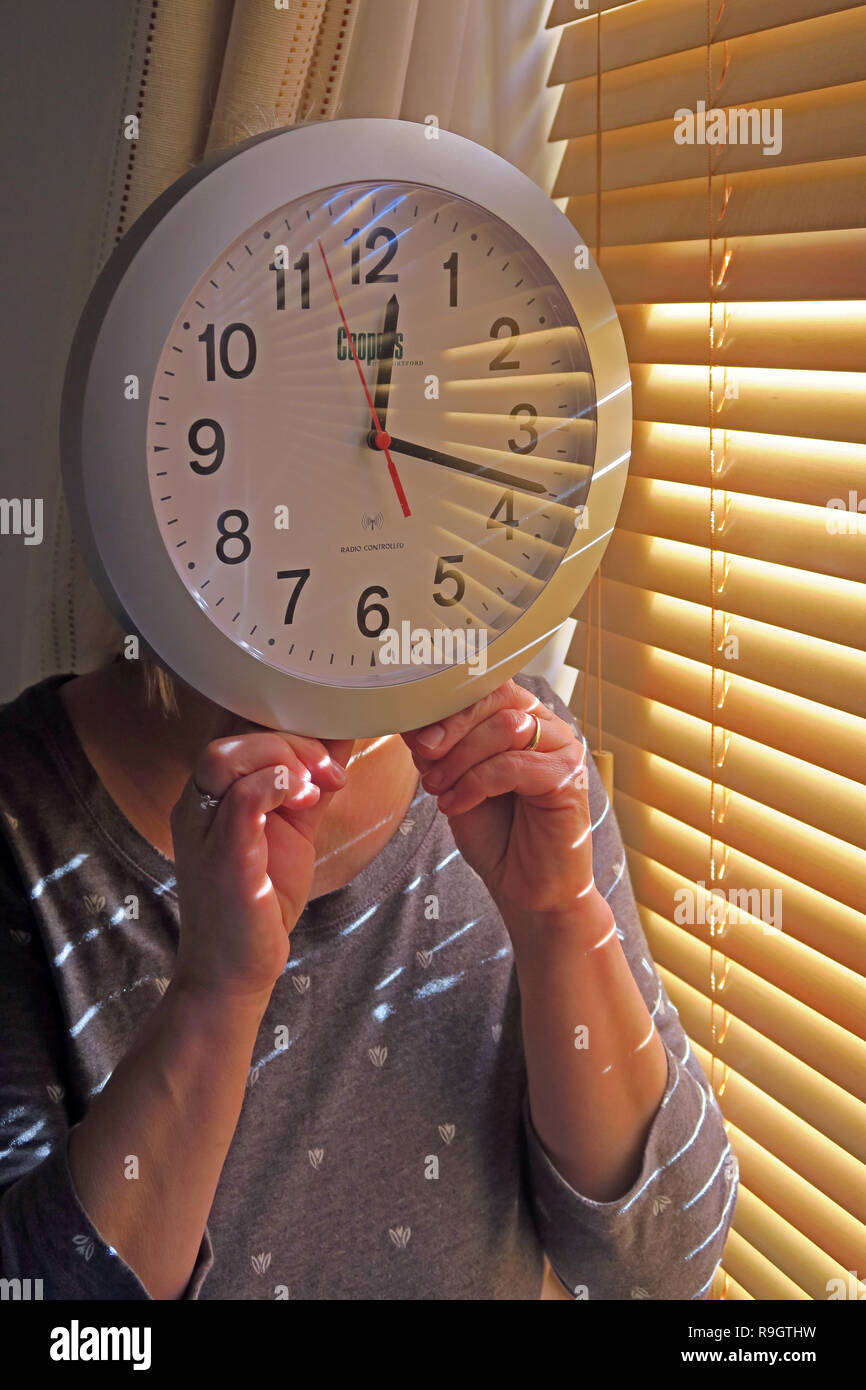
Image details
Contributor:
Tony SmithImage ID:
R9GTHWFile size:
57.1 MB (1.7 MB Compressed download)Releases:
Model - no | Property - noDo I need a release?Dimensions:
3648 x 5472 px | 30.9 x 46.3 cm | 12.2 x 18.2 inches | 300dpiDate taken:
28 October 2018Location:
Scotland, UKMore information:
. This descriptive scene records the visible identity of Scotland, UK, in documentary coverage dating from 2018. The frame is associated with Woman holding a clock face, Daylight Saving Time / British summer Time , clocks going back or forward an hour. The location can also be described in terms of social context, place-based history, modern history, everyday Britain, local identity, public realm, contemporary social history, community life, changing Britain, place and memory, local character, and documentary record. For present-day editorial use, ordinary infrastructure can also illustrate debates about changing use and business turnover, particularly where these affect preservation of everyday detail. Documentary value is strengthened by the precise setting at Scotland, UK, where even ordinary details of frontage, equipment, signs, traffic or public activity may disappear as the area evolves. Beyond the immediate subject, the setting involves visual record, social landscape, community environment, regional identity, urban and rural change, everyday infrastructure. The record also refers to clocks going forward, one hour, BST, DST, adult. Further aspects present in the subject include documentary photography, and cultural landscape. In the mid-2020s, social history is increasingly discussed through altered public space and business turnover, with attention turning to preservation of everyday detail. Taken together, these details make the photograph a useful record of social change, movement through the area, everyday services, planning and redevelopment, and historic fabric without relying on a generic or reconstructed view. The combination preserved here provides evidence of public access, neighbourhood identity, transport patterns, ownership or occupation, and architecture and streetscape in a form that can be compared with later photographs. The view of Scotland, UK also preserves another layer of local identity and period change.

