
Thomas Fattorini factory, Birmingham Jewellery quarter, Regent St, Birmingham, English Midlands, UK, B1 3HQ
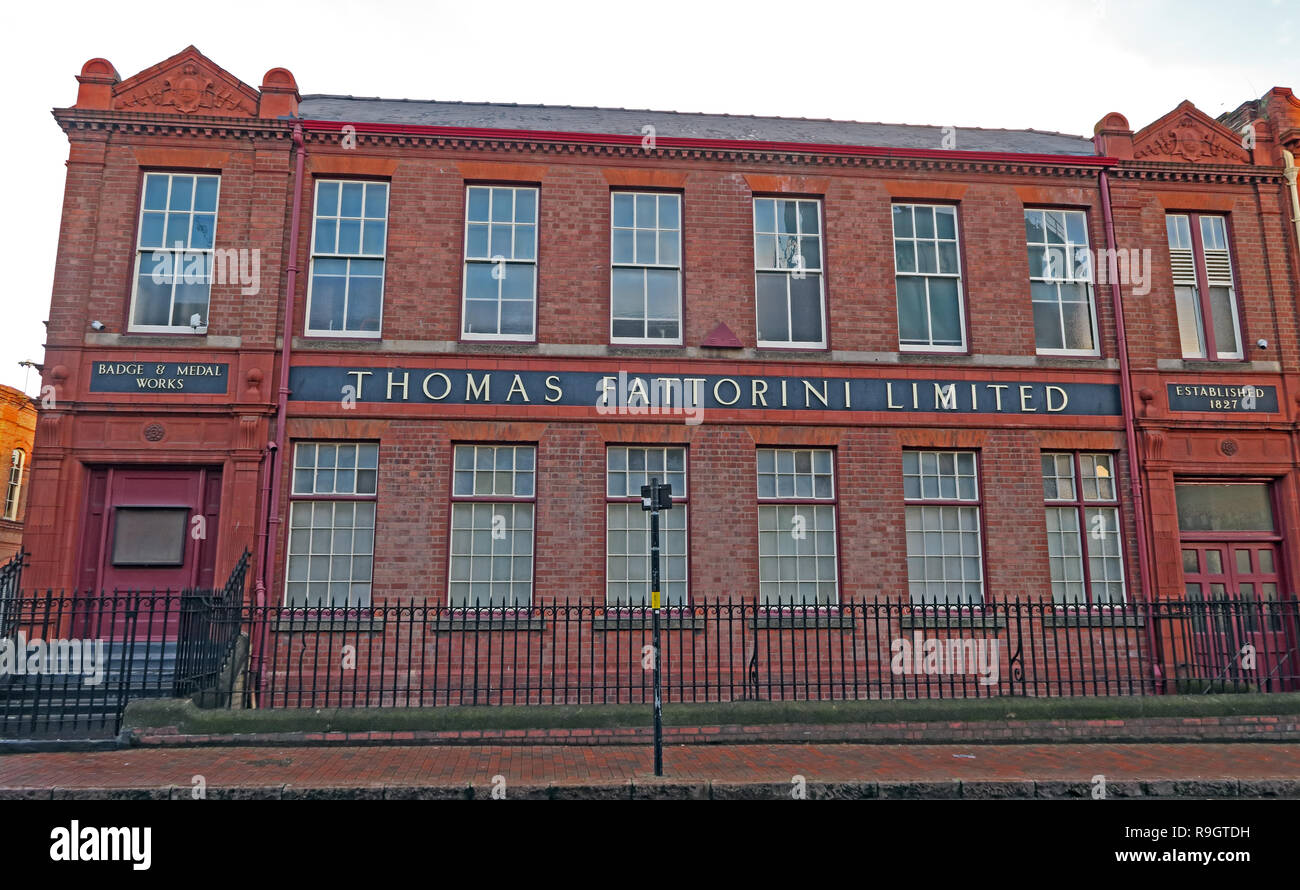
Image details
Contributor:
Tony SmithImage ID:
R9GTDHFile size:
51 MB (2.4 MB Compressed download)Releases:
Model - no | Property - noDo I need a release?Dimensions:
5384 x 3314 px | 45.6 x 28.1 cm | 17.9 x 11 inches | 300dpiDate taken:
10 November 2018Location:
Regent St, Birmingham, English Midlands, UK, B1 3HQMore information:
. A grounded editorial photograph documents the character of Regent St, Birmingham, English Midlands, UK, B1 3HQ, in a time-specific record from 2018. The principal recorded subject is Thomas Fattorini factory, Birmingham Jewellery quarter, Regent St, Birmingham, English Midlands, UK, B1 3HQ. Other closely connected aspects of the subject are adaptive reuse, heritage streetscape, architectural detail, conservation interest, architectural character, historic fabric, historic townscape, period property, architectural heritage, local landmark, traditional building, and urban fabric. Seen from a 2025-onward perspective, older urban fabric also connects with vacancy, redevelopment pressure and efforts aimed at lower-carbon reuse rather than demolition. Small period details preserved at Regent St, Birmingham, English Midlands, UK, B1 3HQ may become historically important as commercial occupants, public services, infrastructure and the built environment change, making the image useful for retrospective editorial coverage. Beyond the immediate subject, the setting involves period architecture, heritage asset, conservation architecture, historic environment, built heritage, historic built environment. Further recorded details include Brum. The same setting also brings together urban conservation, and townscape identity. Modern coverage of local landmarks frequently reaches beyond the immediate scene to questions of conservation of original fabric, planning control and preserving local character. Viewed retrospectively, the photograph can reveal transport patterns, ownership or occupation, architecture and streetscape, public access, and neighbourhood identity as an authentic period reference. Taken together, these details make the photograph a useful record of the condition of buildings, local business activity, patterns of everyday use, public-realm details, and regional identity at this precise location.

