
Hitherto sign, at Tinderbox, 118 Ingram St, Glasgow, Scotland, UK
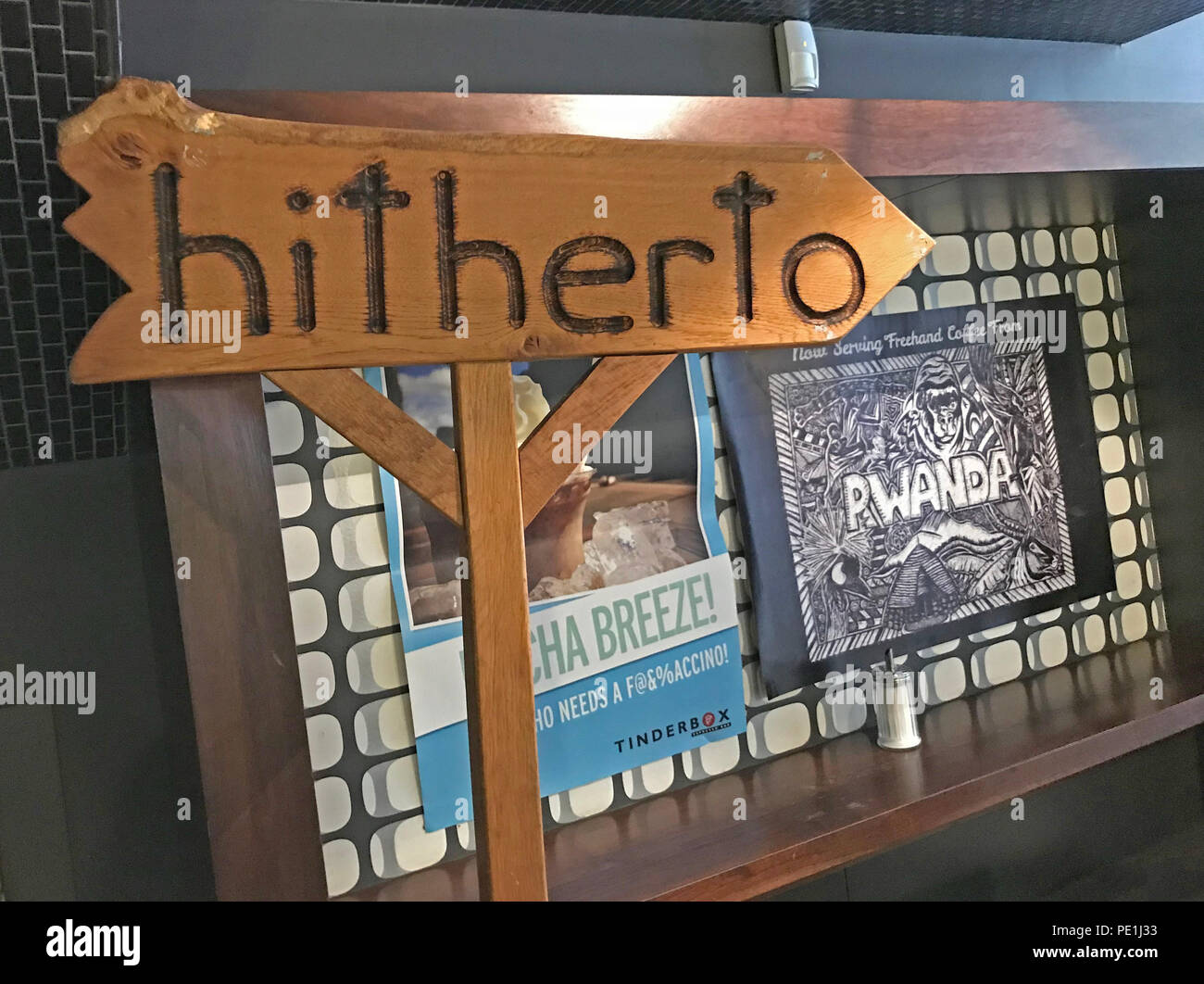
Image details
Contributor:
Tony SmithImage ID:
PE1J33File size:
31.2 MB (1.3 MB Compressed download)Releases:
Model - no | Property - noDo I need a release?Dimensions:
3816 x 2856 px | 32.3 x 24.2 cm | 12.7 x 9.5 inches | 300dpiDate taken:
9 August 2018Location:
120 Ingram St, Glasgow G1 1EJ, UKMore information:
. This descriptive scene preserves the working environment around 120 Ingram St, Glasgow G1 1EJ, UK, as it appeared in 2018. Within that setting the photograph concentrates on Hitherto sign, at Tinderbox, 118 Ingram St, Glasgow, Scotland, UK. The location can also be described in terms of food service, destination economy, food-and-drink business, food culture, hospitality premises, customer service, local tourism, consumer leisure, leisure hospitality, service economy, tourist accommodation, and visitor destination. For present-day editorial use, restaurants and hotels can also illustrate debates about consumer spending and delivery-platform competition, particularly where these affect sustainable tourism. The photograph fixes 120 Ingram St, Glasgow G1 1EJ, UK at one identifiable stage in its history, providing a reference against which later refurbishment, closure, demolition, conversion, new ownership or altered public use can be assessed. Beyond the immediate subject, the setting involves visitor economy, leisure venue, local dining, hospitality trade, hospitality employment, tourism economy. The record also refers to Tinderbox coffee, Hitherto sign at Tinderbox. The scene also carries the language of restaurant sector, and catering trade. In the mid-2020s, restaurants and hotels is increasingly discussed through changing visitor patterns and staffing, with attention turning to distinctive visitor experiences. In historical comparison, the image can help trace everyday services, social change, historic fabric, planning and redevelopment, and movement through the area within the surrounding area. The lasting documentary value lies in its record of public access, architecture and streetscape, transport patterns, neighbourhood identity, and ownership or occupation as part of the area's longer social history. The photograph also fixes the character of the setting for retrospective use.

