
Latchford railway sidings, Bridgefoot Warrington, Cheshire, England UK with Bus Garage in foreground
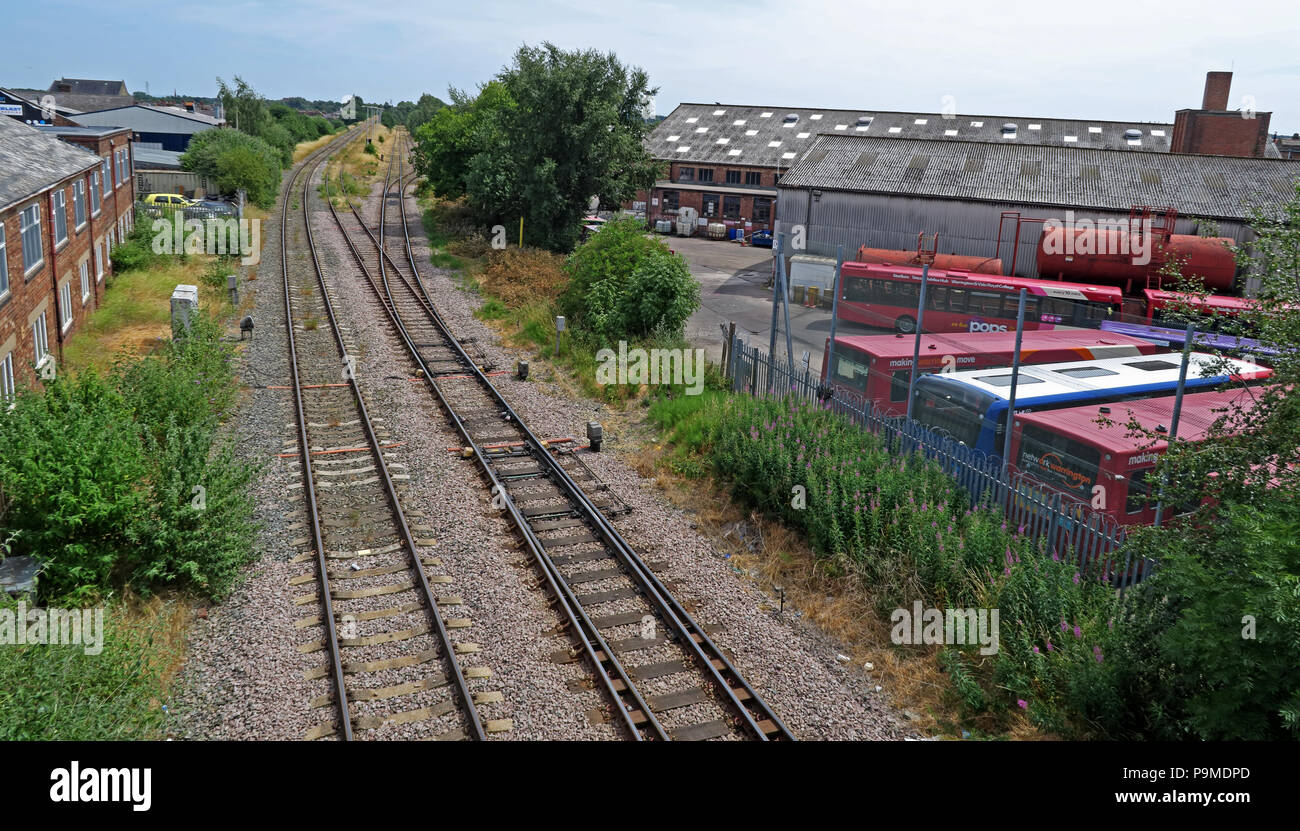
Image details
Contributor:
Tony SmithImage ID:
P9MDPDFile size:
48.8 MB (3.6 MB Compressed download)Releases:
Model - no | Property - noDo I need a release?Dimensions:
5472 x 3120 px | 46.3 x 26.4 cm | 18.2 x 10.4 inches | 300dpiDate taken:
1 July 2018More information:
. An editorial view documents the visible identity of the recorded location, as it appeared in 2018. The supplied image information identifies Latchford railway sidings, Bridgefoot Warrington, Cheshire, England UK with Bus Garage in foreground. The physical and social setting additionally connects with seafaring heritage, waterfront industry, harbour landscape, regional rail, intercity travel, maritime transport, rail transport, surface transport, transport corridor, rail modernisation, rail corridor, and commercial shipping. Current debate around railway governance often combines town-centre connectivity, fares and affordability and the practical challenge of renewed station districts. In the mid-2020s, community change is increasingly discussed through redevelopment and new technology, with attention turning to a clearer record of local change. For present-day editorial use, ferry services can also illustrate debates about port investment and cleaner fuels, particularly where these affect stronger coastal economies. Because this is a time-specific record of the recorded location, later comparison can reveal changes in signage, ownership, land use, transport, street furniture, building condition and the way the public uses the surrounding space, specifically in relation to Latchford railway sidings. The view also records themes involving roadside commerce, marine engineering, public transport network, marine transport, transport planning, sustainable mobility. Other relevant facets include road transport, railway operations, rail heritage, transport interchange, road safety, trackside infrastructure, ship handling, rail infrastructure, traffic management, and ferry connectivity. The wider contemporary story of train travel now includes public ownership alongside decarbonisation, while policy and investment increasingly consider renewed station districts. The frame further records period appearance around the recorded location as evidence of its time.

