
Hosepipe reel connected to a standpipe in garden, with leaking water
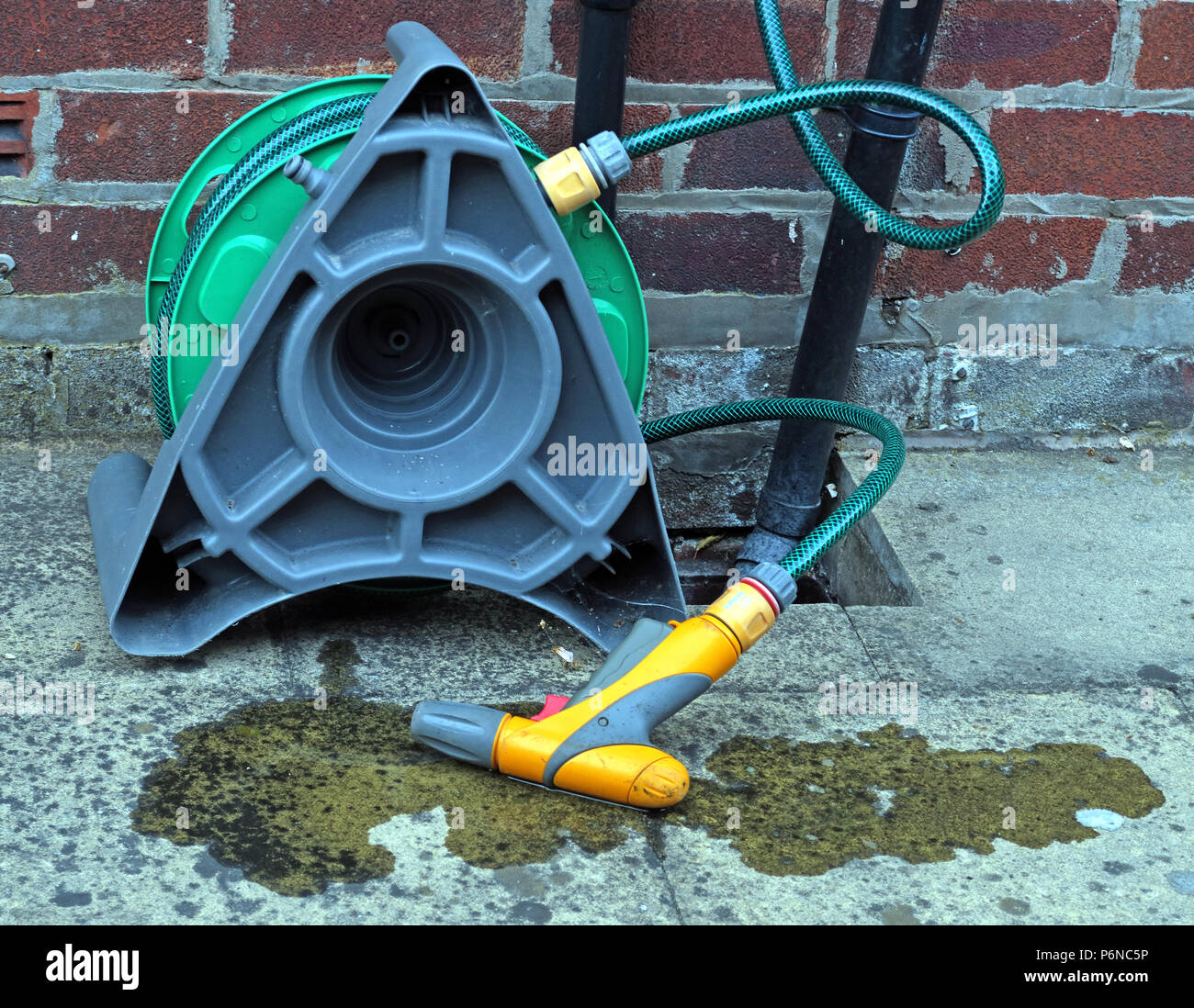
Image details
Contributor:
Tony SmithImage ID:
P6NC5PFile size:
49.1 MB (3.4 MB Compressed download)Releases:
Model - no | Property - noDo I need a release?Dimensions:
4704 x 3648 px | 39.8 x 30.9 cm | 15.7 x 12.2 inches | 300dpiDate taken:
30 June 2018More information:
A green garden hose, portable reel and yellow-and-grey spray nozzle lie beside a brick wall on a wet concrete surface. Water has collected around the disconnected attachment, creating a direct visual concept for hosepipe use, leakage, unnecessary consumption and the conservation of treated drinking water during exceptionally hot and dry weather. The photograph is particularly relevant to the restrictions announced by South East Water on 25 June 2026 following very high demand across its Kent supply area during the late-June heatwave. The company announced a formal Temporary Use Ban for approximately 850, 000 customers, taking legal effect from 00:01 on 3 July, while asking residents to stop using hosepipes and sprinklers immediately to help maintain reliable supplies. The measure applies to South East Water customers in Kent rather than every household supplied by other water companies across the county. A Temporary Use Ban commonly prevents mains-fed hoses from being used for activities including watering private gardens, cleaning vehicles, filling domestic swimming or paddling pools and washing patios. Watering cans, buckets, collected rainwater and some specifically exempt uses may remain permitted. Breaching an enforceable restriction can result in prosecution and a fine of up to £1, 000. The restrictions followed exceptional June temperatures and rapidly increasing household demand rather than proof that water sources had completely run dry. Britain provisionally reached 36.7°C at Merryfield, Somerset, on 25 June, setting a new national June maximum. Across Europe, a persistent high-pressure blocking pattern, widely described as a heat dome or omega block, produced record-breaking warmth and placed pressure on health services, farming, transport, energy and water infrastructure. Other UK water companies were urging customers to conserve supplies and monitoring conditions, but the available official evidence at the time confirmed the new statutory announcement

