
Accident at a Pelican Road Crossing, Howley, Warrington, Cheshire, England UK
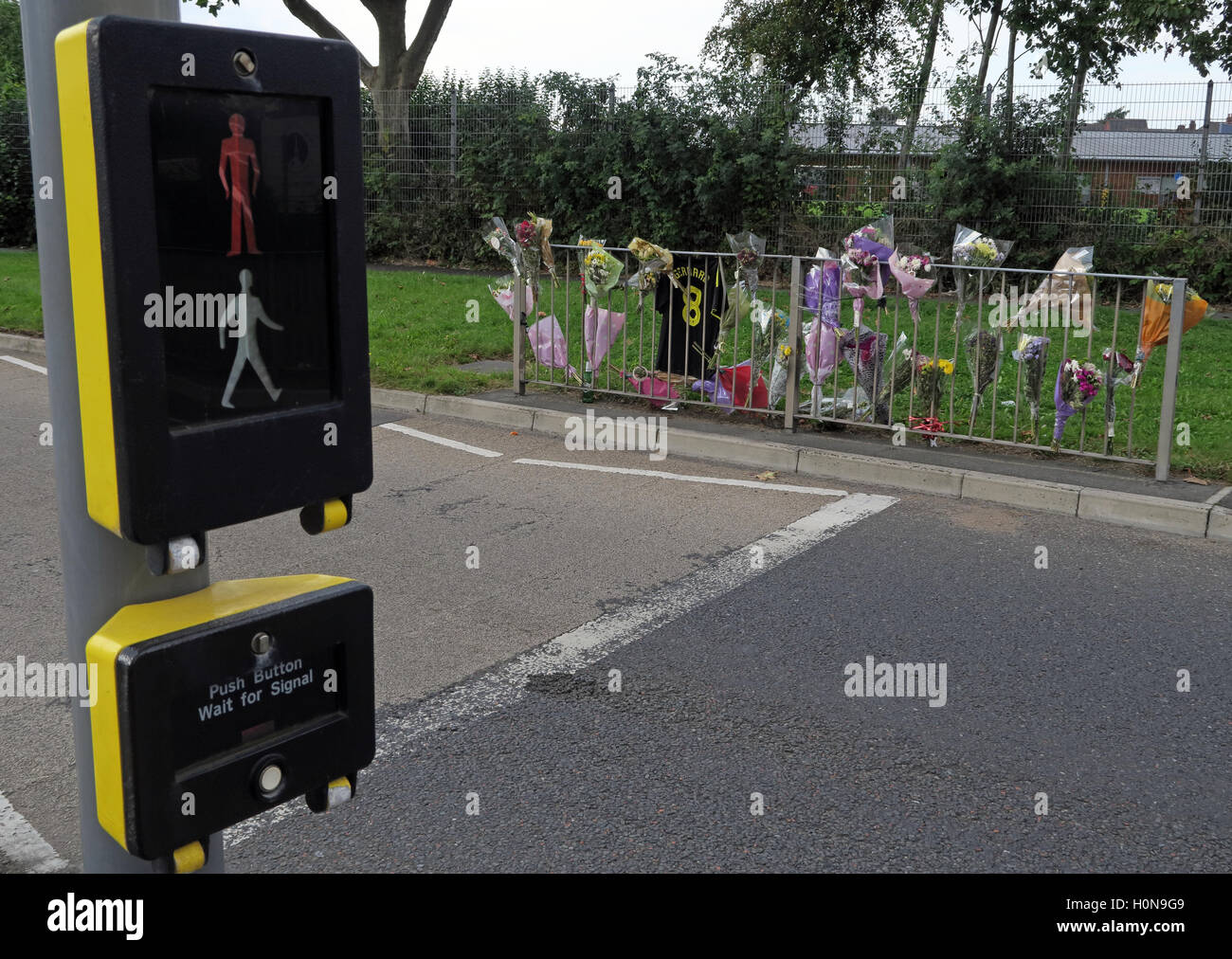
Image details
Contributor:
Tony SmithImage ID:
H0N9G9File size:
48.2 MB (2.8 MB Compressed download)Releases:
Model - no | Property - noDo I need a release?Dimensions:
4872 x 3456 px | 41.2 x 29.3 cm | 16.2 x 11.5 inches | 300dpiDate taken:
20 September 2016More information:
. This dated editorial view of the recorded location in 2016 captures more than the immediate subject, retaining clues about local use, design, activity and change. The principal subject is Accident at a Pelican Road Crossing, Howley, Warrington, Cheshire, England UK. The surrounding context encompasses public realm, public transport stop, passenger transport, memorial culture, tribute design, local history, period detail, community identity, changing land use, bus route infrastructure, street-side transport, roadside transit, social history, and local remembrance. Today's relevance is strengthened by memorial maintenance, heritage conservation and the continuing question of the value of inscriptions and motifs for local history. From a 2025-onward perspective, passenger information and service frequency are closely linked to this subject, alongside the shift toward cleaner vehicles and integrated ticketing. Small period details of transport arrangements and footfall at the recorded location may become more significant with time, particularly following new ownership. Other useful contextual ideas include bus infrastructure, commemorative object, place identity, archival record, public commemoration, historic inscription, before-and-after reference, and community memory. The recorded references to Howley, Crossing, Accident, and Pelican preserve clues about how the subject was presented, used or understood at the time. By fixing the subject within the recorded location, the image preserves more than the headline object or building: it records part of the locality's everyday history. Its period value extends to memorial maintenance and the value of inscriptions and motifs for local history when considered against later change at the recorded location. The location additionally provides evidence of reliability and the shift toward cleaner vehicles and integrated ticketing without losing the local specificity of the recorded location.

