
Three girls and a boy by Wilfried Fitzenreiter - Statue by the Spree River, Moabit, Berlin, Germany, frontal view
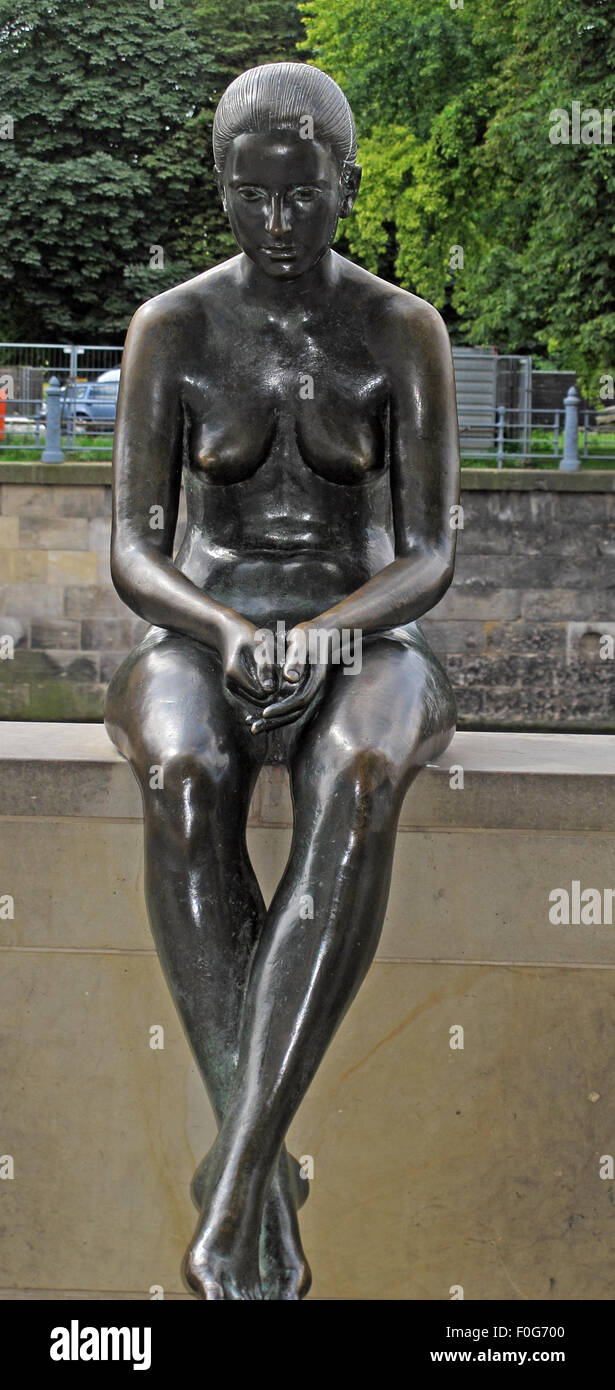
Image details
Contributor:
Tony SmithImage ID:
F0G700File size:
25.4 MB (1 MB Compressed download)Releases:
Model - no | Property - noDo I need a release?Dimensions:
2050 x 4328 px | 17.4 x 36.6 cm | 6.8 x 14.4 inches | 300dpiDate taken:
8 August 2012Location:
Spree River, Moabit, Berlin, GermanyMore information:
. Three girls and a boy by Wilfried Fitzenreiter - Statue by the Spree River, Moabit, Berlin, Germany, frontal view. Photographed on 8 August 2012. 1988: Three girls and one boy, DomAquarée, Berlin (originally created between 1977 and 1979 as a group back to back in the midst of a bubbling fountain between Karl-Liebknecht-Straße and Palace Hotel on the sidewalk freely accessible). In the longer view, human-interest photographs record gestures and relationships that sit outside formal institutions: family care, childhood, friendship and affection; Small interactions such as holding hands can communicate age, dependence and connection without requiring a staged portrait. Looking at the subject's development, murals, sculptures and civic artworks turn public space into a record of local culture; They can commemorate people and events, respond to politics, celebrate industry or simply enliven streets, while the artists' materials and styles place the work within a particular period. Current 2026 relevance comes from the fact that contemporary editorial use often places ordinary family interaction within broader discussions of public space, services, wellbeing and community life. For the 2026 context, public art and murals remain important to place-making, tourism and regeneration, particularly in city districts where street art has become part of the visitor economy; They also raise questions about conservation, ownership, temporary work and the rapid redevelopment of urban neighbourhoods. In historical terms, everyday family scenes provide a social-history record of relationships, clothing and public behaviour; They can be especially valuable when the setting or activity changes over time, such as libraries, playgrounds, streets or travel. As of 2026, contemporary editorial use often places ordinary family interaction within broader discussions of public space, services, wellbeing and community life.

