
Zombie Shack Graffiti, archway behind the Thirsty Scholar pub, Oxford Road Manchester, England, UK, M1 5NP
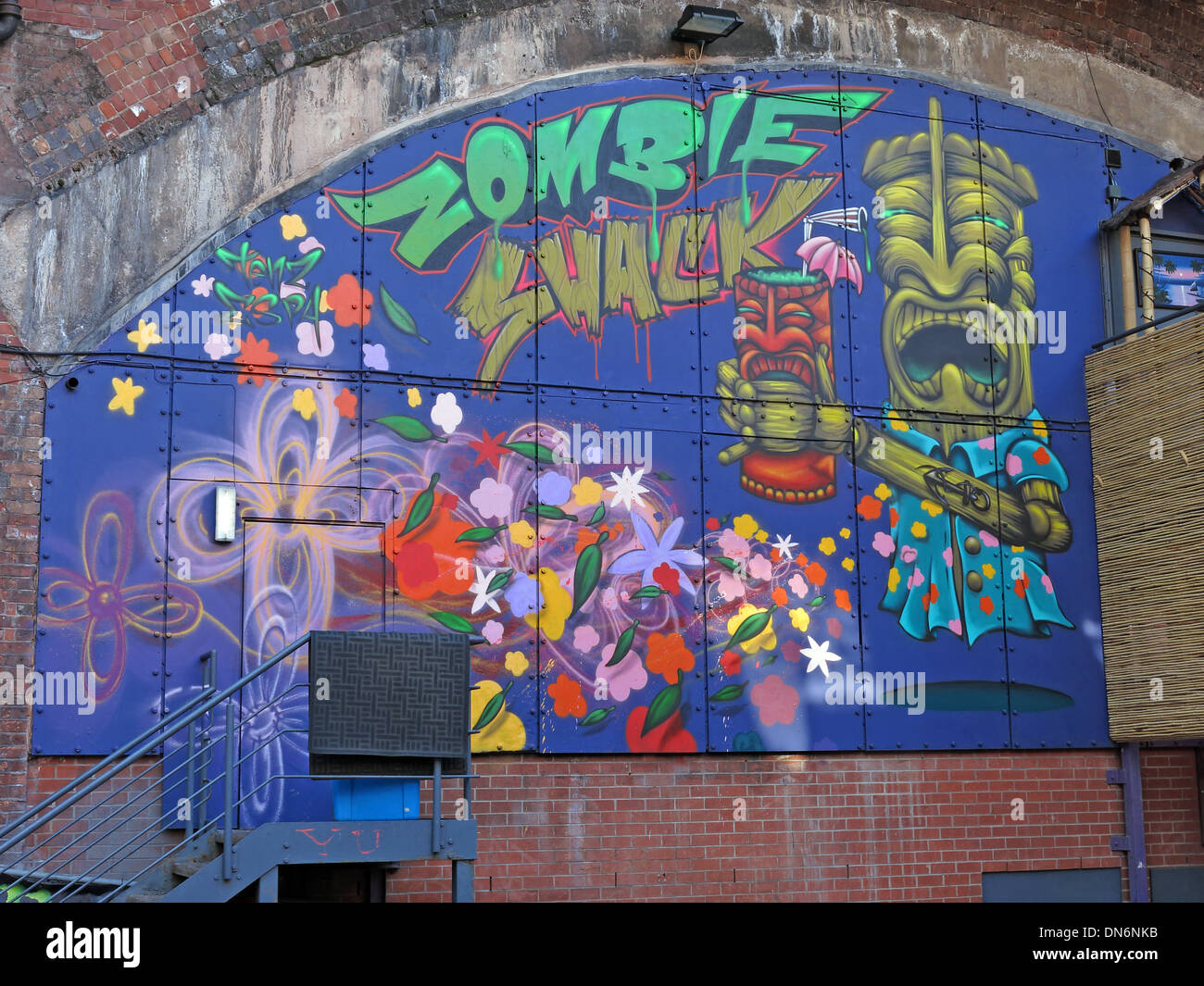
Image details
Contributor:
Tony SmithImage ID:
DN6NKBFile size:
34.3 MB (1.8 MB Compressed download)Releases:
Model - no | Property - noDo I need a release?Dimensions:
4000 x 3000 px | 33.9 x 25.4 cm | 13.3 x 10 inches | 300dpiDate taken:
24 September 2013Location:
50 New Wakefield Street, Manchester, England, UK, M1 5NPMore information:
. Zombie Shack Graffiti, archway behind the Thirsty Scholar pub, Oxford Road Manchester, England, UK, M1 5NP. Photographed on 24 September 2013. The recorded location is 50 New Wakefield Street, Manchester, England, UK, M1 5NP. Free music venue and nightclub, serving vegetarian and vegan pub food including all-day breakfasts. From a heritage perspective, murals, sculptures and civic artworks turn public space into a record of community culture; They can commemorate people and events, respond to politics, celebrate industry or simply enliven streets, while the artists' materials and styles place the work within a particular period. The historical context is that street and highway scenes record the practical infrastructure of mobility, including road signs, junctions, bridges, parking controls and changing vehicle use; They also provide a visual history of traffic growth, road engineering and the effort to balance drivers, pedestrians and community communities. The historical context is that farming and allotment imagery records the practical work behind food production, from ploughing and arable crops to small-scale vegetable growing; Allotments expanded strongly during periods of food shortage and remain an important part of British urban and suburban gardening culture. As of 2026, contemporary interest in public art is closely linked to regeneration and cultural tourism. murals and sculpture continue to be used to express identity and animate public space, while redevelopment can make photographic records of earlier works increasingly valuable. The subject remains topical in 2026 because road policy continues to focus on safety, congestion, emissions and the balance between private cars, buses, cycling and walking; Images of older traffic controls, signs and busy roads provide useful comparison with current debates about sustainable transport and street design. Useful alternative terminology includes street art, visual culture, and cultural identity.

