
Concierge security man at Argyll Arcade Victorian Glasgow shopping mall , Scotland, UK
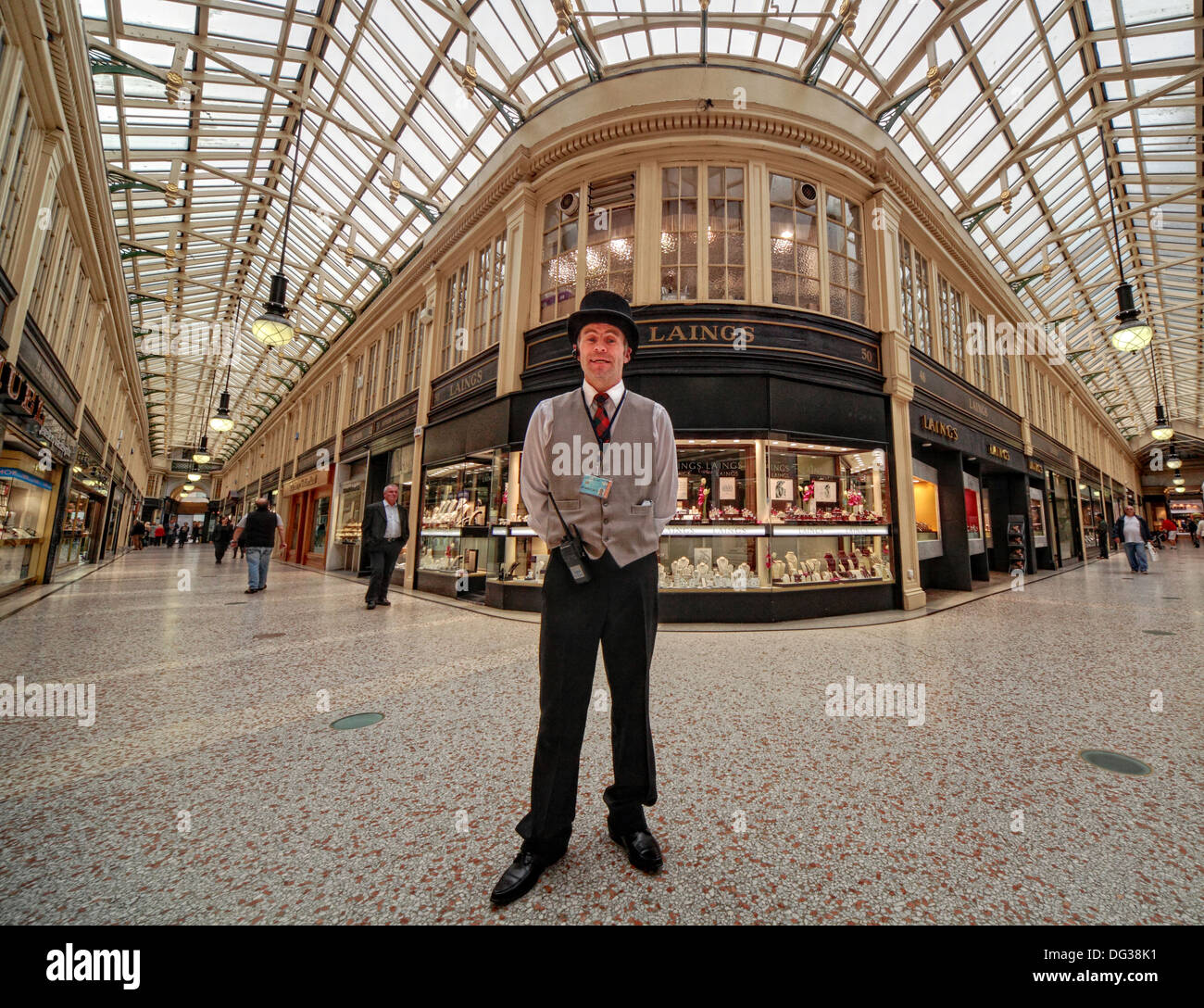
Image details
Contributor:
Tony SmithImage ID:
DG38K1File size:
52.2 MB (3.5 MB Compressed download)Releases:
Model - no | Property - noDo I need a release?Dimensions:
4872 x 3743 px | 41.2 x 31.7 cm | 16.2 x 12.5 inches | 300dpiDate taken:
23 August 2013Location:
30 Buchanan Street, Merchant City, Glasgow, Scotland UK G2 8BGMore information:
. Concierge security man at Argyll Arcade Victorian Glasgow shopping mall , Scotland, UK. Photographed on 23 August 2013. The recorded location is 30 Buchanan Street, Merchant City, Glasgow, Scotland UK G2 8BG. A better class of security guard in the poshest shopping centre in Glasgow! Looking at the subject's development, physical access control traditionally relied on guards, passes, keys and written instructions; Surviving notices show the routines of secure workplaces and can reveal the culture of secrecy or safety surrounding military, transport and industrial operations. Historically, historic and contemporary architecture can be read as a record of investment, planning and changing urban functions; Civic, commercial, industrial and residential buildings each contribute to the character of a townscape, particularly where older structures are adapted rather than demolished. In the longer view, historic objects and places gain meaning through survival; Materials, craftsmanship, inscriptions and later alterations can reveal how a property, machine or everyday item was made, used and valued, while preservation decisions show which parts of the past communities choose to retain. For the 2026 context, modern security spans both buildings and information systems; Historic signs about passes and restricted entrances therefore illustrate the continuity of access control even though the technology used to authenticate people has changed. In 2026, the reuse of existing buildings is increasingly discussed alongside conservation, embodied carbon and town-centre regeneration; Images of older façades and converted premises can therefore illustrate both architectural heritage and the practical pressures of adapting buildings for new uses. As of 2026, heritage continues to be economically and culturally significant through tourism, education and place-making, while the cost of maintaining historic fabric creates continuing debate about conservation and reuse.

