
The Royal Regiment window, Canongate Kirk,Edinburgh,Scotland,UK "The first to follow, The last to forsake thee"
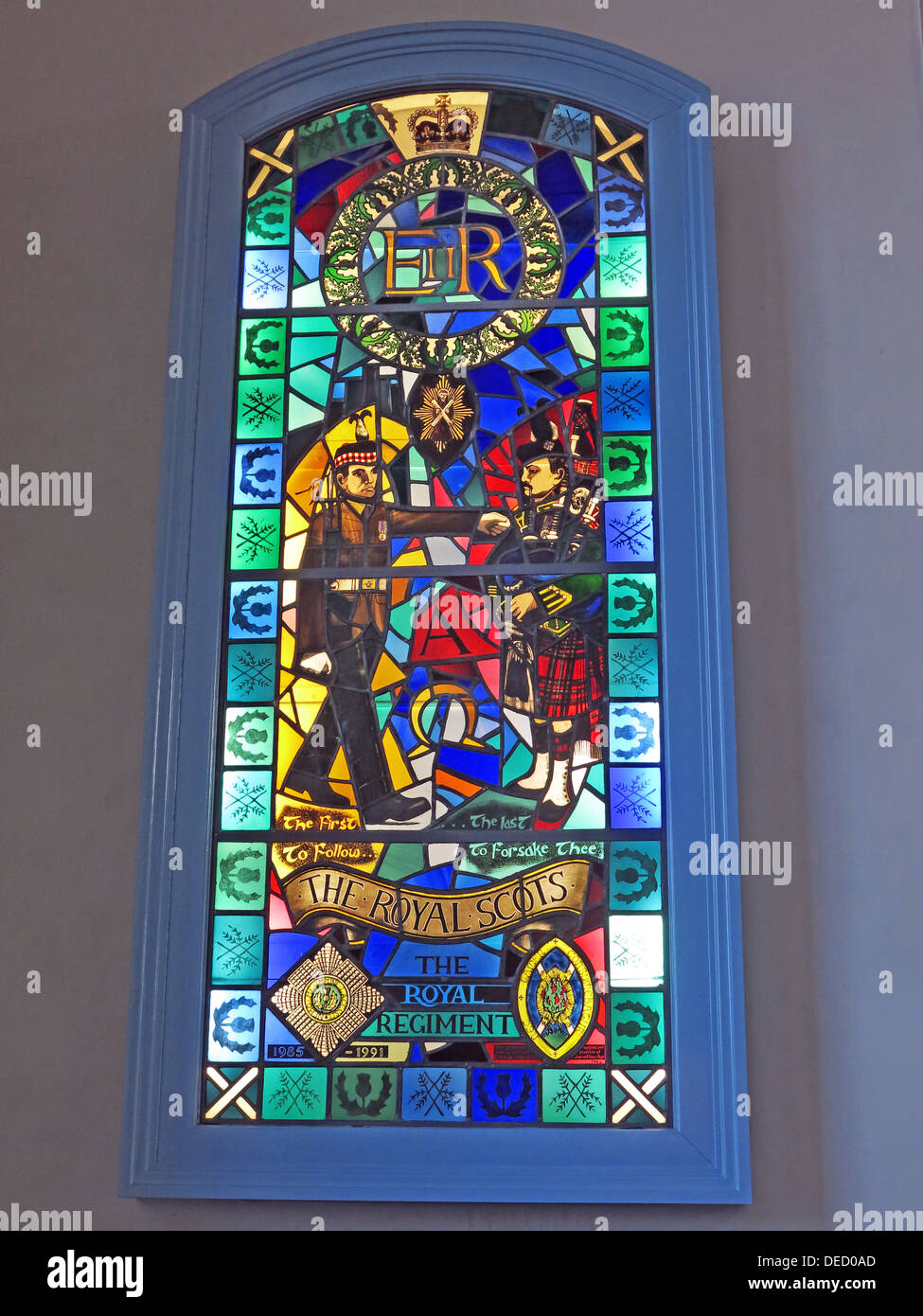
Image details
Contributor:
Tony SmithImage ID:
DED0ADFile size:
34.3 MB (1.6 MB Compressed download)Releases:
Model - no | Property - noDo I need a release?Dimensions:
3000 x 4000 px | 25.4 x 33.9 cm | 10 x 13.3 inches | 300dpiDate taken:
26 August 2013Location:
Canongate, Edinburgh, Scotland, UKMore information:
. The Royal Regiment window, Canongate Kirk, Edinburgh, Scotland, UK;The first to follow, The last to forsake thee. Photographed on 26 August 2013. The recorded location is Canongate, Edinburgh, Scotland, UK. Commissioned by;1st Battalion, The Royal Scots;(The Royal Regiment);originally installed in the kirk at;Albuhera Barracks, Werl, Germany. Transferred to the Regimental Kirk, Canongate;(The Kirk of Holyrood House);27th March 1994. Canongate Kirk was built between 1688 and 1691 after the congregation was displaced from Holyrood Abbey. The distinctive Dutch-gabled church serves the Canongate parish at the lower end of Edinburgh's Royal Mile and has longstanding links with Holyroodhouse and the military. Its interior, monuments, organ and stained glass sit within one of Scotland's most historically dense streetscapes. In historical terms, churches combine worship with architecture, local memory and centuries of community history; Their stonework, stained glass, memorials, furnishings and churchyards often record successive periods of rebuilding, changing liturgy, local benefactors, war remembrance and family history. The historical context is that objects from the First and Second World Wars often have significance beyond their immediate function; Uniform items, medical equipment, memorials and museum displays illustrate logistics, casualty care, military identity and the long cultural memory of industrialised warfare. In the longer view, historic inscriptions offer unusually direct documentary evidence; Names, dates, dedications and symbolic imagery can connect a present-day location with former residents, workers, congregations or wartime casualties, making the object relevant to both genealogy and wider social history. During 2026, historic places of worship remain important not only for faith but also for conservation, tourism, music, community use and local identity; Their maintenance illustrates the continuing challenge of caring for ageing heritage.

