
Robert Fergusson Scots Poet bronze Statue from the canongate Edinburgh Royal Mile.
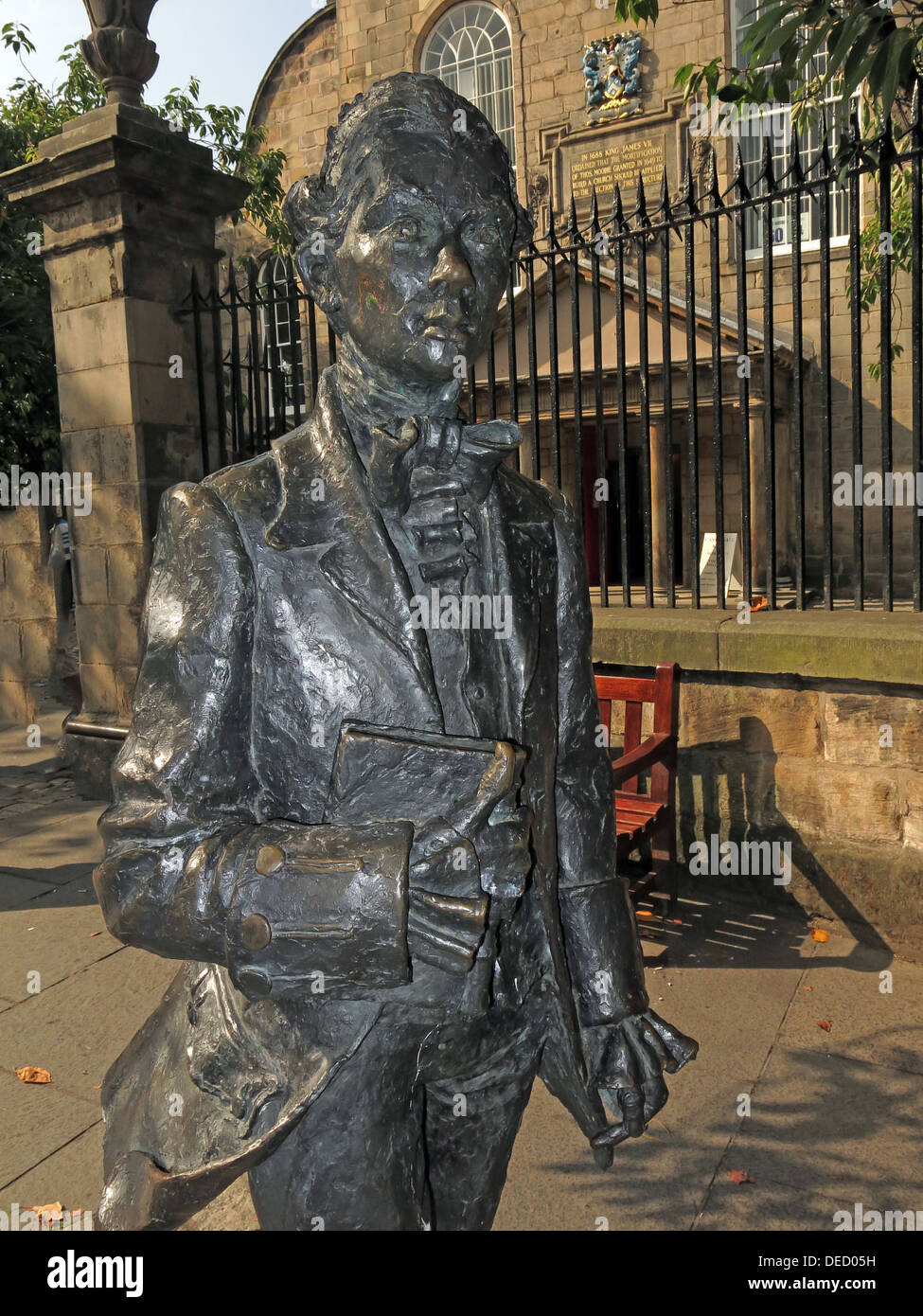
Image details
Contributor:
Tony SmithImage ID:
DED05HFile size:
34.3 MB (1.8 MB Compressed download)Releases:
Model - no | Property - noDo I need a release?Dimensions:
3000 x 4000 px | 25.4 x 33.9 cm | 10 x 13.3 inches | 300dpiDate taken:
26 August 2013Location:
Canongate kirk, Edinburgh Royal Mile, Scotland UKMore information:
. Robert Fergusson Scots Poet bronze Statue from the canongate Edinburgh Royal Mile. Photographed on 26 August 2013. The recorded location is Canongate kirk, Edinburgh Royal Mile, Scotland UK. Edinburgh-born poet Robert Fergusson achieved so much poetical success in his short life of twenty-four years that Robert Burns called him 'my elder brother in the muse'. Robert Fergusson was an eighteenth-century Scots poet whose vivid writing about Edinburgh strongly influenced Robert Burns. The bronze statue outside Canongate Kirk was sculpted by David Annand and unveiled in 2004, showing Fergusson walking through the street environment he wrote about. Burns admired Fergusson so much that he paid for a memorial stone over the poet's grave in Canongate Kirkyard, creating a direct link between two major figures in Scottish literary history. Canongate Kirk was built between 1688 and 1691 after the congregation was displaced from Holyrood Abbey. The distinctive Dutch-gabled church serves the Canongate parish at the lower end of Edinburgh's Royal Mile and has longstanding links with Holyroodhouse and the military. Its interior, monuments, organ and stained glass sit within one of Scotland's most historically dense streetscapes. Looking at the subject's development, public art can become part of the identity of a street or neighbourhood, recording political ideas, local history, humour, memory and changing cultural tastes; Murals, sculpture and decorative art are especially valuable as documentary subjects because they may be altered, moved, weathered or removed. Historically, street signs, shop fascias, notices and inscriptions combine practical communication with graphic design; Typefaces, colours and wording can identify an era, organisation or local custom, making close photographs valuable for social, transport and commercial history. Related search language includes street art, artwork, visual culture, cultural identity, place-making, and community art.

