
Welcome to Dewsbury sign, Station,West Yorkshire, England UK
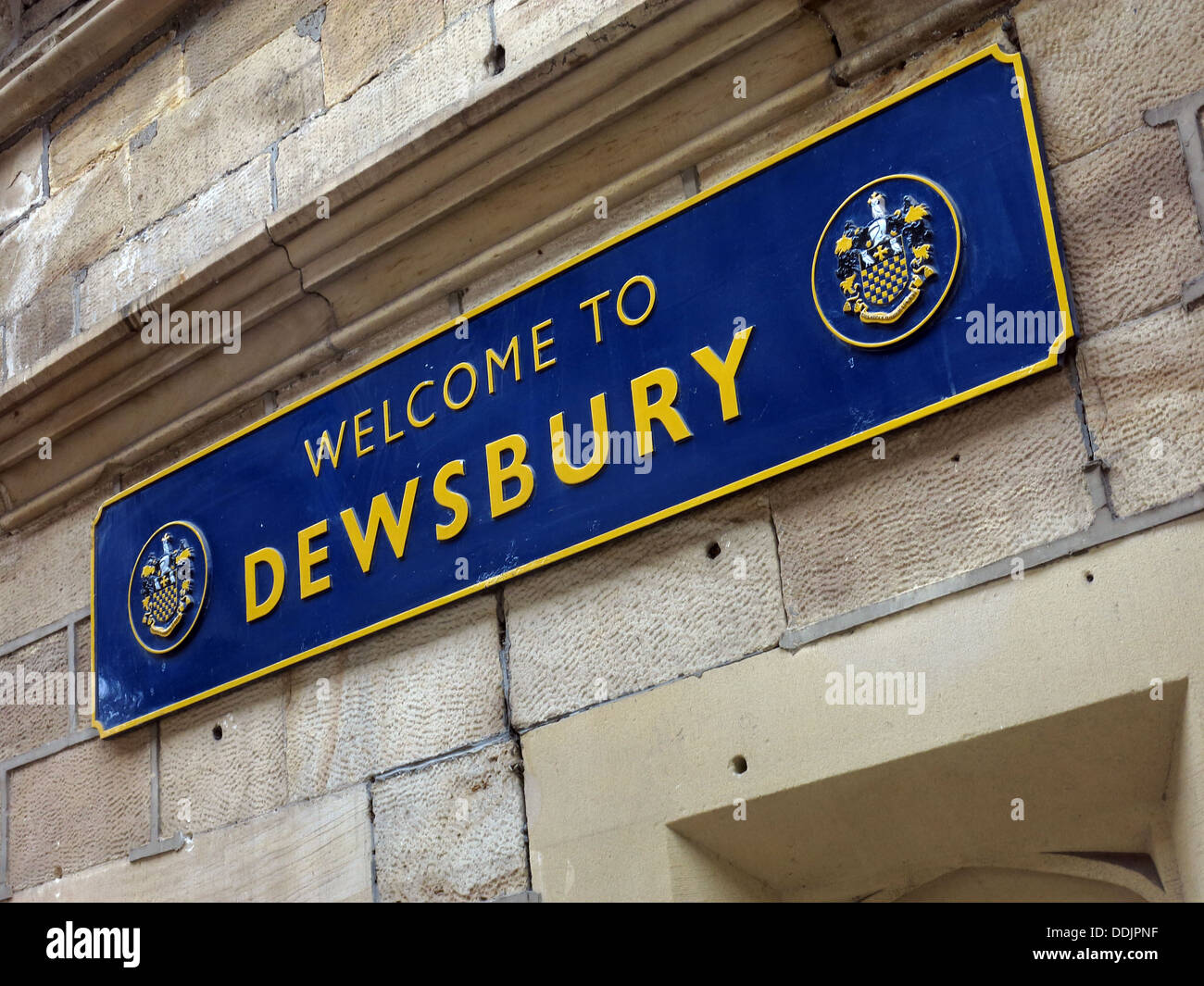
Image details
Contributor:
Tony SmithImage ID:
DDJPNFFile size:
34.3 MB (1.6 MB Compressed download)Releases:
Model - no | Property - noDo I need a release?Dimensions:
4000 x 3000 px | 33.9 x 25.4 cm | 13.3 x 10 inches | 300dpiDate taken:
13 July 2013Location:
Dewsbury Railway station, Station Road, Dewsbury, Wet Yorkshire WF13 1HFMore information:
. Welcome to Dewsbury sign, Station, West Yorkshire, England UK. Photographed on 13 July 2013. The recorded location is Dewsbury Railway station, Station Road, Dewsbury, Wet Yorkshire WF13 1HF. This is a pub stop on the Ale Train Trail. From a heritage perspective, stations and railway infrastructure are both working transport assets and historical records; Their changing operators, signage, ticketing systems, rolling stock and architecture chart the development of British rail travel from the Victorian era to modern inter-city and commuter services. As background, signs and notices are ephemeral pieces of design that can become significant historical evidence; Lettering, logos, warnings and directions record former businesses, regulations, transport systems and public messages that may disappear long before the surrounding building changes. As of 2026, rail reform gives this type of image extra context; The government is legislating for Great British Railways to coordinate infrastructure, services, fares and timetables, while historic operator liveries and station equipment increasingly become records of the post-privatisation era. Against the 2026 backdrop, digital wayfinding is widespread, but physical signage remains essential for safety, accessibility and identity; Historic notices and ghost signs are also increasingly appreciated as part of the character of streets and buildings. As background, britain's railways reshaped towns, industry and passenger travel from the nineteenth century onwards, creating a dense network of stations, goods yards, signalling infrastructure and long-distance routes; Surviving buildings, signs and operating equipment now document both railway heritage and continuing public transport. As of 2026, much public information has moved onto smartphones and digital displays, making older fixed signs and printed notices increasingly useful as evidence of how people once navigated places, bought services and followed rules.

