
Green Triumph Stag, 2+2 sports tourer, British Triumph Motor Company, styled by Italian designer Giovanni Michelotti
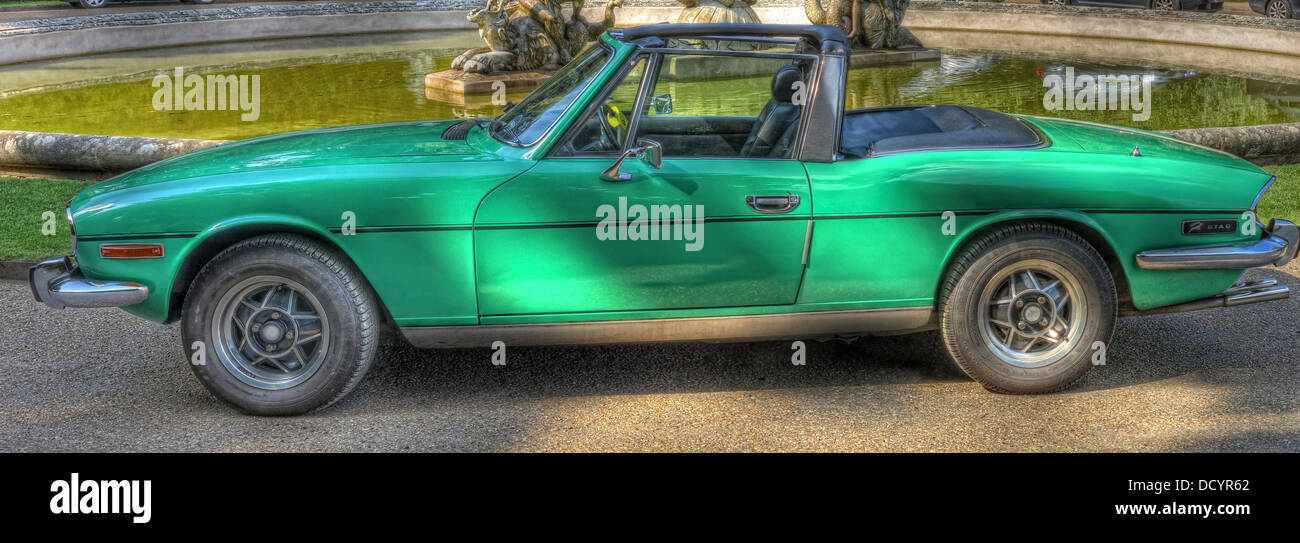
Image details
Contributor:
Tony SmithImage ID:
DCYR62File size:
40.6 MB (2.3 MB Compressed download)Releases:
Model - no | Property - noDo I need a release?Dimensions:
6379 x 2224 px | 54 x 18.8 cm | 21.3 x 7.4 inches | 300dpiDate taken:
8 August 2013More information:
. Green Triumph Stag, 2+2 sports tourer, British Triumph Motor Company, styled by Italian designer Giovanni Michelotti. The photograph was taken on 08 August 2013. This editorial stock image documents the subject as it appeared at that time, preserving a clear record of the place, its appearance and the everyday details surrounding it. The scene is closely associated with Triumph Motor Company, British Triumph Motor Company, Triumph Stag, coupe, coupé, four-seater, convertible, Triumph Motors, Green Triumph Stag and Green Triumph, adding specific subject detail and useful search context without losing the documentary focus on the main subject. The photograph is relevant to sport, supporters, venues, clubs, competition and the strong connection between sporting institutions and local identity. It can support editorial features about football, rugby or other spectator sports, stadiums, club heritage, matchday culture, investment, redevelopment, fans, sponsorship and the commercial side of professional sport. Signs, colours, banners, buildings, entrances and surrounding streets can help establish a recognisable sporting context without relying on a posed action image. The dated scene also has archive value as clubs, grounds, branding and neighbourhoods evolve over time. Search themes include sport, clubs, stadiums, supporters, venues, matchday culture, sponsorship, sporting heritage, redevelopment and local identity. A dated view is valuable where club branding, grounds, surrounding streets or the commercial presentation of a venue subsequently changes. The combination of a named subject, precise location and capture date gives the image particular value to editors who need a real, identifiable place rather than a generic illustrative photograph. It can be used in newspapers, magazines, books, websites, documentaries, heritage projects and retrospective features where geographical accuracy and period detail matter.

