
Sillfield Farm, Wild Boar Stall, Borough Market, Southwark, London,
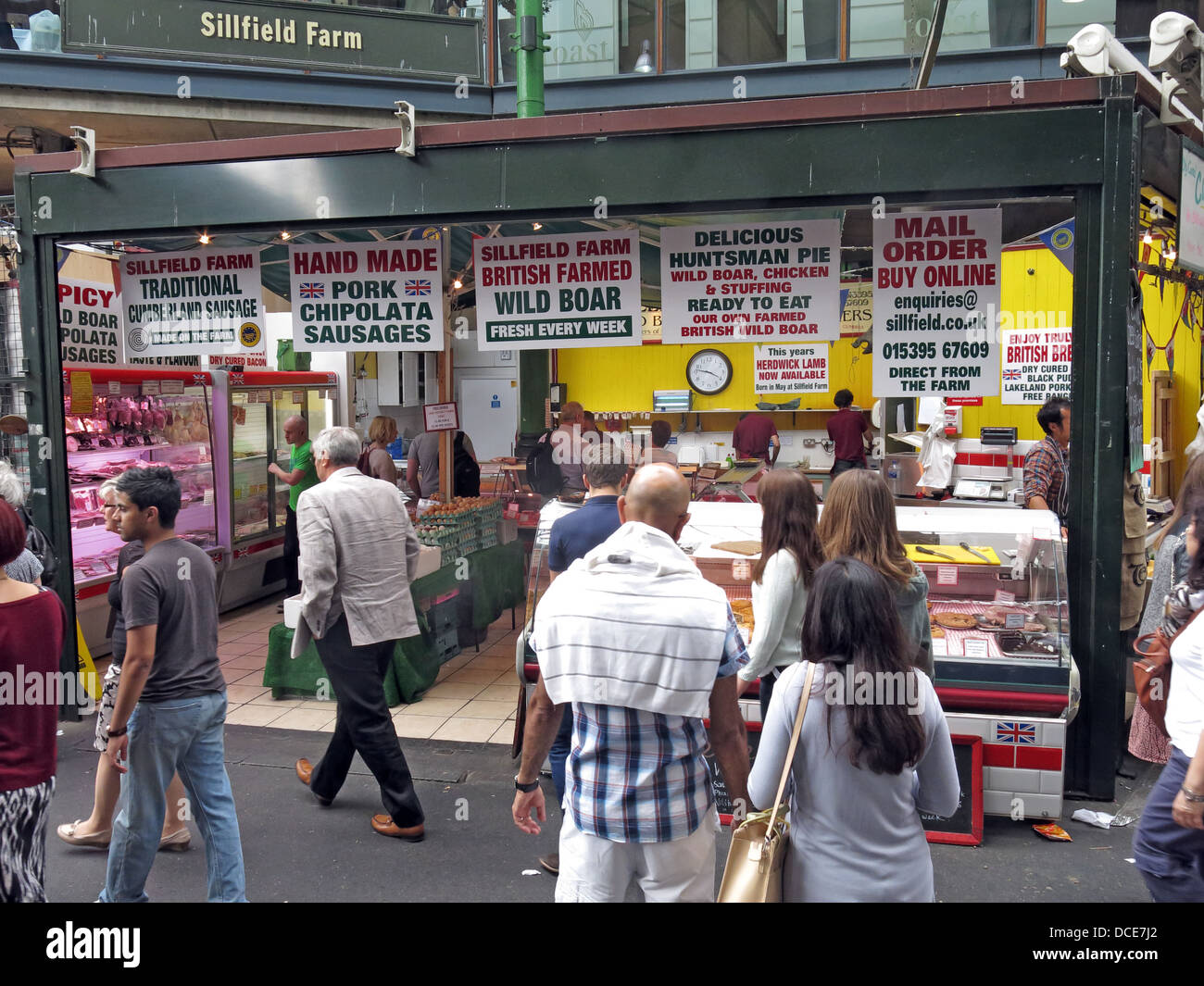
Image details
Contributor:
Tony SmithImage ID:
DCE7J2File size:
34.3 MB (1.5 MB Compressed download)Releases:
Model - no | Property - noDo I need a release?Dimensions:
4000 x 3000 px | 33.9 x 25.4 cm | 13.3 x 10 inches | 300dpiDate taken:
10 August 2013Location:
8 Southwark St, London, England, UK, SE1 1TLMore information:
The wild boar (Sus scrofa), also known as the wild swine, Eurasian wild pig, or simply wild pig, is a suid native to much of Eurasia, North Africa, and the Greater Sunda Islands. Human intervention has spread its distribution further, making the species one of the widest-ranging mammals in the world, as well as the most widely spread suiform.[4] Its wide range, high numbers, and adaptability mean that it is classed as least concern by the IUCN and it has become an invasive species in part of its introduced range. The animal probably originated in Southeast Asia during the Early Pleistocene, and outcompeted other suid species as it spread throughout the Old World. As of 1990, up to 16 subspecies are recognized, which are divided into four regional groupings based on skull height and lacrimal bone length. The species lives in matriarchal societies consisting of interrelated females and their young (both male and female). Fully grown males are usually solitary outside the breeding season. The grey wolf is the wild boar's main predator throughout most of its range, except in the Far East and the Lesser Sunda Islands, where it is replaced by the tiger and Komodo dragon, respectively. It has a long history of association with humans, having been the ancestor of most domestic pig breeds and a big-game animal for millennia. Boars have also re-hybridized in recent decades with feral pigs; these boar–pig hybrids have become a serious pest animal in Australia, Canada, United States, and Mexico.

