
Putting a green Lloyds Avios account card into a co-op cash machine
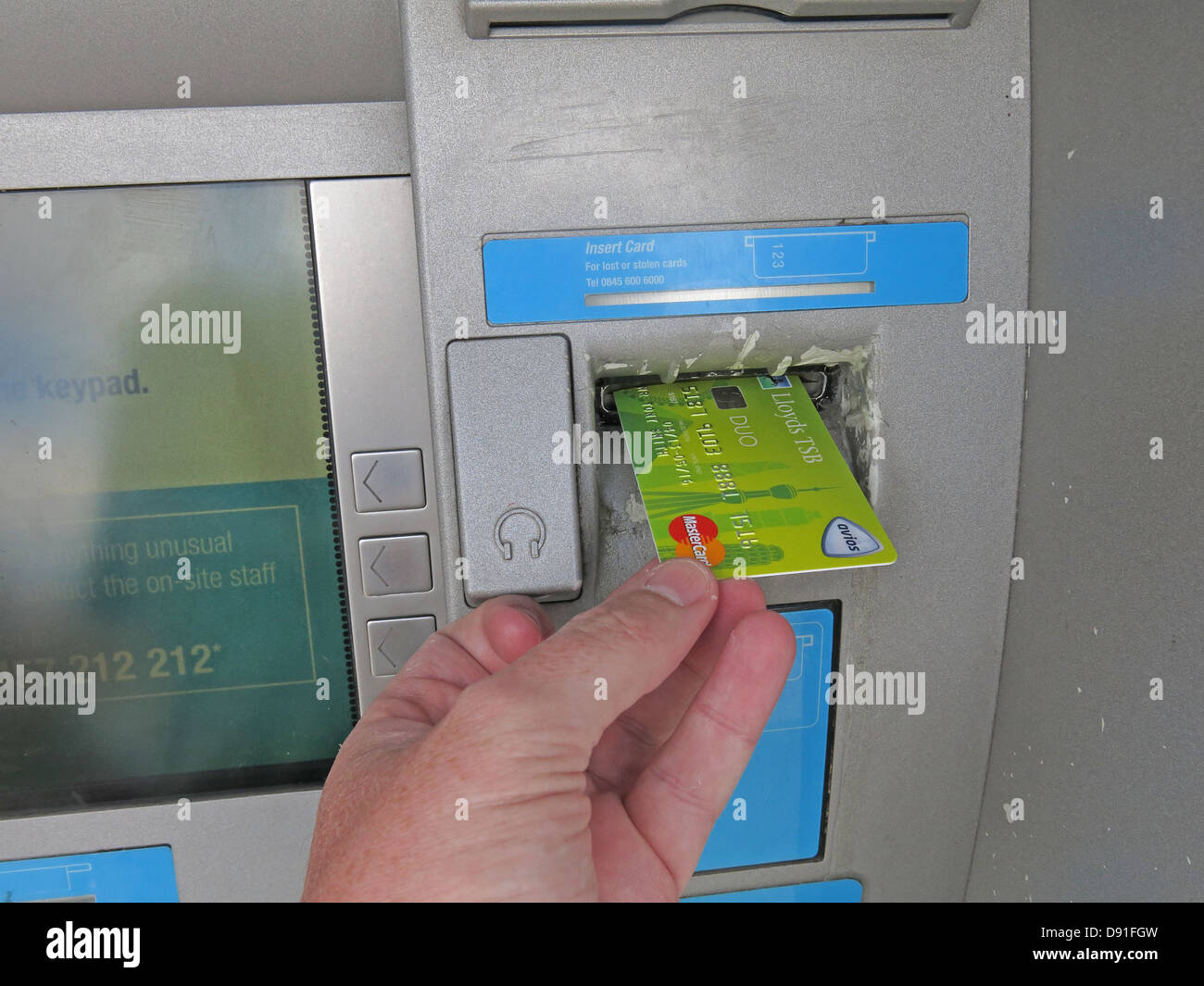
Image details
Contributor:
Tony SmithImage ID:
D91FGWFile size:
34.3 MB (1.4 MB Compressed download)Releases:
Model - yes | Property - noDo I need a release?Dimensions:
4000 x 3000 px | 33.9 x 25.4 cm | 13.3 x 10 inches | 300dpiDate taken:
8 June 2013Location:
Knutsford Road, Grappenhall, Warrington, Cheshire, WA4 2PL, United KingdomMore information:
. Putting a green Lloyds Avios account card into a co-op cash machine. Photographed on 8 June 2013. The recorded location is Knutsford Road, Grappenhall, Warrington, Cheshire, WA4 2PL, United Kingdom. From a heritage perspective, printed and graphic ephemera are highly effective dating evidence; Tickets, labels, cards, stamps, posters and logos combine wording, typography, colour and branding in forms that are often discarded after use, so surviving examples can become valuable records of popular culture and commerce. The historical context is that financial objects and premises connect economic history with daily life; Banknotes, coins, savings products, cheques, branch buildings and ATMs show how people stored and accessed money before digital banking reduced the visibility of many traditional banking services. As of 2026, digital-first communication means many everyday printed objects are disappearing; Older tickets, labels, cards and signs therefore provide useful material for stories about changing design, retail and consumer behaviour. The subject remains topical in 2026 because cash is used less often than in previous decades but remains important, particularly for vulnerable consumers and some small businesses; FCA access-to-cash rules require designated banks and building societies to assess local provision and address significant gaps, making images of ATMs, notes and former branches relevant to financial inclusion. As background, graphic design turns practical information into a visual object; Typefaces, colour, layout and printing methods can identify a period or brand, while small items such as tickets and cards preserve events, prices and messages that may exist nowhere else in physical form. In the present 2026 context, digital-first communication means many everyday printed objects are disappearing; Older tickets, labels, cards and signs therefore provide useful material for stories about changing design, retail and consumer behaviour.

