
Wave Crest Trawler docked at Stornoway Fishing Port & Harbour at dusk
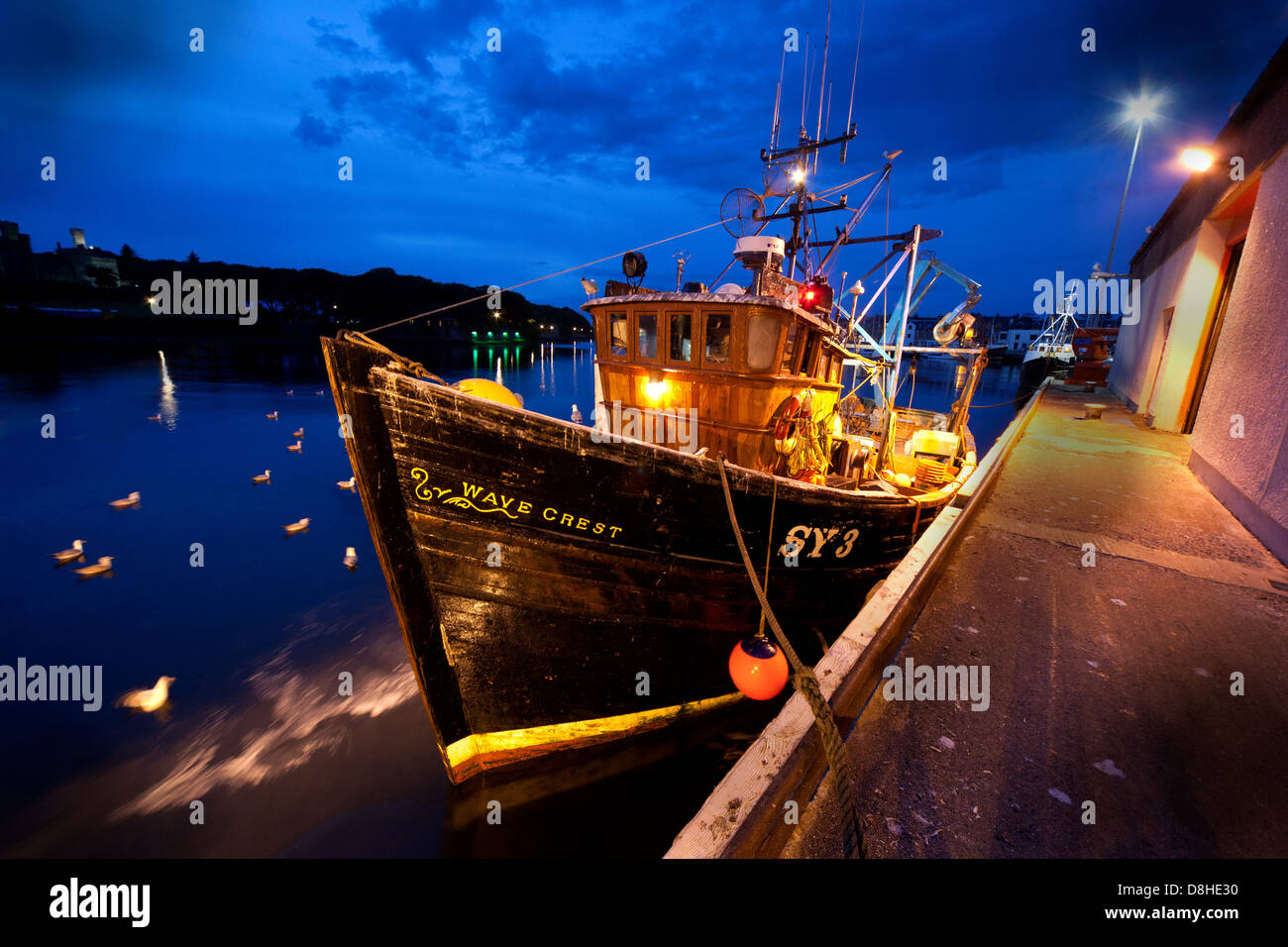
Image details
Contributor:
Tony SmithImage ID:
D8HE30File size:
60.2 MB (3.1 MB Compressed download)Releases:
Model - no | Property - noDo I need a release?Dimensions:
5616 x 3744 px | 47.5 x 31.7 cm | 18.7 x 12.5 inches | 300dpiDate taken:
13 July 2010Location:
Stornoway, Isle of Lewis, Western Isles, Scotland UK SY1More information:
. Wave Crest Trawler docked at Stornoway Fishing Port & Harbour at dusk. Photographed on 13 July 2010. The recorded location is Stornoway, Isle of Lewis, Western Isles, Scotland UK SY1. In the longer view, maritime scenes record both movement and infrastructure: ships, ferries, fishing boats, quays and waterfront buildings show how ports serve commerce, communities and tourism; The details of a vessel's design, livery and role can also date a photograph precisely. The wider historical story is that seasonal and low-light photography can emphasise the relationship between natural conditions and the built environment; Dusk, snow, mist or dramatic cloud often reveal lighting, silhouettes and reflective surfaces that are less apparent in ordinary daylight. Current 2026 relevance comes from the fact that modern maritime policy increasingly combines freight efficiency with lower-carbon shipping and port investment; Photographs of working vessels and harbours can illustrate the continuity between traditional maritime trades and today's logistics, offshore and passenger sectors. In the present 2026 context, landscape imagery is increasingly used alongside discussion of climate, resilience, tourism and development; Older panoramas can show how skylines, waterfronts and vegetation have changed over a comparatively short period. In historical terms, harbours and shipping routes have long shaped British coastal and riverside towns; Fishing, cargo handling, ferry services, shipbuilding and port engineering created distinctive working landscapes that increasingly coexist with tourism, leisure craft and waterfront regeneration. Looking at the subject's development, maritime scenes record both movement and infrastructure: ships, ferries, fishing boats, quays and waterfront buildings show how ports serve commerce, communities and tourism; The details of a vessel's design, livery and role can also date a photograph precisely.

