
Gravestone of Ian Curtis, lead singer of the band Joy Division, in Macclesfield Cemetery, Cheshire, England, covered with flowers and personal tribute
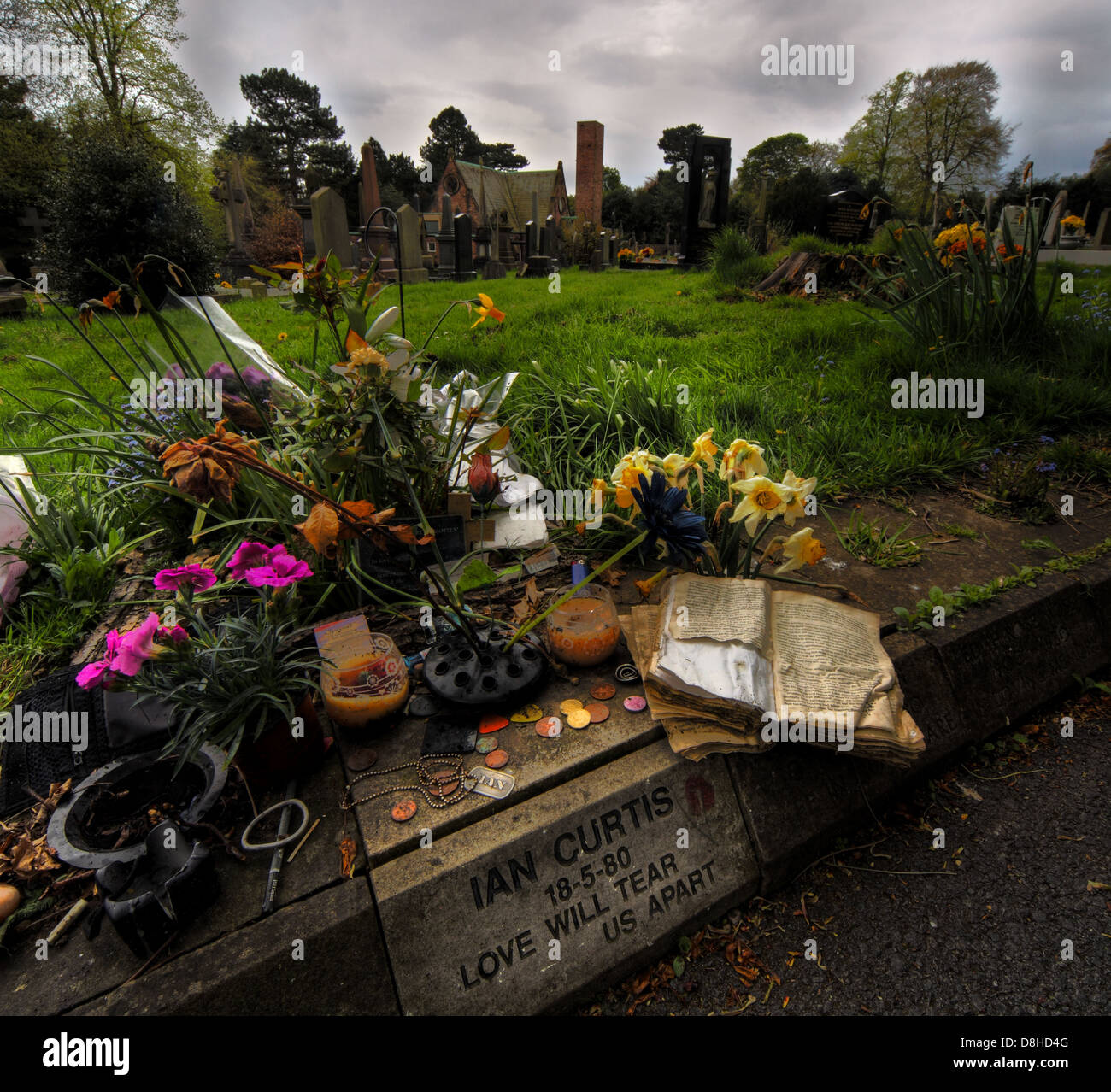
Image details
Contributor:
Tony SmithImage ID:
D8HD4GFile size:
32 MB (1.8 MB Compressed download)Releases:
Model - no | Property - noDo I need a release?Dimensions:
3498 x 3198 px | 29.6 x 27.1 cm | 11.7 x 10.7 inches | 300dpiDate taken:
3 May 2010Location:
Gravestone of Ian Curtis, lead singer of the band Joy Division, in Macclesfield Cemetery, Cheshire,More information:
A poignant view of the gravestone of Ian Curtis in Macclesfield Cemetery, Cheshire, England. Ian Curtis was the lead singer and lyricist of the influential Manchester post-punk band Joy Division, whose music helped define a generation and continues to resonate globally decades after his death in 1980 at the age of 23. The grave is adorned with flowers, candles, coins, handwritten notes and personal objects left by fans, reflecting the enduring emotional connection between Curtis and his audience. The inscription on the stone includes the lyric “Love will tear us apart”, one of Joy Division’s most famous songs, transforming the grave into both a memorial and a cultural symbol. The surrounding cemetery landscape, with weathered headstones, grass and trees under an overcast sky, reinforces the quiet, reflective atmosphere. The open book and scattered offerings suggest repeated visits over time, marking the site as a place of pilgrimage for music fans from around the world. Ian Curtis’s work addressed themes of alienation, mental health, despair and emotional intensity, subjects that remain deeply relevant. His death has become part of a wider conversation about depression, epilepsy and the pressures faced by young artists. Macclesfield Cemetery therefore occupies a unique position in British cultural geography, where personal loss, artistic legacy and collective memory intersect. This image is well suited for editorial use covering music history, post-punk culture, British cultural heritage, mental health awareness, fandom and memorial practices, as well as commercial editorial projects examining the lasting impact of musicians whose influence far outlived their short lives.

