
Consume less love more - good advice think green
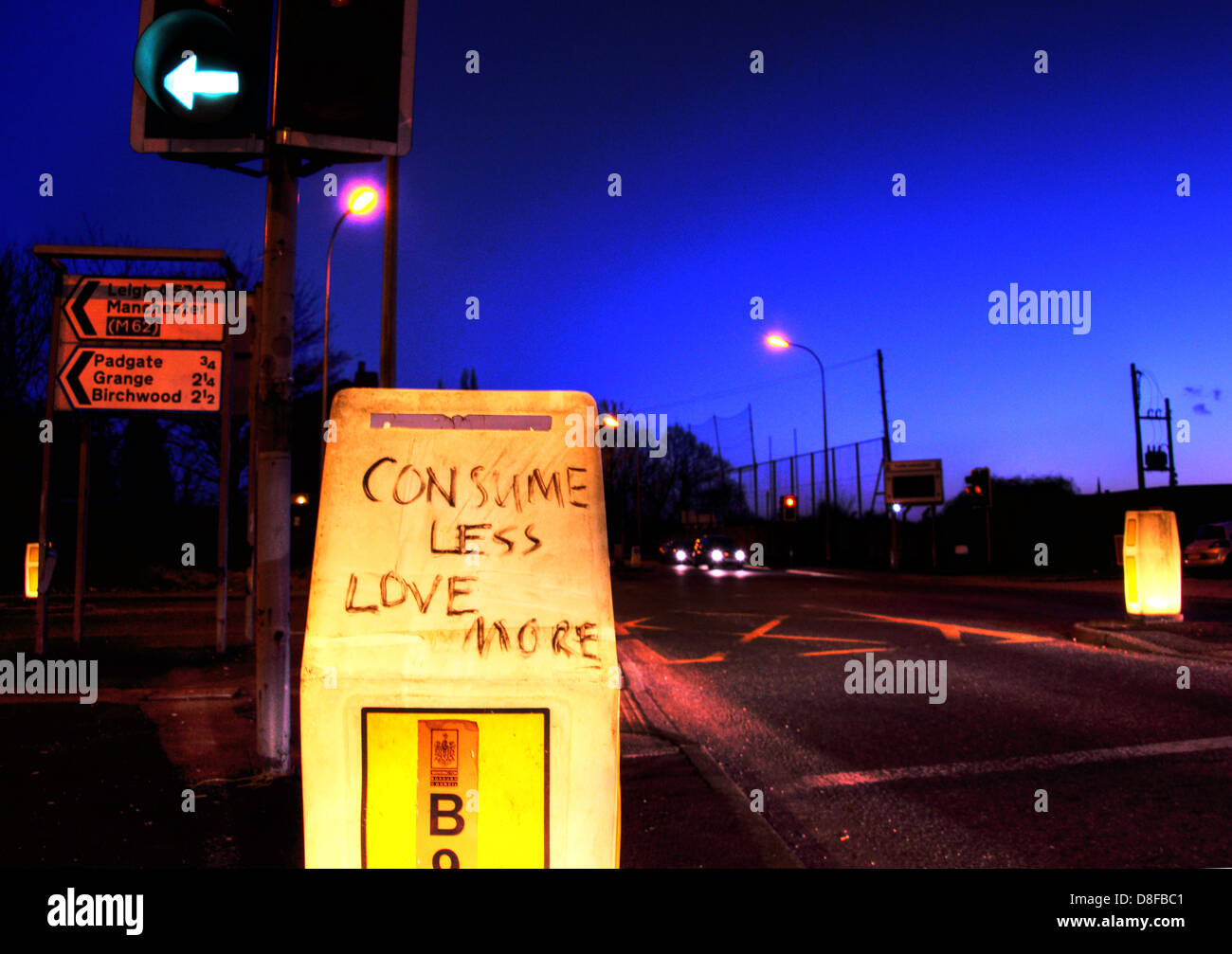
Image details
Contributor:
Tony SmithImage ID:
D8FBC1File size:
51.5 MB (1.5 MB Compressed download)Releases:
Model - no | Property - noDo I need a release?Dimensions:
5050 x 3563 px | 42.8 x 30.2 cm | 16.8 x 11.9 inches | 300dpiDate taken:
2009Location:
Padgate, Warrington, Cheshire England UKMore information:
. Consume less love more - good advice think green. Photographed on 1 January 2009. The recorded location is Padgate, Warrington, Cheshire England UK. The wider historical story is that murals, sculptures and civic artworks turn public space into a record of local culture; They can commemorate people and events, respond to politics, celebrate industry or simply enliven streets, while the artists' materials and styles place the work within a particular period. As background, seasonal and low-light photography can emphasise the relationship between natural conditions and the built environment; Dusk, snow, mist or dramatic cloud often reveal lighting, silhouettes and reflective surfaces that are less apparent in ordinary daylight. In the present 2026 context, public art and murals continue to be important to place-making, tourism and regeneration, particularly in city districts where street art has become part of the visitor economy; They also raise questions about conservation, ownership, temporary work and the rapid redevelopment of urban neighbourhoods. Against the 2026 backdrop, current interest in climate and place-making gives atmospheric landscape images added documentary value, particularly where weather, coastlines or urban development are prominent. Looking at the subject's development, art in public and historic settings adds another layer to the built environment; Sculpture, mosaic, painting and street art can interpret heritage, provoke debate, memorialise communities or create landmarks, and photographs preserve works that may later change or disappear. The historical context is that public art can become part of the identity of a street or neighbourhood, recording political ideas, local history, humour, memory and changing cultural tastes; Murals, sculpture and decorative art are especially valuable as documentary subjects because they may be altered, moved, weathered or removed.

