
Milepost To Prescot 8 Miles, Liverpool 16 Miles on A57 at Liverpool Road, Penketh, Cheshire, England UK
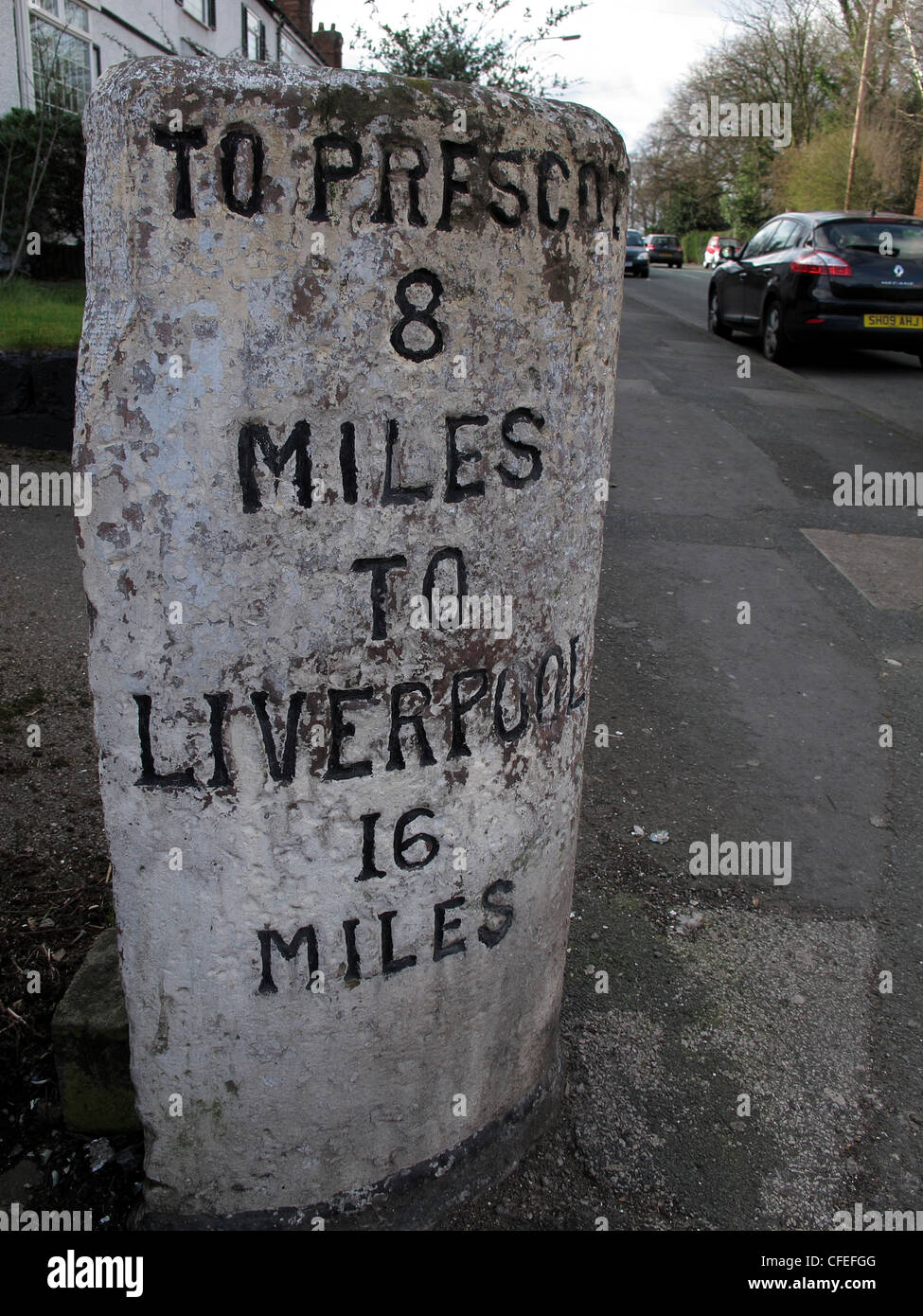
Image details
Contributor:
Tony SmithImage ID:
CFEFGGFile size:
28.5 MB (1.7 MB Compressed download)Releases:
Model - no | Property - noDo I need a release?Dimensions:
2735 x 3648 px | 23.2 x 30.9 cm | 9.1 x 12.2 inches | 300dpiDate taken:
10 March 2012Location:
A57, Liverpool Road, Penketh, Warrington, Cheshire, England, UKMore information:
. Milepost To Prescot 8 Miles, Liverpool 16 Miles on A57 at Liverpool Road, Penketh, Cheshire, England UK. Photographed on 10 March 2012. The recorded location is A57, Liverpool Road, Penketh, Warrington, Cheshire, England, UK. In historical terms, britain's road landscape has accumulated layers of transport history: old milestones and cast signs coexist with speed limits, parking controls, motorway infrastructure and electronic traffic management; Such details reveal how movement and road safety have been regulated over time. As background, older buildings and artefacts provide tangible evidence that written records cannot fully replace; Their wear, construction, signage and setting help researchers understand local history, design, industry and social life across different periods. During 2026, congestion, road safety and decarbonisation continue to be prominent transport issues; Historic signs, traffic jams and older road infrastructure therefore work both as location records and as evidence of how the road network and travel behaviour have changed. Against the 2026 backdrop, conservation is increasingly considered alongside regeneration, climate resilience and adaptive reuse; The value of a historic subject therefore lies not only in nostalgia but in the evidence it provides about materials, local identity and how places change. In the longer view, street and highway scenes record the practical infrastructure of mobility, including road signs, junctions, bridges, parking controls and changing vehicle use; They also provide a visual history of traffic growth, road engineering and the effort to balance drivers, pedestrians and local communities. Against the 2026 backdrop, congestion, road safety and decarbonisation remain prominent transport issues; Historic signs, traffic jams and earlier road infrastructure therefore work both as location records and as evidence of how the road network and travel behaviour have changed.

