
Defaced Apr 2010 Election Poster for George Gideon Osbourne now elected MP and Conservative Chancellor for Tatton Ward, Cheshire
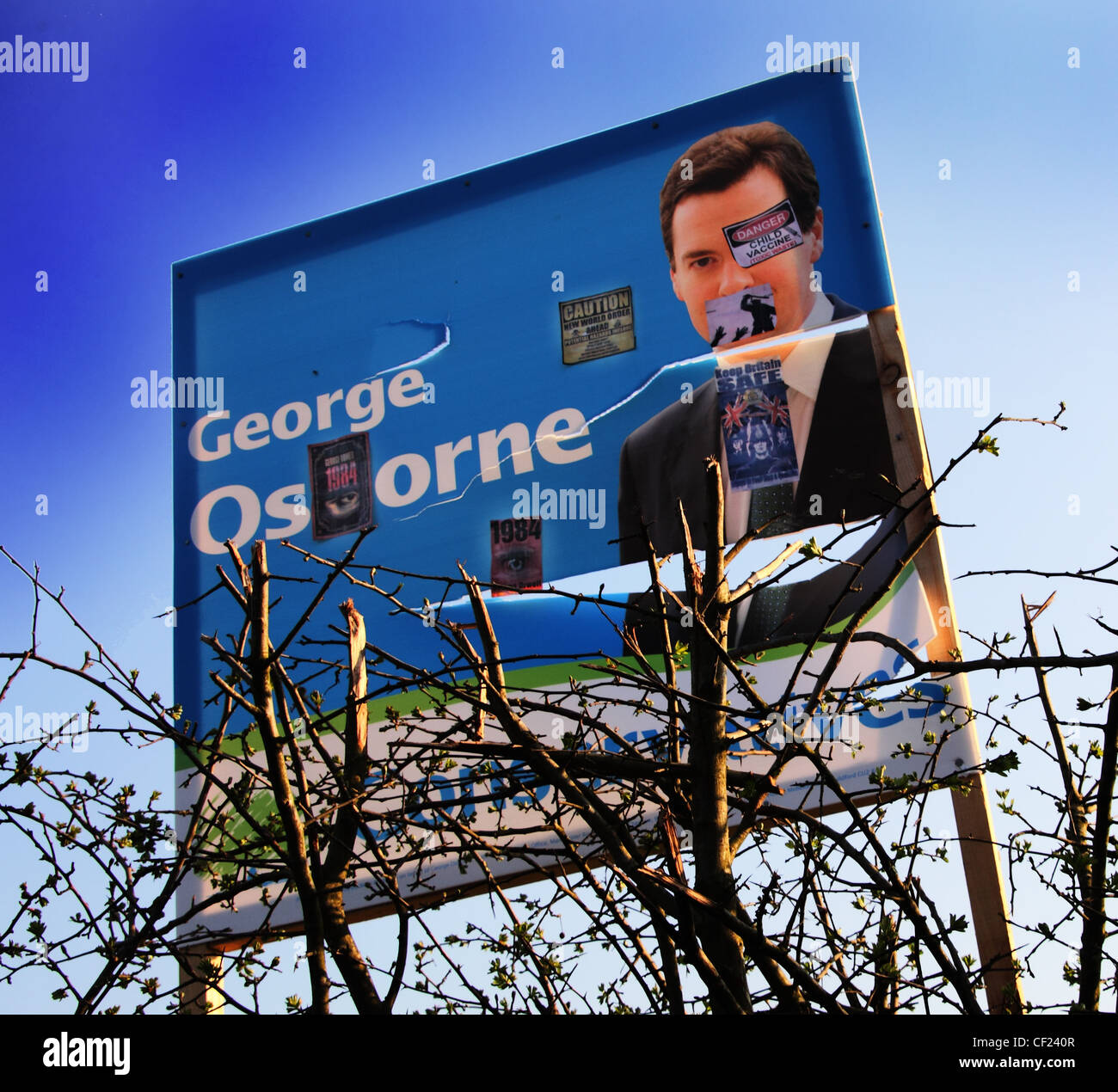
Image details
Contributor:
Tony SmithImage ID:
CF240RFile size:
26.6 MB (1.1 MB Compressed download)Releases:
Model - no | Property - noDo I need a release?Dimensions:
3198 x 2904 px | 27.1 x 24.6 cm | 10.7 x 9.7 inches | 300dpiDate taken:
16 April 2010Location:
Pickmere, Knutsford, Cheshire North west England, UKMore information:
. Defaced Apr 2010 Election Poster for George Gideon Osbourne now elected MP and Conservative Chancellor for Tatton Ward, Cheshire. Photographed on 16 April 2010. The recorded location is Pickmere, Knutsford, Cheshire North west England, UK. Located in a farmers field it had been shot at, stickers added and generally defaced. Historically, campaign imagery captures politics at street level, where national debates become posters, banners, marches and handwritten slogans; Such material often disappears immediately after an election or referendum, making contemporary photographs especially useful to historians. Historically, ephemeral design is especially useful to social historians because it was created for immediate use rather than posterity; A ticket, label or novelty card can reveal contemporary humour, branding, consumer habits and printing style in a compact object. In historical terms, signs and notices are ephemeral pieces of design that can become important historical evidence; Lettering, logos, warnings and directions record former businesses, regulations, transport systems and public messages that may disappear long before the surrounding building changes. In 2026, political photographs from previous campaigns can be used comparatively, showing how parties, issues and constitutional debates have shifted; They are particularly useful when the underlying subject, such as Scottish independence, public spending or local government, remains unresolved. In 2026, digital-first communication means many everyday printed objects are disappearing; Older tickets, labels, cards and signs therefore provide useful material for stories about changing design, retail and consumer behaviour. Current 2026 relevance comes from the fact that digital-first communication means many everyday printed objects are disappearing; Older tickets, labels, cards and signs therefore provide useful material for stories about evolving design, retail and consumer behaviour.

