
Corn in a summer English field battling wild flowers near Walton, Warrington Cheshire UK
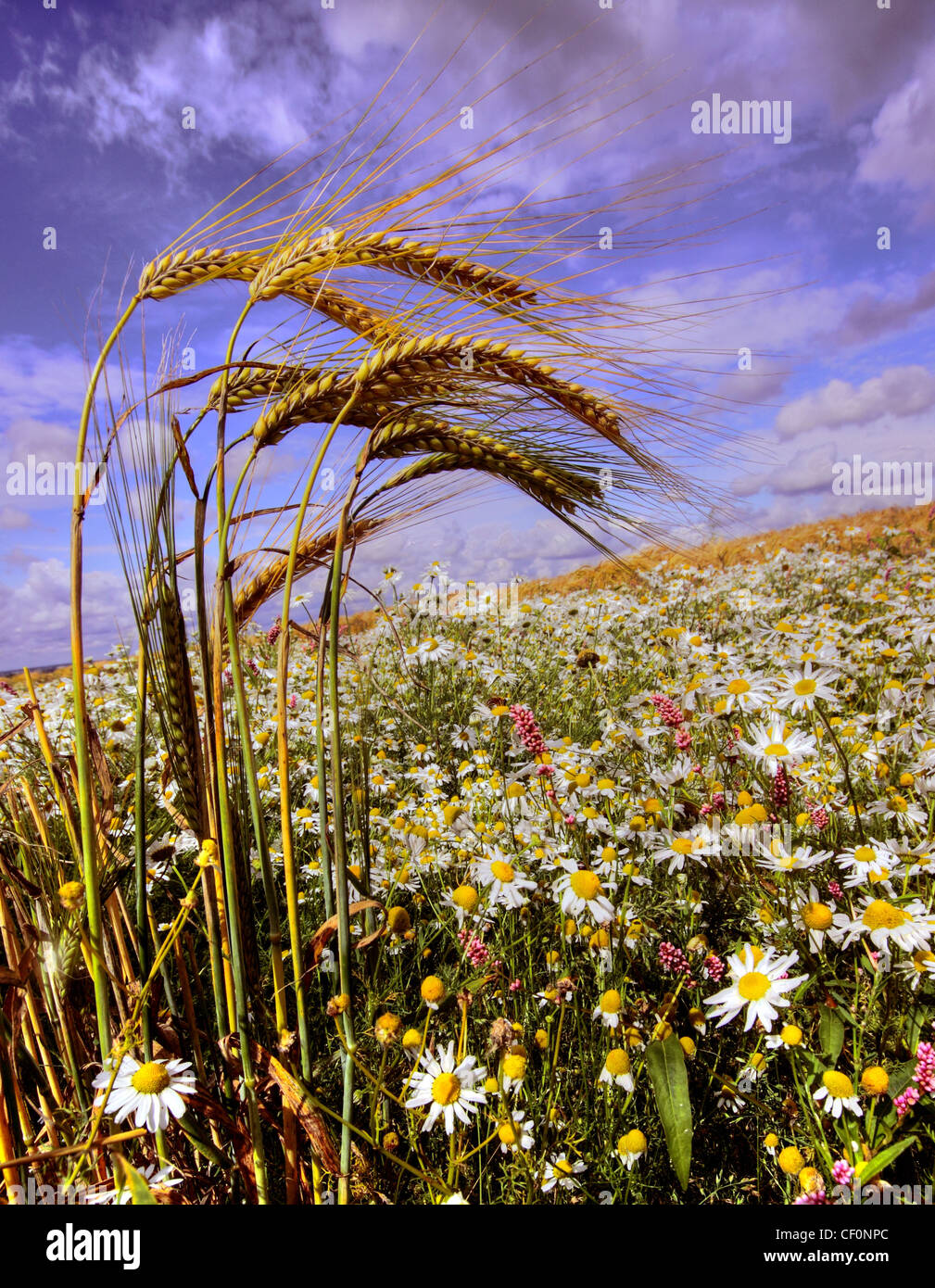
Image details
Contributor:
Tony SmithImage ID:
CF0NPCFile size:
27.8 MB (2.1 MB Compressed download)Releases:
Model - no | Property - noDo I need a release?Dimensions:
2748 x 3537 px | 23.3 x 29.9 cm | 9.2 x 11.8 inches | 300dpiDate taken:
18 July 2009Location:
A56, Walton, Warrington , Cheshire, England UKMore information:
. Corn in a summer English field battling wild flowers near Walton, Warrington Cheshire UK. Photographed on 18 July 2009. The recorded location is A56, Walton, Warrington , Cheshire, England UK. Nature flourishing in the countryside. Looking at the subject's development, nature photography can serve both aesthetic and documentary purposes, preserving details of species, flowering seasons, weather and land use; Repeated images of the same places also become useful evidence of environmental evolution over time. In historical terms, farming and allotment imagery records the practical work behind food production, from ploughing and arable crops to small-scale vegetable growing; Allotments expanded strongly during periods of food shortage and remain an significant part of British urban and suburban gardening culture. Historically, flowers and foliage provide precise seasonal markers; Snowdrops are associated with late winter and early spring, while seed heads and autumn leaves show later stages of the plant cycle; dew, frost and backlighting can further emphasise structure. For the 2026 context, climate adaptation and biodiversity remain prominent concerns, giving ordinary countryside scenes greater documentary relevance; Changes in rainfall, temperature and land management affect flowering, crops, insects and wildlife, while public interest in nature recovery continues to grow. During 2026, food security, soil health, biodiversity and climate resilience are increasingly central to UK farming and gardening; Images of crops, allotments and field work can support coverage of domestic food production, sustainable agriculture and adaptation to more variable weather. In 2026, climate adaptation and biodiversity remain prominent concerns, giving ordinary countryside scenes greater documentary relevance; Changes in rainfall, temperature and land management affect flowering, crops, insects and wildlife, while public interest in nature recovery continues to grow.

