
Thorn Marine, Bridgewater canal, Stockton Heath, Warrington, Cheshire, England, UK at dusk
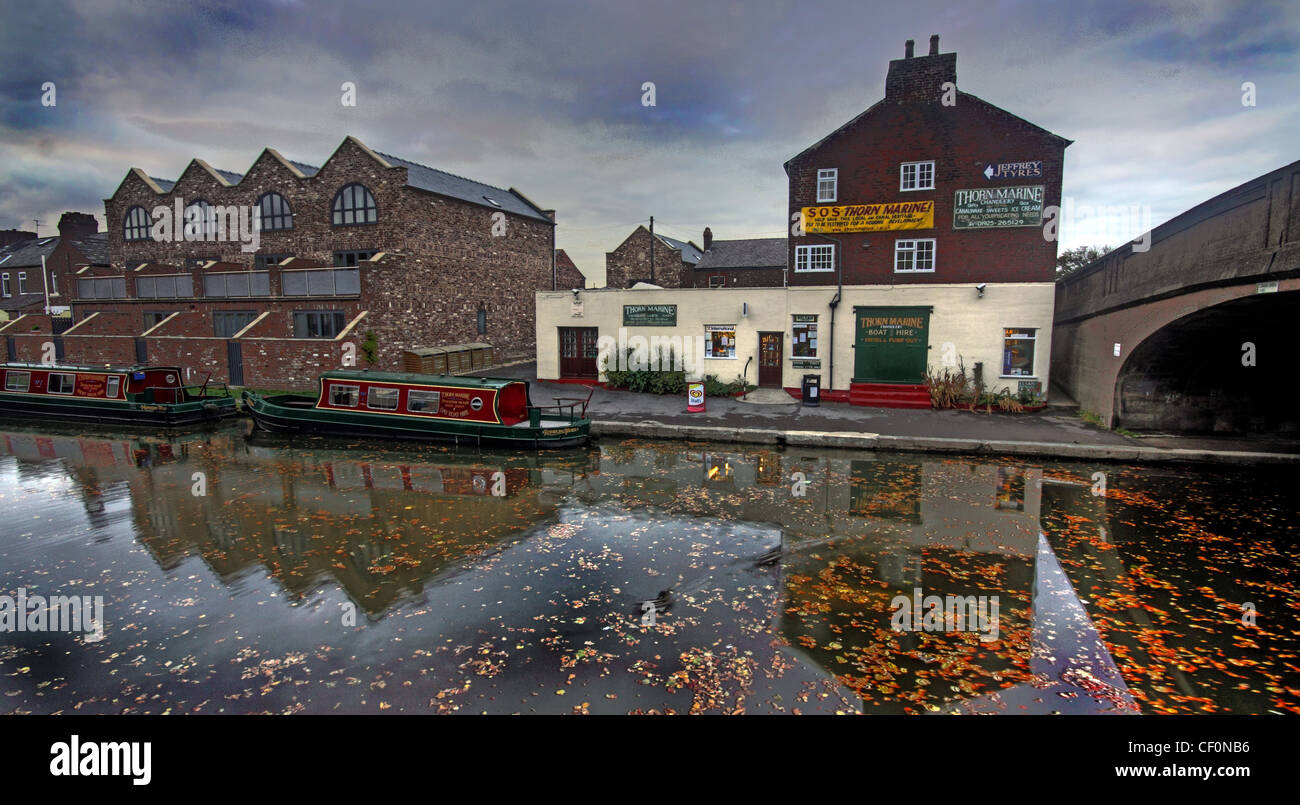
Image details
Contributor:
Tony SmithImage ID:
CF0NB6File size:
33.5 MB (1.9 MB Compressed download)Releases:
Model - no | Property - noDo I need a release?Dimensions:
4614 x 2539 px | 39.1 x 21.5 cm | 15.4 x 8.5 inches | 300dpiDate taken:
26 October 2009Location:
Thorn Marine, Bridgewater canal, Stockton Heath, Warrington, Cheshire, England, UKMore information:
. Thorn Marine, Bridgewater canal, Stockton Heath, Warrington, Cheshire, England, UK at dusk. Photographed on 26 October 2009. Looking at the subject's development, canal infrastructure is a legacy of the Industrial Revolution, when navigable waterways linked mines, mills, factories and ports; The same lock chambers, bridges and towpaths now support leisure cruising, cycling, walking, wildlife corridors and redevelopment, while retaining evidence of their freight-carrying past. Historically, seasonal and low-light photography can emphasise the relationship between natural conditions and the built environment; Dusk, snow, mist or dramatic cloud often reveal lighting, silhouettes and reflective surfaces that are less apparent in ordinary daylight. For the 2026 context, britain's historic waterways remain significant for recreation, tourism, biodiversity and industrial heritage, while ageing locks, embankments and bridges require continuing maintenance; Urban canal corridors are also increasingly used for walking, cycling and waterside regeneration. In 2026, current interest in climate and place-making gives atmospheric landscape photographs added documentary value, particularly where weather, coastlines or urban development are prominent. The wider historical story is that working locks, bridges and canal-side buildings reveal the engineering system that underpinned industrial Britain; Many former commercial waterways have been restored for recreation and heritage use, creating a distinctive mixture of historic infrastructure, modern development and linear green space. Historically, britain's canals were built principally in the eighteenth and early nineteenth centuries to move coal, raw materials and manufactured goods cheaply between industrial districts, ports and growing towns; Locks, basins, towpaths and warehouses survive as engineering heritage even where freight has given way to leisure boating, walking and waterside regeneration.

