
Old Leyland Wirral double decker Buses in Blue and Yellow Birkenhead New Brighton AHF 850 and GCM 152E
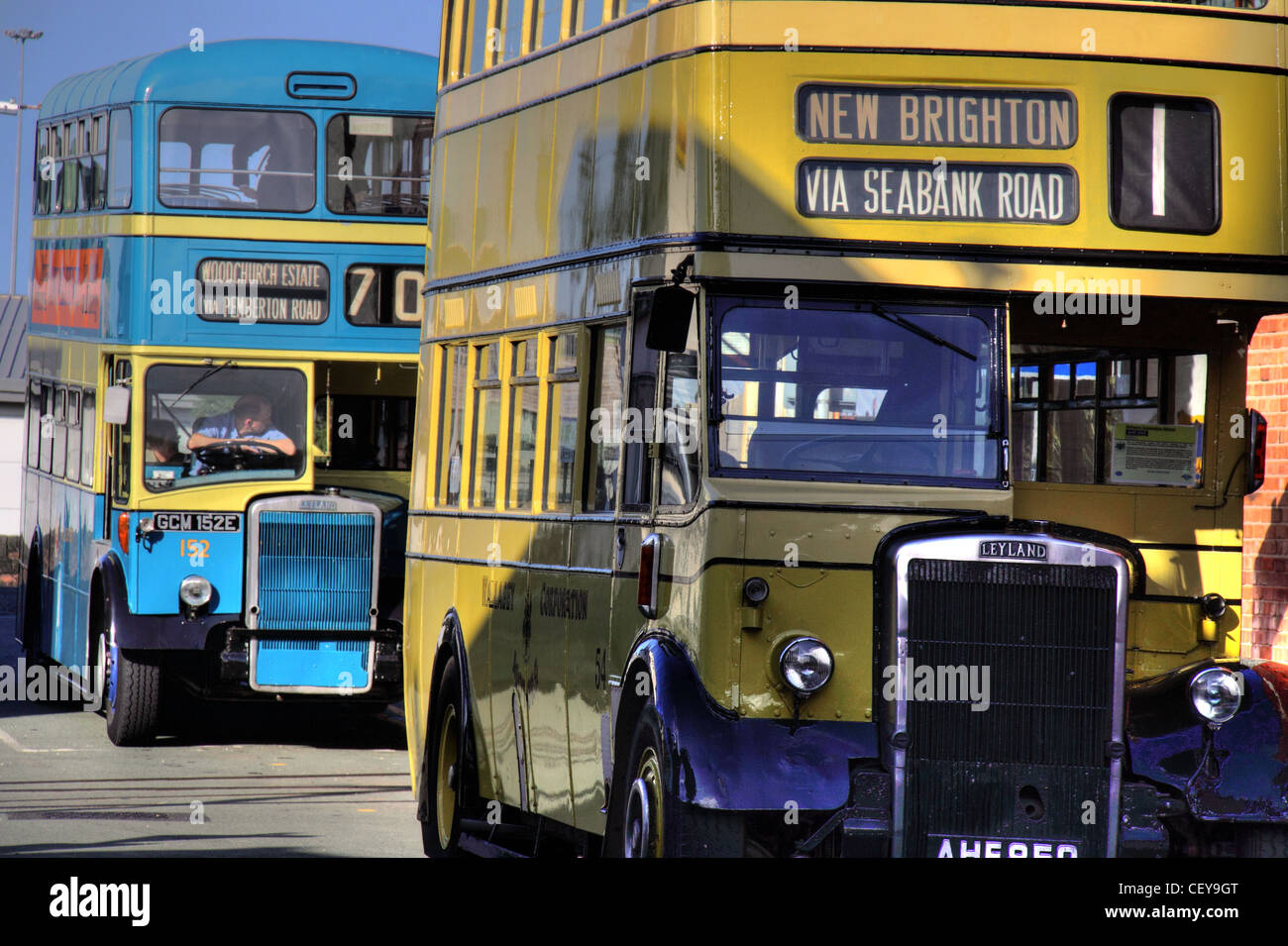
Image details
Contributor:
Tony SmithImage ID:
CEY9GTFile size:
42.6 MB (1.9 MB Compressed download)Releases:
Model - no | Property - noDo I need a release?Dimensions:
4731 x 3150 px | 40.1 x 26.7 cm | 15.8 x 10.5 inches | 300dpiDate taken:
20 September 2009Location:
Birkenhead, Wirral, Merseyside, United Kingdom, CH41 1FEMore information:
. Old Leyland Wirral double decker Buses in Blue and Yellow Birkenhead New Brighton AHF 850 and GCM 152E. Photographed on 20 September 2009. The recorded location is Birkenhead, Wirral, Merseyside, United Kingdom, CH41 1FE. Birkenhead Corporation and Wallasey Corporation motor buses. In historical terms, historic objects and places gain meaning through survival; Materials, craftsmanship, inscriptions and later alterations can reveal how a building, machine or everyday item was made, used and valued, while preservation decisions show which parts of the past communities choose to retain. Looking at the subject's development, everyday journeys depend on an evolving network of vehicles, stops, stations and roads; Buses, cars, ferries and trams can become historical subjects within a few years as operators rebrand, fleets are replaced and infrastructure is rebuilt. During 2026, heritage remains economically and culturally significant through tourism, education and place-making, while the cost of maintaining historic fabric creates continuing debate about conservation and reuse. For the 2026 context, transport policy increasingly emphasises decarbonisation, integration and reliable public services, while older diesel vehicles and legacy infrastructure provide a visual contrast with electric fleets and changing travel behaviour. In the longer view, heritage photography is particularly useful where structures or objects have changed function; A former workplace, shop, transport structure or piece of equipment can become a museum object or landmark, linking everyday history with conservation and interpretation. As background, older buildings and artefacts provide tangible evidence that written records cannot fully replace; Their wear, construction, signage and setting help researchers understand local history, design, industry and social life across different periods. Further subject-specific language includes historic environment and period detail.

