
Historic parlour at the Pankhurst Museum in Manchester
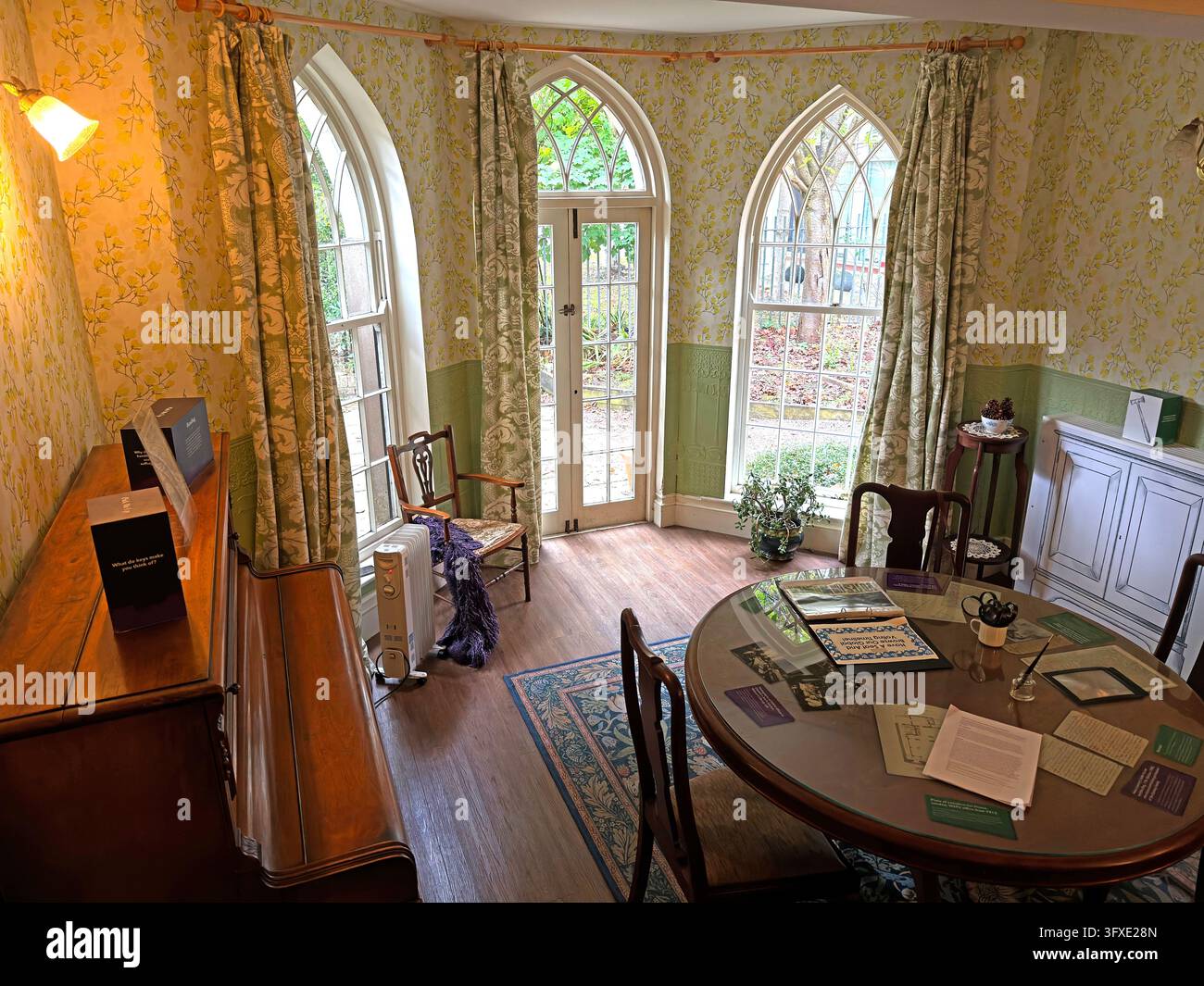
Image details
Contributor:
Tony SmithImage ID:
3FXE28NFile size:
66.4 MB (3.7 MB Compressed download)Releases:
Model - no | Property - noDo I need a release?Dimensions:
5564 x 4173 px | 47.1 x 35.3 cm | 18.5 x 13.9 inches | 300dpiDate taken:
18 October 2026Location:
60-62 Nelson Street, Manchester M13 9WP, UKMore information:
The parlour of the former Manchester home of Emmeline Pankhurst, now part of the Pankhurst Museum at 62 Nelson Street, preserves the setting associated with the beginnings of the militant women's suffrage campaign in Britain. The ground-floor room is lit by three tall Gothic pointed-arch openings, with a glazed door leading into the garden between two windows. Floral patterned curtains hang beside the windows and door, framing views of greenery, shrubs and a stone exterior beyond. Pale decorative wallpaper, a green-painted lower wall, timber flooring and a patterned rug create a domestic setting around a large oval wooden table. Museum interpretation materials, leaflets and open reading material are arranged across the tabletop, with wooden chairs positioned around it. A wooden cabinet stands against the left wall, while another pale cupboard occupies the right corner. A portable electric heater sits near a chair beside the garden door, and a leafy potted plant stands beside the right-hand window. The preserved interior connects the everyday surroundings of a family home with a turning point in British political history. Emmeline Pankhurst lived at 62 Nelson Street with her children from 1898, following the death of her husband Richard. On 10 October 1903 she convened a meeting in her home that established the Women's Social and Political Union, the organisation subsequently identified with the suffragettes and their campaign for votes for women. Her daughters Christabel and Sylvia became prominent figures in the movement. The building later faced demolition as nearby hospital facilities expanded, but campaigners saved it and it opened as the Pankhurst Museum and resource centre in October 1987. The room today offers visitors a tangible link to early twentieth-century Manchester, political organising, women's activism, the campaign for equal voting rights and the survival of an important heritage building within the Manchester Royal Infirmary site.

